SCIEX acquires Intabio, a developer of precision solutions for biotherapeutic analysis through imaged cIEF-MS

25 Jan 2021

Edward Carter
Publishing / Media

Industry news

SCIEX has announced the closing of its acquisition of Intabio, a privately held company and the developer of the Blaze™ System for biotherapeutic analysis and quality assessment. Blaze enables the direct coupling of imaged cIEF charge variant analysis with high-resolution mass spectrometry to detect intact proteins.

“Intabio’s technology is an excellent fit with SCIEX. With our combined knowledge of the biopharma market, capillary electrophoresis and mass spectrometry, we believe we can significantly simplify how our customers bring life-saving drugs to market faster,” said Inese Lowenstein, President at SCIEX.

Imaged cIEF-MS technology provides a groundbreaking solution for those looking for better and faster tools to characterize their increasingly complex biomolecules. The Blaze System coupled to high-resolution mass spectrometry provides a streamlined approach that can reduce lengthy sample prep and deliver increased sample throughput. This results in much needed cost and time savings for biopharma analytical labs.

“This acquisition creates a synergy of technology and scale to deliver solutions that eliminate many workflow bottlenecks our customers struggle with in biopharmaceutical drug development,” added Lena Wu, Ph.D., CEO and co-founder of Intabio. "The Intabio team is excited by this acquisition and especially the ability to leverage SCIEX expertise and scale in global sales, support and manufacturing.”

Intabio associates and products will transition into SCIEX while continuing to operate from its existing facilities in Fremont, California. Financial terms of the transaction were not disclosed.

Want the latest science news straight to your inbox? Become a SelectScience member for free today>>

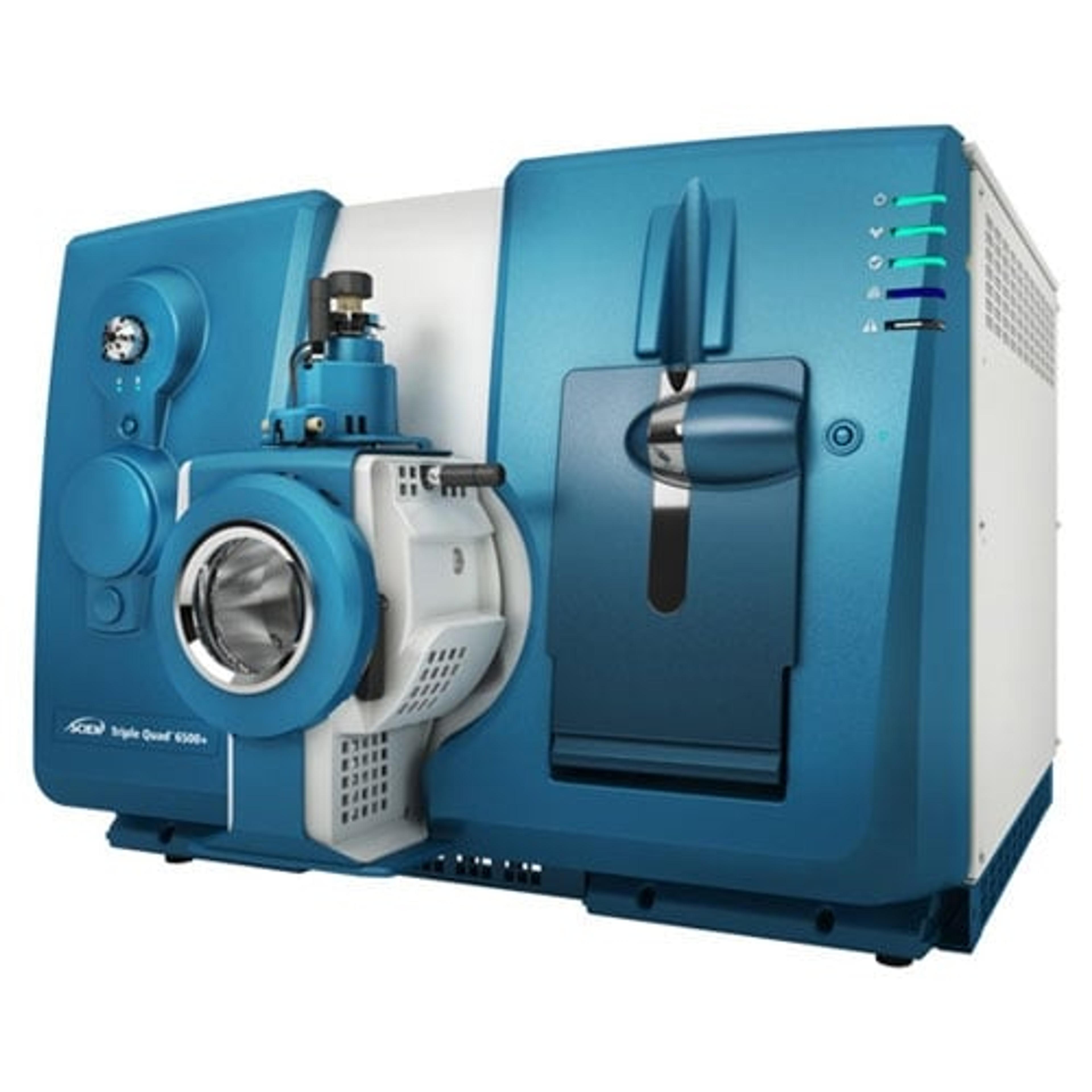
Triple Quad 6500+ system

SCIEX

The Triple Quad 6500+ system features multi-component IonDrive technology including the IonDrive high energy detector+ that pushes the boundaries of LC-MS/MS quantitation farther than ever before. The revolutionary sensitivity, speed, and performance delivered through these technology enhancements enable you to see it all, from low mass to high mass compounds, in positive or negative polarity – in a single injection, with high sensitivity, reliability, and confidence.

(10)

Links

Tags

Mass SpectrometryMass spectrometry (MS) is a powerful analytical technique used to identify and quantify molecules based on the mass-to-charge ratio of gas-phase ions. It provides detailed information about the structure, composition, and properties of compounds and is widely used across fields such as environmental monitoring, materials science, drug discovery and development, food and beverage testing, and wider chemical research. Key MS techniques include tandem mass spectrometry (MS/MS), liquid chromatography–mass spectrometry (LS-MS) and inductively coupled plasma (ICP-MS). Choosing from these wide range of techniques and technologies can be a daunting task, so keep up to date with scientific applications, performance expectations, and customer reviews here all in one place. Visit our product directory to receive quotes direct from the manufacturer. ProteomicsProteomics is the systemic bioinformatics study of proteins and amino acids, including their structure, size, function and identification. Tools used in proteomics include chromatography, blotting and gels, protein arrays, mass spectrometry and ELISA and associated analysis software. Analyzers and proteomic systems should be sensitive, high resolution, fast and may be automated for high-throughput.Protein PurificationProtein purification is a vital step in drug discovery, therapeutics, biotech and life science research. The purification process typically involves subcellular or membrane protein extraction with cell lysis kits, separation of proteins from cell debris by filtration or spin columns, and the isolation of proteins of interest from other proteins and impurities with affinity purification (including fusion protein tags and antibody binding proteins A, G and L), immunoprecipitation or chromatographic methods, such as ion exchange, size exclusion and immobilized metal affinity chromatography. All purification methods come in multiple formats for your laboratory needs, including agarose or magnetic beads, resins, columns and filter plates. Find the best protein purification equipment in our peer-reviewed product directory: compare products, check customer reviews and receive pricing direct from manufacturers.Protein QuantificationThe detection and quantification of proteins in a sample is vital across life sciences, pharmaceutical research and clinical diagnostics, and a variety of equipment is available to scientists to simplify the workflow. Proteins of interest can be easily labeled and detected on light-based detection instruments. Immunoassay kits allow you to identify a specific protein of interest and protein detection beads or antibody microarrays allow you to identify multiple specific proteins at once. Protein interactions and enzyme activity can also be monitored with protein-protein interaction assays. Additionally, the biophysical characterization of proteins is made easy with biokinetic analyzers. Find the best protein detection and quantification products in our peer-reviewed product directory: compare products, check customer reviews and receive pricing direct from manufacturers.Protein ExpressionProtein expression is the utilization of cell machinery for the synthesis of proteins and has become a critical tool in biotherapeutic, genomic, and proteomic research. Produce recombinant proteins with expression vectors in combination with a host cell suitable for high-level protein expression. For production of toxic proteins, consider cell-free expression vectors. Create and monitor post-translational modifications with protein modification kits. Find the best protein expression products in our peer-reviewed product directory: compare products, check customer reviews and receive pricing direct from manufacturers.BiotherapeuticsBiotherapeutics are proteins and other compounds (such as nucleic acids) produced by living organisms that have uses as therapeutics or in <i>in vivo</i> diagnostics. The most well-known example of a biotherapeutic product, and the first to be approved for therapeutic use, was recombinant human insulin.Protein BiologyThe analysis of protein expression, identity and function is vital for many areas of life science research and drug discovery. Some of the most commonly used techniques in protein analysis include Western blotting, electrophoresis and mass spectrometry.
SCIEX acquires Intabio, a developer of precision solutions for biotherapeutic analysis through imaged cIEF-MS