Sartorius introduces BioPAT Spectro to enable Raman spectroscopy capability and QbD with its ambr and BIOSTAT STR Platforms
25 Feb 2020
Sartorius have introduced BioPAT® Spectro, a Quality by Design (QbD) tool for use with its ambr® automated micro and mini bioreactor systems and with the single-use production bioreactors BIOSTAT STR®. The new tool offers access to Raman spectroscopy analysis in high-throughput process development, supporting faster Raman model building and accelerating scale-up into commercial manufacturing.
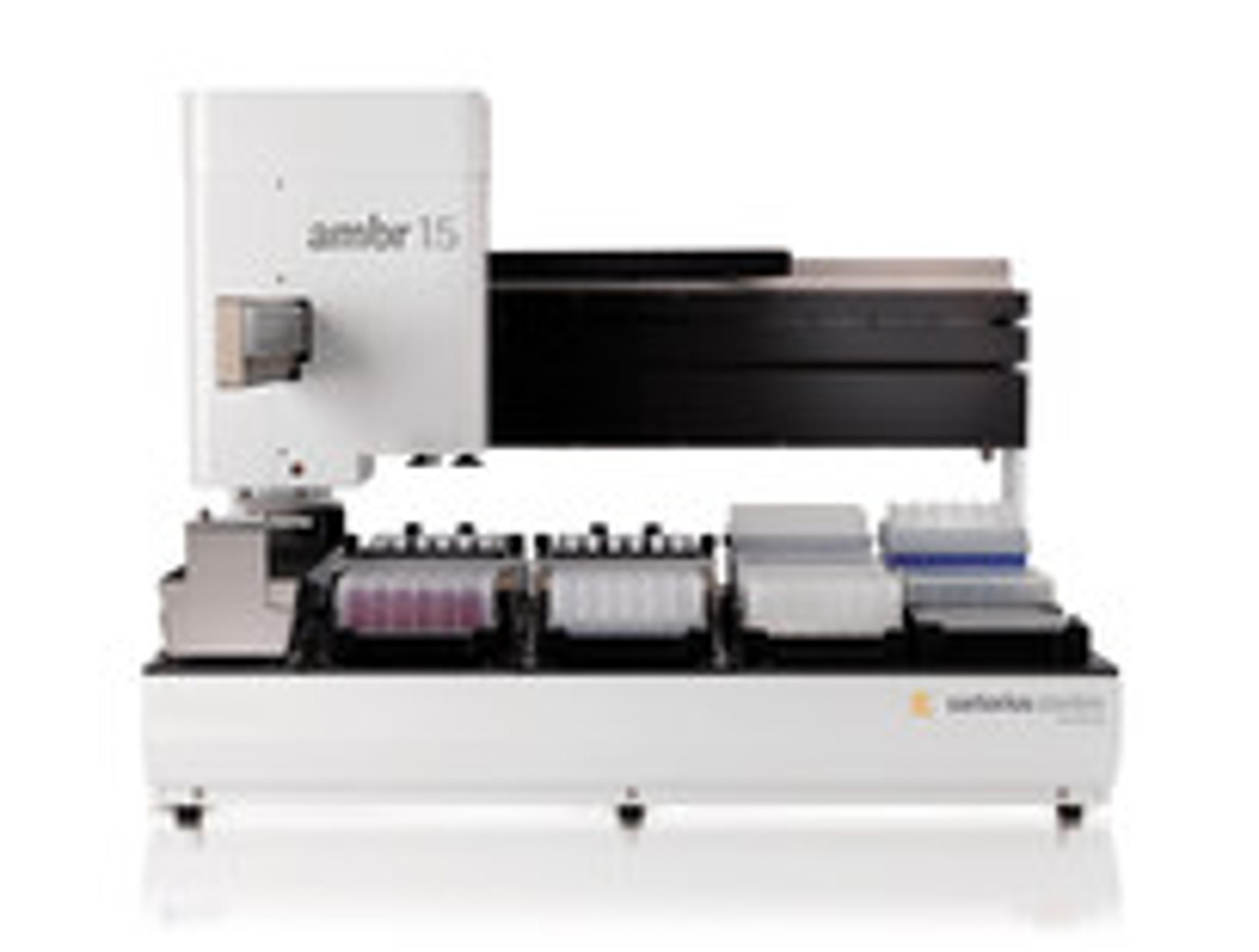
Raman spectroscopy is non-invasive and can measure multiple analytes, making it suitable as a Process Analytical Technologies (PAT) method for process control and monitoring of cell cultures. Off-line approaches to obtain and consolidate enough data to produce a robust Raman model can be time‐consuming and costly. The new BioPAT Spectro Tool, can be retrofitted into ambr® 15 cell culture and ambr® 250 high throughput systems, and enables quick and simple sampling for integrated at-line analysis of a large number of analytes by Raman spectroscopy in a Design of Experiments (DoE) approach.
Consisting of a multi-use flow cell integrated into the ambr analysis module, BioPAT Spectro in ambr has been successfully demonstrated by major pharmaceutical companies and is compatible with Raman spectrometers from Kaiser Optical Systems and Tornado Spectral Systems. The online Raman spectroscopy data alongside data from the ambr process and selected integrated analyzers, is automatically collated by the ambr software and can be easily transferred to SIMCA® Multivariate Data Analysis (MVDA) software to build robust Raman models.
One benefit of using BioPATSpectro with ambr system is that all integrated sampling, sample analysis, data collection, and consolidation is automated, making walk-away Raman spectroscopy analysis in high throughput process development a reality. Additionally, one ambrrun in 24 mini bioreactors can cover a wide design space, rapidly providing all the data required to build robust Raman models to support QbD, in less than half the time of the conventional benchtop approach.
Developed with scalability in mind, BioPAT Spectro’s flow cell’s Raman probe interface and optical path design is identical across scales so it enables time-saving, automated in-line Raman spectroscopy with Sartorius’ BIOSTAT STR single-use bioreactors. The integrated qualified and ready-to-use single-use spectroscopy port in Flexsafe STR® bags for BIOSTAT STR bioreactors will be launched in the near future.
"Unlocking the potential of Raman spectroscopy as a high throughput analytical technique for monitoring cell culture in mini bioreactors has been a key goal of process development scientists for a number of years,” commented Dr. Svea Cheeseman, Product Manager Process Analytical Technology at Sartorius. “We are showcasing the BioPAT Spectro at IFPAC and BPI West this year and look forward to discussing with scientists how they can use this new analytical technique with ambr systems to build and utilize robust Raman models, in a workflow which will support their QbD programs, while minimizing resource costs and biologics’ manufacturing timelines,” adds Dr. Cheeseman.
Do you use Sartorius products in your lab? Write a review today for your chance to win a $400 Amazon gift card>>
Related products
Request Quote for All Products
ambr® 250
Sartorius Groupambr® 250 is a new bioreactor system for parallel fermentation or cell culture using 100-250mL single-use bioreactors controlled by an automated liquid handling platform.The new system, developed with two major industrial partners, builds on the original ambr® microscale technology developed by TAP Biosystems (now part of Sartorius Stedim Biotech).