
Roche Introduces New GS FLX+ Software for Significantly Improved Long-Read Sequencing Performance
7 Nov 2012Roche announced today the launch and immediate availability of a new software package (v2.8) that significantly improves long-read shotgun sequencing performance on its GS FLX+ System. This system is the first high-throughput sequencing platform to deliver one million reads with accuracy and length that are comparable to traditional Sanger-based methods. The improvements will allow researchers to discover more novel complex genetic variants and uncover the hidden biology in difficult-to-sequence regions of genomes, transcriptomes, and metagenomic samples. The GS FLX+ System and software will be presented today at the American Society for Human Genetics Annual Meeting in San Francisco.
“This latest software release represents a major step forward in meeting the expectations of our customers on the long-read performance of the GS FLX+ System,” said Thomas Schinecker, President Roche Sequencing Solutions. “Over 30 leading sequencing laboratories around the world are already implementing the latest improvements of our new software, and their feedback has been overwhelmingly positive.”
Since the launch of the GS FLX+ System, researchers have confirmed the value of extra-long reads
for more complete de novo assembly of whole genomes, superior full-length transcriptome analysis, and better characterization of mixed metagenomic samples. The latest software will further improve the sequencing results for these applications and also bring new functionality enhancements to the suite of 454 Sequencing System’s bioinformatics tools for de novo assembly, mapping, and variant analysis.
“We have experienced excellent results in our laboratory using the latest GS FLX+ software. All sequencing metrics, including read length, have exceeded our expectations,” explained Hiroshi Tarui, RIKEN Omics Science Center and Yokohama City University KIHARA Institute for Biological Research. “We are excited to use the platform in our de novo transcriptome studies, where the long reads are critical for full-length assembly of cDNA transcripts and splice variant investigation.”
“We have been using the GS FLX+ System extensively for our de novo sequencing project of different tobacco strains achieving modal read lengths of around 820 bases and several runs with an output of more than 1 Gb,” said Bernd Timmermann, Head of the Max Planck Institute Sequencing Core Facility, Berlin, Germany. “With the upgrade to the v2.8 software, we are seeing an improvement in average and modal read length in all cases. We will continue to use our GS FLX+ Systems in the future for our de novo sequencing and metagenome projects.”
Roche also plans to roll out long-read improvements for long amplicon sequencing on the GS FLX+ System. They will advance sequencing results for targeted sequencing and 16S/18S rRNA metagenomic applications.
Related products
Request Quote for All Products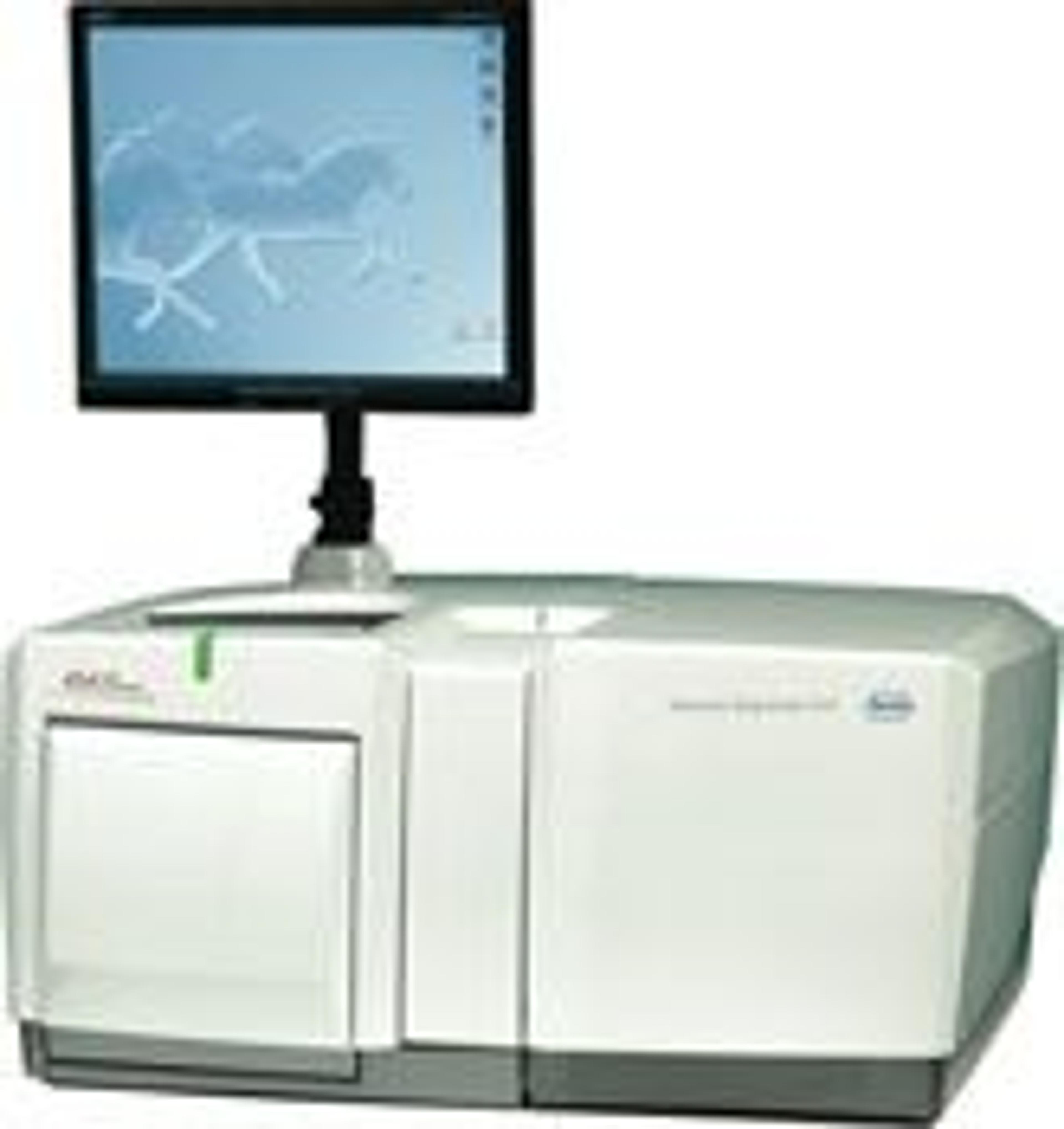
GS FLX+ System
RocheNow delivering sequencing reads up to 1,000 bp in length! The GS FLX+ System features the unique combination of long reads, exceptional accuracy and high-throughput, making the system well suited for larger genomic projects. The GS FLX System has been at the heart of key breakthrough genomic discoveries and over 1,000 peer-reviewed publications to date.Advancements in sequencing chemistry, instrumentation and software offer the latest improvements in GS FLX System performance, with read lengths up to 1 kb. Available as an on-site instrument upgrade or new instrument, the GS FLX+ System is designed for use with both the new long-read Sequencing Kit XL+ and existing Sequencing Kit XLR70.GS FLX+ System Features: True capillary sequencing-like read lengths: Continuous development of the GS FLX Titanium chemistry now offers read lengths up to 1 kb Flexible sequencing formats: Broad selection of gaskets and Multiplex Identifiers (MIDs) enables efficient use of sequencing runs Point-and-click data analysis: Included GS Data Analysis Software for de novo assembly, reference mapping and amplicon variant analysis. Applications: Whole Genome Sequencing: De novo sequencing of large, complex organisms or multiple bacterial genomes in a single run Transcriptome Sequencing: Full-length de novo sequencing and assembly of complex organisms Amplicon Sequencing: High-throughput sequencing of 100s to 1,000s of samples and loci Sequence Capture: Targeted resequencing of whole exomes or large capture regions Metagenomics: Characterization of complex environmental samples; pathogen discovery