
Revvity introduces Signals AI, a native agentic framework to accelerate scientific R&D
Native agentic framework turns connected data and knowledge into task-ready insights for scientists
22 Jun 2026
Revvity, Inc. has launched Signals AI™, a native agentic framework built into the Revvity Signals One™ platform, enabling scientists in pharmaceutical, biotech, chemical and academic research organizations to search, understand and act on complex R&D data in natural language.
By combining governed, ontology-driven scientific data with leading large language model (LLM) capabilities, Signals AI helps research teams transform connected R&D knowledge into reliable, traceable and task-ready insights, accelerating decision-making across scientific workflows.
Transforming R&D data into scientific understanding
As scientific organizations generate growing volumes of data across experiments, instruments, applications and enterprise systems, the challenge has shifted from data collection to extracting meaningful insight and driving action. Signals AI introduces a new intelligence layer within the Signals One platform, allowing scientists to directly engage with connected R&D knowledge and dynamically recast it for different scientific and operational purposes.
Using natural language, researchers can interact with governed data and scientific context, transforming existing knowledge into the specific form needed to support experimental design, data interpretation, portfolio decisions and operational execution.
Native agentic framework within Signals One
Signals AI is built natively into the Signals One platform as an agentic framework that turns connected data and knowledge into task-ready insights. By leveraging leading LLM capabilities within a governed, domain-aware environment, Signals AI enables:
- Natural language search and interaction across complex R&D data
- Dynamic transformation of information for different scientific questions and workflows
- Contextual, traceable responses grounded in structured scientific data and ontologies
This approach helps scientists move more efficiently from data to understanding, and from understanding to action, within their existing Signals One workflows.
Grounded, traceable and scientifically rigorous AI
Grounded in structured scientific data, domain ontologies and validated scientific algorithms, Signals AI delivers traceable, scientifically relevant responses through natural language and interactive views. Scientists can explore molecules, sequences, experimental results and connected knowledge in context, helping them understand, validate and act on AI-generated insights while maintaining scientific rigor and compliance.
By integrating governed data, ontology-driven context and validated algorithms, Signals AI supports reliable and auditable outcomes across discovery, development and analytical workflows.
From system of record to system of scientific understanding
The integrated intelligence of Signals AI transforms the Signals One platform from a traditional system of record into a system of scientific understanding. Researchers can:
- Navigate and interpret complex, multi-source R&D data
- Generate context-rich insights to guide experiments and decisions
- Operationalize knowledge across teams and workflows
This evolution helps organizations move from data to insight, and from insight to action, faster than ever before. Select capabilities of Signals AI are available, with additional features expected to be released and enhanced in the coming weeks.
Want the latest science news straight to your inbox? Become a SelectScience member for free today>>
Related products
Request Quote for All Products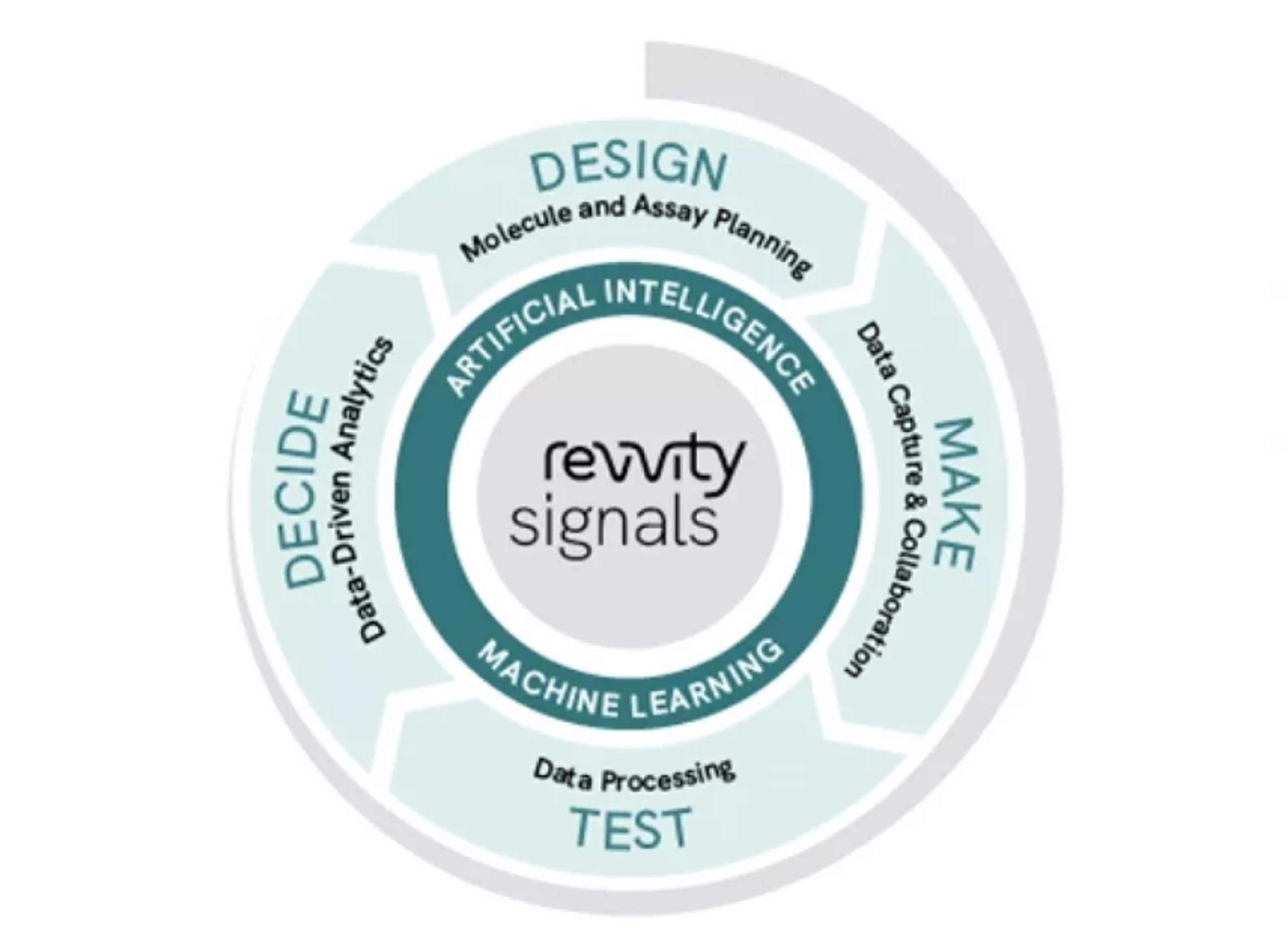
Signals One™
Revvity SignalsMake your innovations a reality with the first unified, cloud-native SaaS R&D solution that streamlines scientific complexity and promotes collaboration.
Links
Tags
Frequently asked questions
Show frequently asked questions
How does Revvity Signals AI enhance R&D data analysis for pharmaceutical and biotech organizations?
Signals AI™, embedded in the Revvity Signals One™ platform, lets scientists in pharmaceutical, biotech, chemical and academic research use natural language to search and interact with governed, ontology-driven R&D data. By combining connected scientific data with leading LLM capabilities, it transforms complex experimental and enterprise information into reliable, traceable and task-ready insights that accelerate decision-making across discovery, development and analytical workflows.
What makes the Signals AI™ agentic framework different from traditional scientific software platforms?
Signals AI introduces a native agentic framework within Signals One that shifts from predefined applications and dashboards to direct engagement with organizational R&D knowledge. Researchers can ask natural language questions, dynamically transform information for different scientific workflows, and receive contextual, traceable responses grounded in structured data and scientific ontologies, supporting faster exploration of experimental results, hypotheses and operational scenarios without compromising scientific rigor.
How does Signals AI ensure scientific rigor, traceability and compliance in AI-driven R&D insights?
Signals AI is grounded in structured scientific data, domain ontologies and validated scientific algorithms, ensuring responses are traceable and scientifically relevant. Scientists can explore molecules, sequences, experimental results and connected knowledge in context, validating AI-generated insights.
By integrating governed data and ontology-driven context, the platform supports reliable, auditable outcomes and helps organizations move from system of record to a system of scientific understanding across complex R&D workflows.