
Rethinking food sample preparation: How microwave technology is transforming laboratory workflows
Guest editorial by Milestone explores the benefits of microwave technology in elemental analysis, organic contaminant testing, and nutritional and compositional profiling of food samples
23 Apr 2026
Discover how Milestone microwave systems streamline food elemental, contaminant, and nutritional analysis with faster, greener workflows.
In today’s food industry, sample preparation remains one of the most critical and time-consuming steps in the analytical workflow, whether testing for contaminants, verifying nutritional labels, or profiling complex matrices.
Traditionally, food laboratories have relied on a patchwork of techniques: Soxhlet extraction for lipids, long acid hydrolysis for amino acids, and multiple matrix-specific protocols for different analyses. While these approaches are well-established, they often involve lengthy processing times, high solvent consumption, and complex, multi-step workflows that limit productivity.
A new generation of microwave-assisted sample preparation techniques is reshaping this landscape, offering a unified approach that addresses both efficiency and analytical performance across a wide range of food applications.
Elemental analysis: Overcoming the limits of conventional digestion
Elemental and trace metals analysis remains a cornerstone of food safety testing. However, conventional digestion techniques often struggle with the diversity of food matrices, long digestion times, and careful method optimization.
Microwave digestion using SRC (Single Reaction Chamber) technology offers a new approach. By operating at a controlled elevated temperature and pressure, Milestone's ultraWAVE systems can completely digest complex food matrices in a controlled environment. A key advantage of this technique is the ability to process mixed batches of samples simultaneously, regardless of differences in the sample matrix. This eliminates the need to group samples by type, enabling laboratories to handle real-world sample flows more efficiently.
In addition, the capability to work with larger sample masses improves representativity, which is particularly important for heterogeneous food matrices. Combined with high-pressure conditions, this ensures complete digestion while minimizing residual carbon and improving analytical accuracy.
Finally, ultraWAVE digestion systems reduce the risk of external contamination and analyte loss, supporting the low detection limits required for trace metal analysis, like in sensitive applications such as baby food testing.
Organic contaminants: Faster and more efficient extractions
Alongside elemental analysis, food laboratories must routinely monitor organic contaminants such as PAHs, dioxins, PCBs, and mineral oil hydrocarbons (MOSH/MOAH). These analyses traditionally rely on time-intensive extraction techniques such as Soxhlet or pressurized liquid extraction.
Microwave-assisted extraction powered by the Milestone ETHOS X offers a more efficient alternative. By combining controlled heating with optimized solvent interaction, it enables rapid extraction of analytes from complex matrices.
When it comes to quality and reliability, studies demonstrate that microwave extraction delivers results comparable to established reference methods and aligned with regulatory standards. Recovery values and interlaboratory comparisons confirm its suitability across a wide range of food types, including oils, meats, and processed products.
From a productivity perspective, the impact is significant. Parallel processing of up to 24 samples in under an hour allows laboratories to dramatically increase throughput compared to conventional approaches that may require several hours per batch.
At the same time, solvent consumption is reduced, contributing to lower operating costs and improved sustainability.
Nutritional and compositional analysis: Simplifying complex workflows
Microwave technology is also transforming workflows for nutritional and compositional analysis, where traditional methods are often complex and multi-step.
In total fat determination, for example, conventional protocols typically involve separate hydrolysis and extraction steps, often followed by lengthy evaporation. Microwave-assisted approaches integrate these steps into a single process. The ETHOS X microwave extraction system introduces a universal method that can be applied across different food matrices. This reduces both analysis time and method complexity while maintaining accuracy across a wide working range.
Fatty acid profiling presents another opportunity for simplification. Instead of performing extraction and derivatization separately, the microwave-assisted technique of ETHOS X can combine these into a single step, significantly reducing sample preparation time while maintaining comparability with official methods.
Protein hydrolysis for amino acid determination presents another example. Conventional acid hydrolysis can take up to 30-40 hours and requires dedicated equipment, careful handling of corrosive reagents, and extensive optimization. Microwave-assisted hydrolysis reduces this process to just a few hours, while providing precise control of temperature and pressure that helps preserve sensitive amino acids and improve reproducibility.
How to reduce solvent use and improve sustainability
Sustainability is becoming an increasingly important consideration for food laboratories, both from a regulatory and operational perspective.
Traditional digestion and extraction methods often rely on large volumes of organic solvents and extended heating times, contributing to higher costs and environmental impact. Microwave-assisted systems significantly reduce solvent consumption by improving extraction efficiency under controlled temperature and pressure conditions.
Lower acid volumes, minimal cleaning, and durable components make the Milestone microwave systems sustainable by design. The environmental performance has been independently verified through the My Green Lab® ACT® Ecolabel, providing transparent, third-party assessed data. In addition, Milestone has developed the Green Prep MW Score to evaluate chemistry, workflow efficiency, and technology, supporting informed and responsible choices.
A smart approach to food sample preparation
As the scope and complexity of food testing continue to expand, laboratories must rethink how they approach sample preparation. The move toward integrated, high-efficiency workflows enables consistent, reliable results across a wide range of applications.
Across these diverse applications, several common themes emerge:
- Workflow integration: combining multiple preparation steps into one
- Time reduction: from hours or days to minutes or a few hours
- Parallel processing: enabling high-throughput operation
- Reduced reagent and solvent use: supporting sustainability goals
- Improved reproducibility: through precise control of temperature and pressure
Instead of relying on separate techniques for digestion, extraction, and hydrolysis, laboratories can adopt a unified and flexible strategy that supports:
- Elemental analysis (trace metals)
- Organic contaminant testing
- Nutritional and compositional profiling
The Milestone microwave-based technologies are playing a central role in this transition, bridging the gap between inorganic and organic analysis and supporting a more streamlined, future-ready laboratory workflow.
Related products
Request Quote for All Products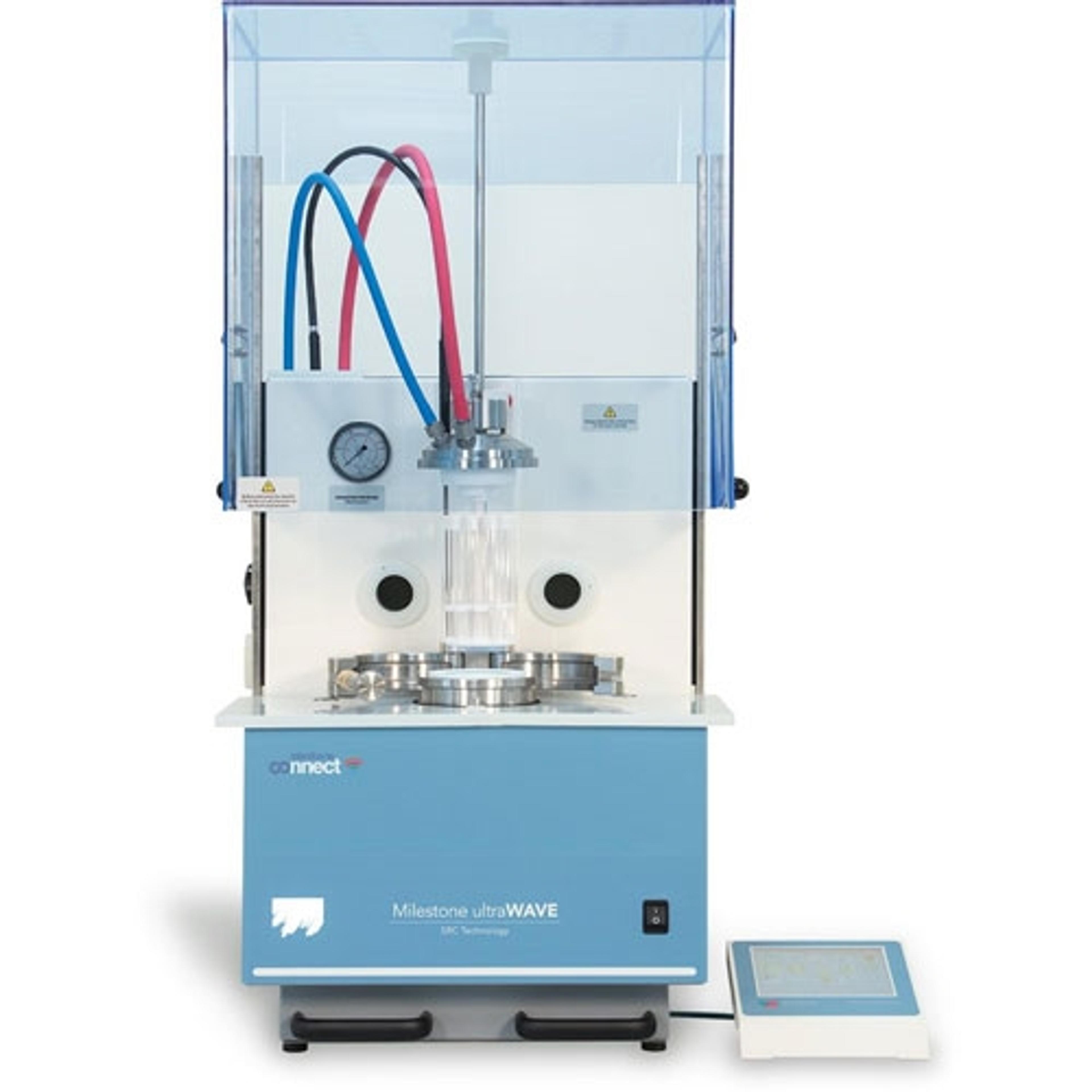
ultraWAVE SRC (Single Reaction Chamber) Microwave Digestion System
MilestoneultraWAVE has already revolutionized and enhanced the way analytical chemists think to sample preparation for trace metal analysis in hundreds of laboratories all over the world. ultraWAVE is based on the SRC (Single Reaction Chamber technology), invented by Milestone several years ago ( EP0728038B1 ). SRC technology achieves extraordinary performance capabilities combining microwave heating with a high-pressure reactor which acts simultaneously as microwave cavity and vessel.
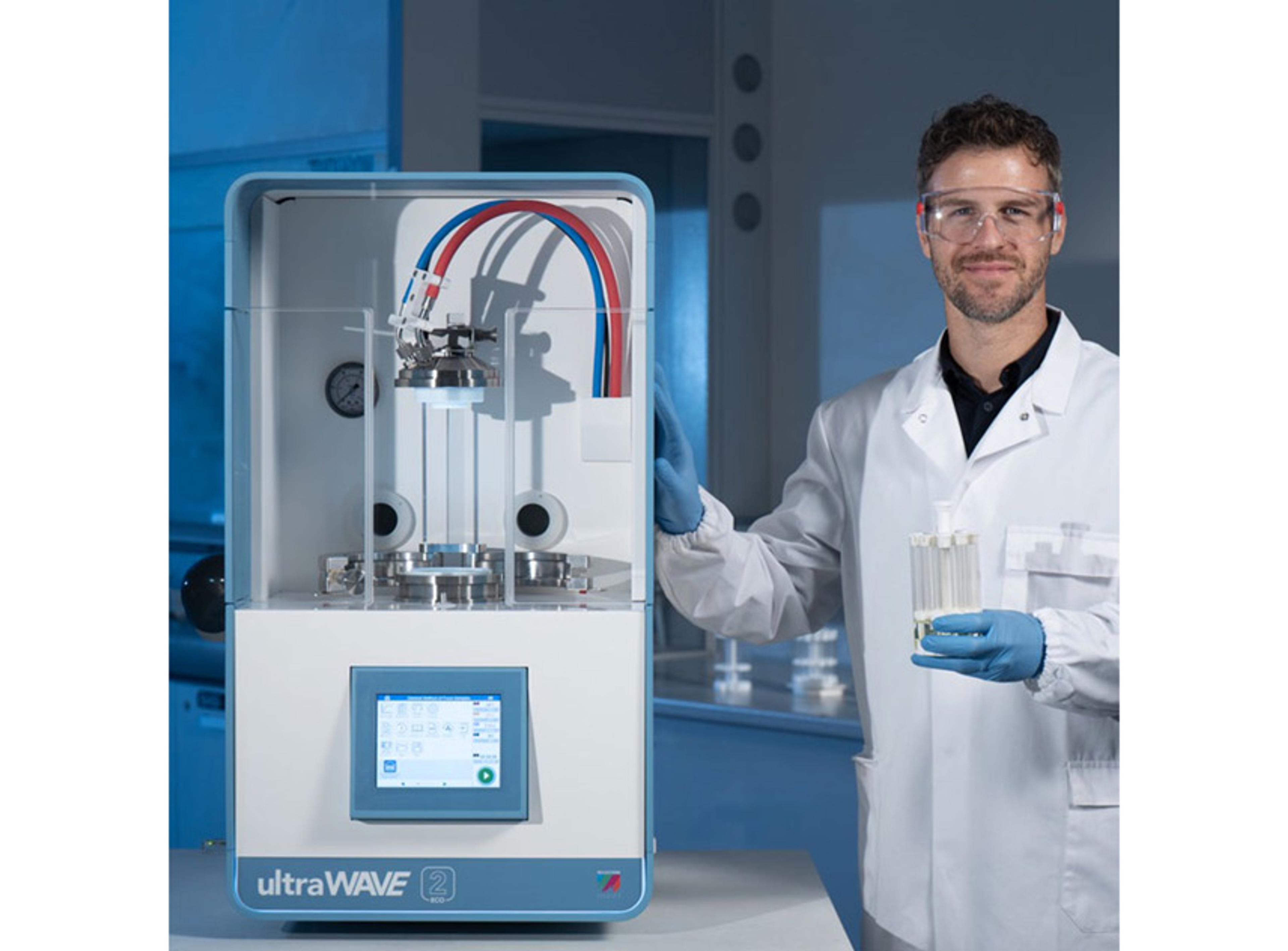
ultraWAVE 2 eco Single Reaction Chamber Microwave Digestion System
MilestoneThe ultraWAVE 2 eco brings these core advantages to routine and regulated workflows in an accessible, right-sized design. It delivers dependable digestion performance, simplified daily operation, and flexible capacity for food, environmental, pharma, polymers, and more, making Milestone SRC the practical choice for modern laboratories.
ultraWAVE 3 SRC (Single Reaction Chamber) Microwave Digestion System
MilestoneThe features of the new ultraWAVE 3 merge with those already intrinsic in the SRC technology so that labs will experience higher performance, greater productivity, and more streamlined workflow, providing them with improved competitiveness and a lower cost of ownership. Thanks to its superior digestion capabilities that result from its higher temperature and pressure capabilities, ultraWAVE 3 microwave system provides greater digestion efficiency, making it an ideal solution to address these