
qPCR results improved by novel microplate design

Two-component design minimizes risk of evaporation related qPCR inaccuracies

29 Aug 2024
Product news

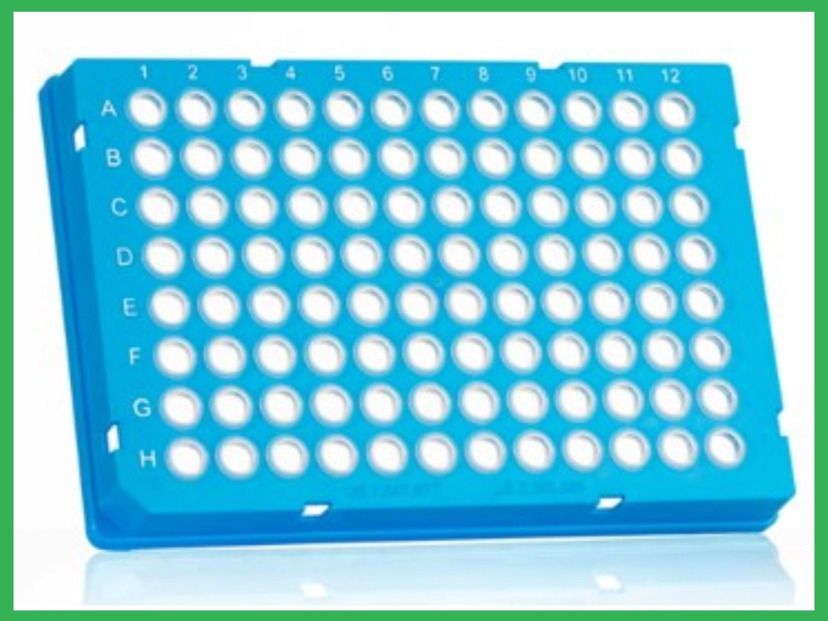
FrameStar® 96 Well Skirted PCR Plate

FrameStar® 96 Well Skirted PCR Plate

Azenta Life Sciences reports how the two-component design of its FrameStar® microplate range reduces range reduces thermal expansion and sample evaporation leading to improved consistency of PCR results.

Many commercially available PCR and qPCR plates are based on polypropylene designs because of its chemical inertness and that ultra-thin tube walls can be moulded enabling fast temperature transfer. While polypropylene is the standard material for PCR consumables, thermal expansion and evaporation properties reduce its suitability for applications including qPCR and next-generation sequencing. FrameStar PCR plates employ a novel two-component design consisting of polypropylene tubes in a polycarbonate frame.

In a study* carried out by Emily Flowers, Hanna Oldfield and Gerrit Gutzke, the authors demonstrated how FrameStar PCR plates minimize the problem of evaporation related qPCR inaccuracies due to their two-component design. The reduced risk of evaporation using these two-component plates facilitates the miniaturisation of reaction volumes and therefore provides opportunities for savings relating to lower use of expensive PCR reagents.

Study data also illustrated the benefits of using polycarbonate in the FrameStar PCR plate design. Using a more rigid plate frame which does not alter size or shape during PCR reduces distortion and weakens seal attachment to produce more reliable data for quantification.

FrameStar PCR plates are available in 96- and 384-well formats, with a choice of multiple well-frame colour combinations. The 384-well plates are recommended for low volume PCR. The 96-well plates are available in low and standard (high profile) and come with a variety of skirt lengths (non, semi, and fully skirted).

*Influence of PCR consumables on the accuracy of real-time PCR experiments

Want the latest science news straight to your inbox? Become a SelectScience member for free today>>

Links

Tags

PCR and Thermal CyclingPolymerase chain reaction (PCR) kits and thermal cyclers are used for the in vitro amplification of DNA permitting subsequent analysis and experimental procedures. Explore a range of high-quality polymerase, primers and nucleotides or simplify your workflow with a PCR mastermix. Find reverse transcription PCR (RT-PCR) and cDNA synthesis kits for RNA products and libraries. Quantitatively measure the amplification of DNA with real-time PCR (qPCR) and droplet digital PCR (ddPCR) kits and systems, and discover automated PCR setup solutions to increase throughput. Alternative DNA amplification methods also include recombinase polymerase amplification (RPA) kits. Find the best PCR kits and thermal cyclers and purification equipment in our peer-reviewed product directory: compare products, check customer reviews and receive pricing direct from manufacturers.Next Generation SequencingNext-generation sequencing (NGS), also known as whole-genome sequencing, high-throughput sequencing and massive parallel sequencing, produces and analyses thousands to millions of nucleotide sequences at once. Sequencing systems operate via varying technologies depending on the manufacturer, including sequencing by synthesis, ligation, pyrosequencing, ion semiconductor and single-molecule real-time sequencing. For NGS, library preparation is paramount to successful sequencing. In this section, explore a range of library preparation kits, from targeted, amplicon-based or hybridization-based kits including epigenomic, transcriptomic and genomic workflows to fragmentation kits. Find the best next-generation sequencing products in our peer-reviewed product directory: compare products, check customer reviews and receive pricing direct from manufacturers.qPCRQuantitative PCR (qPCR) is a molecular biology technique used to amplify and measure the amount of a specific DNA or RNA target. It plays a crucial role in gene expression analysis, pathogen detection, and quantifying DNA or RNA in various applications. Real-time PCR provides precise, quantitative results and is widely used in research, diagnostics, and clinical studies. Browse our peer-reviewed product directory to find the best qPCR solutions; compare products, check reviews, and get pricing directly from manufacturers.Sample Evaporation
qPCR results improved by novel microplate design