Pharmaceutical CRO Teams Up with AB SCIEX and Eksigent to Accelerate Use of Dried Blood Spot Analysis for Drug Discovery and Development

15 Mar 2011
bridget bridget
Laboratory Director

Product news

AB SCIEX, a global leader in life science analytical technologies, and Alturas Analytics Inc., a leading provider of LC/MS contract research services for the pharmaceutical and biotech industries, today announced a collaboration to accelerate the adoption of dried blood spot (DBS) analysis for drug discovery & development. This analysis is designed to help pharmaceutical companies save costs and increase productivity by simplifying the collection, storage and shipment of samples for pre-clinical and clinical studies in the drug development process.

As part of the collaboration, scientists at Alturas are using QTRAP® 5500 technology from AB SCIEX as well as novel micro-flow chromatography technology from Eksigent to further develop novel workflows based on microflow LC/MS (liquid chromatography/mass spectrometry) for dried blood spot analysis and validate them to ensure they meet Alturas' Quality Assurance requirements. The new workflows are designed to require smaller sample volumes and provide sensitivity and low coefficient of variations. Compared to traditional bioanalysis, dried blood spot analysis requires fewer animals during preclinical trials and less blood drawn during clinical trials. With this approach, scientists can obtain the same or better information than currently possible with traditional sampling techniques.

The viability of dried blood spot analysis in pharmaceutical science is enhanced by dramatic increases in sensitivity, which is available with the combination of the AB SCIEX QTRAP® 5500 System and the Eksigent ExpressHT Ultra LC system. The AB SCIEX QTRAP® 5500 System merges high sensitivity and speed on a platform that integrates quantitative and qualitative analysis, representing a more versatile type of triple quadrupole than other systems. The Eksigent system provides the advantages of high pressure micro-flow LC/MS and ease of operation.

The new workflows that Alturas scientists are developing for use across the industry utilize MRM3 capabilities - uniquely available on the QTRAP system - eliminate the interference traditionally associated with dried matrix spot analysis, help expand the limits of quantitation and improve selectivity to a level required by drug discovery scientists. The high performance of the AB SCIEX as well as the power of the Eksigent system also reduce the time needed to conduct analysis, boosting productivity.

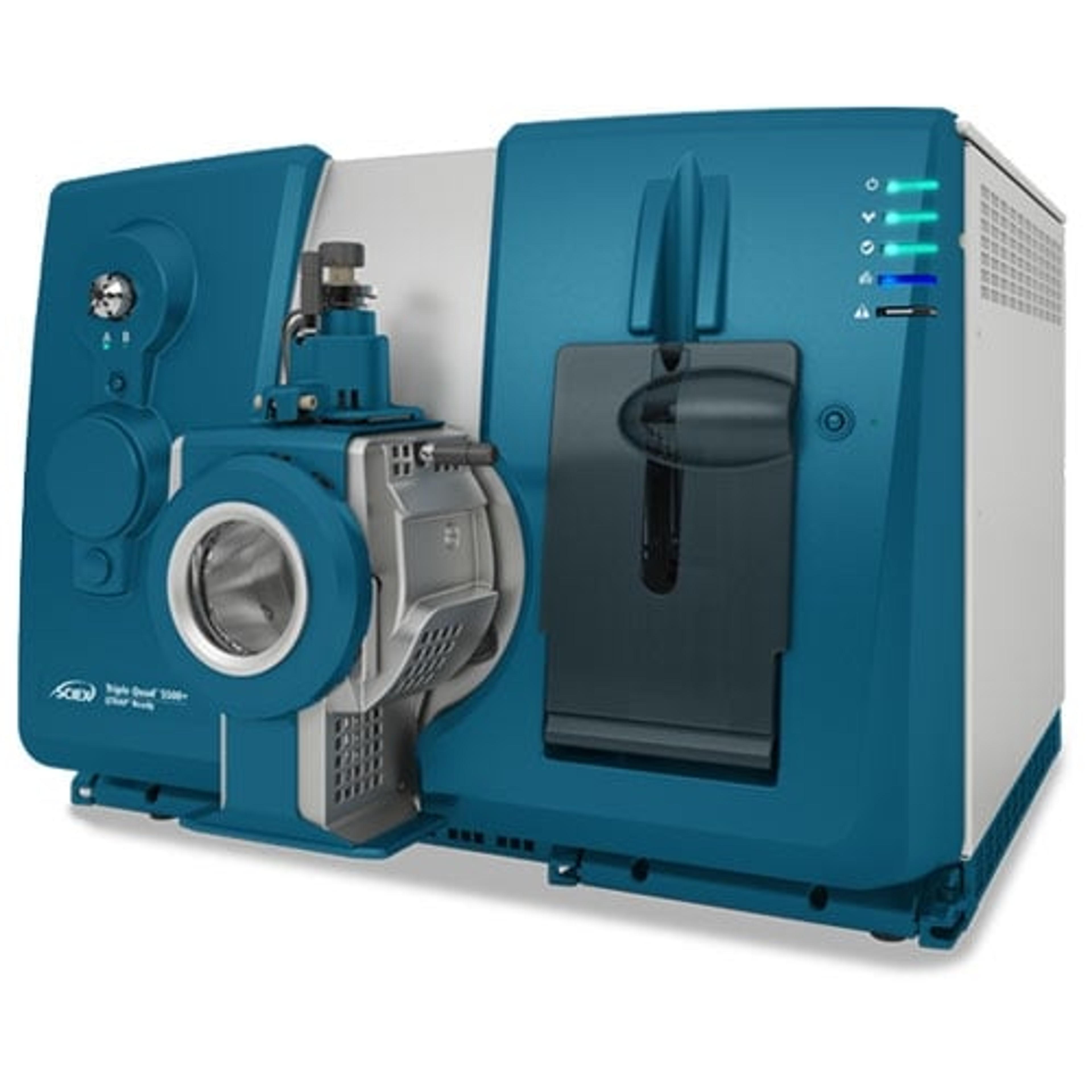
Triple Quad 5500+ system

SCIEX

The Triple Quad 5500+ system is designed to conquer your laboratory’s most complex workflows and opportunities. This LC-MS/MS system promises to provide the sensitivity and performance to meet analytical and regulatory demands for low-level trace detection with ease.

(15)

Links

Tags

LC-MSLC-MS (liquid chromatography-mass spectrometry) systems and equipment are used for separation and quantitative analysis of complex mixtures, combining liquid chromatography and mass spectrometry. Quantify proteins, contaminants, pesticides or screen for drug metabolites with a high level of sensitivity. LC-MS systems and equipment include reverse phase, normal phase and specialized columns integrated with various MS detectors such as time-of-flight (TOF), quadrupole, orbitrap or ion trap mass analyzers. LC-MS/MS instruments equipped with a qTOF or triple quadrupole analyzer give greater sensitivity and resolving power to your analysis. Find the best LC-MS equipment in our peer-reviewed product directory: compare products, check customer reviews and receive pricing direct from manufacturers.Combinatorial ChemistryCombinatorial chemistry, also known as combichem, is a technique used in drug discovery to create libraries of structurally related compounds. A library is generated by synthesis with a chemical reactor system or by computer-based modeling of compound combinations. When undertaking combinatorial chemistry consider reagents, buffers, resins and standards.High-Throughput ScreeningHigh-throughput screening (HTS) is an automated drug discovery technique for identification of active compounds against a compound library. Use HTS readers and integrated assay preparation / analysis workstations to screen your compounds. Identify active compounds against various HTS libraries, including membranes, proteins and peptides and HTS cell lines. Find the best high-throughput screening products in our peer-reviewed product directory: compare products, check customer reviews and receive pricing direct from manufacturers.Assay AssemblyAssay Assembly is technique used in drug discovery to develop assays to test the cytotoxicity, genotoxicity, or other activities of a compound on a cell. Assay assembly requires chip assembly, a delivery system and a detection and analysis method. Beneficial features of assay kits or automated systems include high-throughput, high speed and sensitivity and low signal to noise ratio.Medicinal ChemistryMedicinal chemistry is a broad discipline encompassing the design, identification, synthesis and development of chemicals in drug discovery. It includes a number of techniques covering structural biology, synthetic chemistry and molecular biology. Technologies used in medicinal chemistry include ADME, lab-on-a-chip, high content screening and assay assembly.Process ChemistryProcess chemistry is an important stage of drug development for scaling-up drug production or chemical synthesis reactions. It is useful for optimizing economical and efficient drug production. Process chemistry uses reactors and pump systems as well as reagents, standards and buffers.High-Content ScreeningHigh-content screening (HCS), also known as high-content analysis (HCA), is a high-throughput technique used in drug discovery to identify substances that alter the phenotype of cells. HCS uses fluorescent microscopic imaging and automated image analysis to investigate cellular events such as apoptosis, cell viability, GPCR activation, oxide production, neurite outgrowth, and cell signaling. Find the best fluorescent labeling reagents, cellular assays, and high-content imaging systems in our peer-reviewed product directory: compare products, check customer reviews and receive pricing direct from manufacturers.Biopharmaceutical AdvancesBiopharmaceutical advances follow the development of pharmaceuticals derived from biotechnology, also known as biotechnology medicines. Biopharmaceuticals may be produced from cell lines, plants, or microbial cells. Important considerations of biopharmaceutical use include application, cost, production process and purification.Dried Blood Spots