
Optibrium Adds 3D Structure-Based Design with Introduction of StarDrop 6.3
Seamless link between 2D and 3D structure-activity relationships guides more efficient compound optimization
10 Mar 2016Optibrium™, a developer of software for small molecule drug discovery and optimization, announce the launch of version 6.3 of the StarDrop™ platform.
The release introduces a new module providing seamless access to best-in-class structure-based design technologies, based on BioSolveIT's SeeSAR™ package, and follows the companies' recently announced collaboration. The addition of intuitive visualization of 3-dimensional (3D) protein-ligand interactions to StarDrop results in a fully integrated environment for analysis and visualization of compound data, coupled with a comprehensive range of ligand- and structure-based design capabilities that guide the optimization of high-quality compounds.
The new SeeSAR™ module for StarDrop provides a state-of-the-art and scientifically rigorous approach to understanding the binding of compounds in their protein targets in 3D. Users can import ligand and protein structures, derived from crystal structures or predicted with any docking software, and visualize the key interactions driving potency. This is seamlessly linked to StarDrop’s cheminformatics methods based on 2-dimensional (2D) compound structure and its unique Card View™ approach to interpreting the resulting structure-activity relationships (SAR). This combination enables chemists to better understand and rationalize the SAR within their project chemistry. StarDrop's suite of predictive modelling and de novo design capabilities guide further improvements in a truly multi-parameter optimization environment.
In addition to the new module, StarDrop 6.3 will also bring further enhancements to its existing capabilities, including powerful chemical sub-structure searching, an interactive designer for StarDrop's Card View and updates to both the Derek Nexus™ module for toxicity prediction and the BIOSTER™ database of precedented chemistry transformations.
Dr Matthew Segall, Optibrium's CEO, commented: "We are delighted to announce this exciting new version of StarDrop, including the SeeSAR™ module developed with our partners at BioSolveIT. In the short time since its announcement, our collaboration has already produced enhancements to both SeeSAR™ and StarDrop. This latest addition to StarDrop provides users with a complete compound design and optimization platform in a fully integrated, intuitive user interface."
"We are proud to collaborate with Optibrium on this powerful combination of 2D and 3D worlds. Merging our user-friendly technologies will save project team's time and enable better research as visually informed decisions literally guide scientists to design the best molecules to be synthesized next," commented Dr Christian Lemmen, BioSolveIT's CEO.
A preview of StarDrop 6.3 will be on show at the American Chemical Society National Meeting, 13th-17th March 2016, in San Diego with demonstrations on booth #1227. Attendees at this meeting can also gain 'hands on' experience of these new capabilities during an interactive workshop at 3.30 pm on Monday 14th March.
Related products
Request Quote for All Products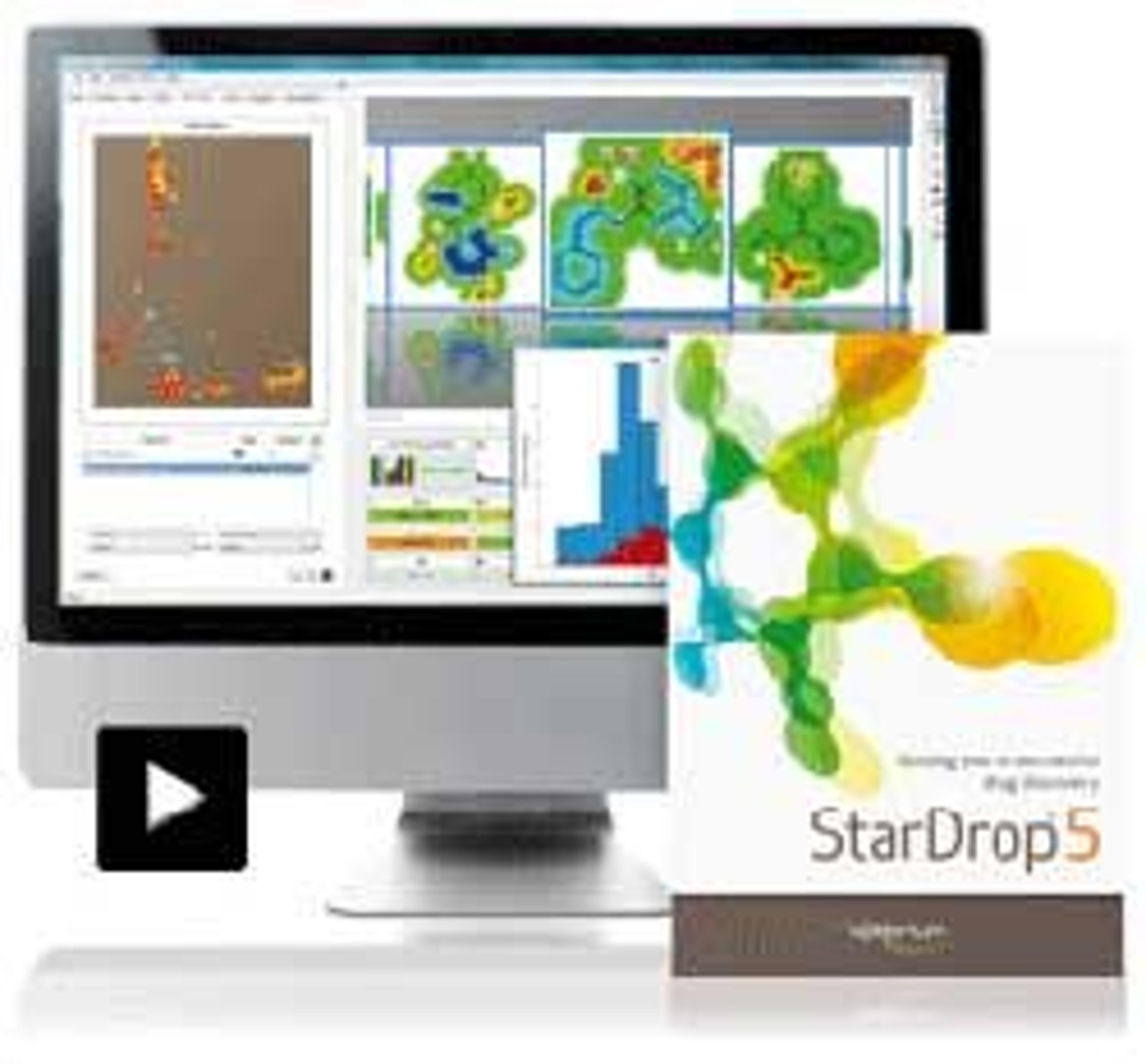
StarDrop 5 - Drug Discovery Software
OptibriumStarDrop is a suite of software that helps you to deliver optimally balanced, effective drugs - fast StarDrop works by evaluating complex data, which is often uncertain because of experimental variability or predictive error. In scoring this data, it brings confidence and intuitive simplicity to decision-making: guiding and validating the direction you take and which compounds you prioritise. Its instantly interactive tools then enable you to efficiently explore ways to further improve your chosen chemistries.Highly visual and easy-to-use, StarDrop also works with your existing IT systems to integrate a multiplicity of data sources. The latest release, version 5.5, comes with extensive data visualisation tools, which now include interactive 3D scatter and chemical space plots.StarDrop's modules include predictive ADME models, P450 metabolism prediction, automatic model building, application of 3D SAR based on Cresset's Field technology, knowledge based toxicity prediction through Derek Nexus while the Nova module can be used for automatically generating new compound ideas in parrallel with the BIOSTER database.StarDrop 5 - Drug Discovery Software Features: Probabilistic Scoring Chemical space Glowing Molecule Data visualisation R-group analysis StarDrop 5 Optional Modules: ADME QSAR Auto-Modeller Nova BIOSTER P450 torch3D Derek Nexus MPO Explorer