
Nuclera launches antibody screening service to accelerate AI driven discovery
Rapid binder triage, of AI-driven candidate sets, enables early elimination of non-binders ahead of costly downstream workflows
13 May 2026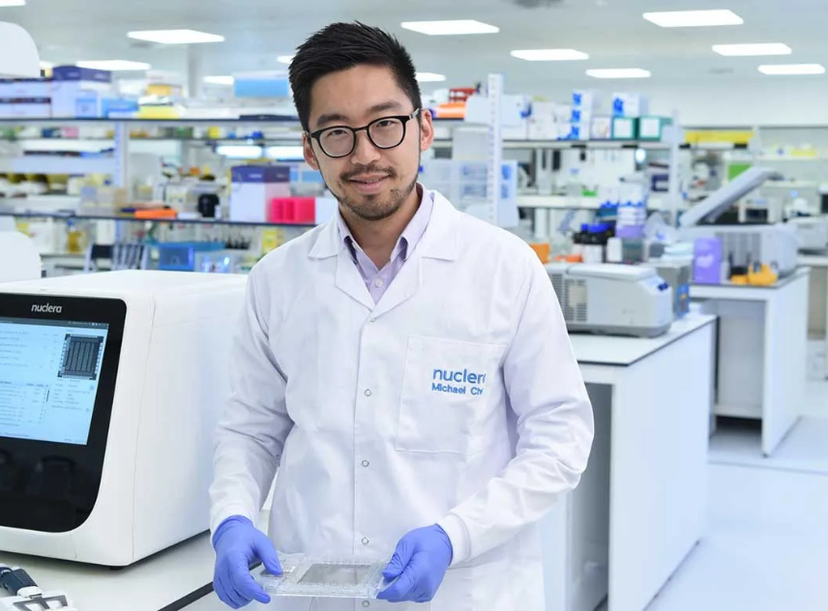
Michael Chen, CEO and co-founder, Nuclera
Nuclera, a biotechnology company enabling rapid access to high-quality proteins, has launched a new antibody screening service. The service is designed to streamline the transition from antibody hit generation to lead selection by helping researchers identify the most promising antibody candidates before committing to costly mammalian expression and functional testing, addressing a key bottleneck in AI-driven antibody discovery.
New antibody screening service bridges hit generation and lead selection
Nuclera’s antibody screening service delivers a rapid upstream triage workflow that identifies viable binders early in the process between in silico hit generation and mammalian scale-up. The service is designed for researchers working with large antibody libraries, including those generated by AI and machine learning platforms, who need to prioritize candidates for downstream validation.
The launch of this service follows Nuclera’s Series C extension, which has enabled the integration of antibody expression and binding validation to support end-to-end antibody discovery workflows.
High-throughput cell-free expression and binding assays
The antibody screening service uses 96-plex binary cell-free expression and binding assays to screen full-length antibody libraries in parallel. This high-throughput approach rapidly narrows large candidate sets to a focused subset of confirmed binders.
Once prioritized hits are identified, surface plasmon resonance (SPR) is performed to characterize binding kinetics. This workflow is designed to generate decision-grade binding data that can guide which antibody candidates progress to mammalian expression and functional testing.
Addressing bottlenecks in experimental antibody validation
Despite advances in bioinformatics and in silico antibody design, a major bottleneck remains in experimentally validating large numbers of antibody candidates. Traditional secondary screening methods are often slow and fragmented, leading to significant resources being spent on non-binders through costly processes.
As AI-driven approaches generate increasingly large antibody libraries, the need for rapid, cost-effective triage solutions has become more critical. Nuclera’s antibody screening service addresses this gap by converting large AI-generated libraries into experimental binding data and enabling early elimination of non-binders. This approach reserves expensive downstream biology for candidates proven to bind and accelerates progression to validated leads.
Dr. Michael Chen, CEO and co-founder, Nuclera, said, “Antibodies are one of the most important classes of therapeutic molecules, yet antibody discovery remains inefficient, with many initially promising candidates failing during downstream validation. A key bottleneck is the cost of recombinant antibody expression and binding validation, which limits the generation of high-quality data, and is holding back the full potential of AI/ML discovery."
"The launch of our antibody service addresses this challenge by enabling rapid triage of large candidate sets and delivering decision-grade binding data early in the discovery process at a competitive cost. By helping teams focus on the most promising candidates before scale-up, we are taking an important step toward enabling more effective use of AI in antibody discovery.”
Want the latest science news straight to your inbox? Become a SelectScience member for free today>>
Tags
Frequently asked questions
Show frequently asked questions
How does Nuclera’s new antibody screening service streamline AI-driven antibody discovery?
Nuclera’s antibody screening service provides a rapid upstream triage workflow between in silico hit generation and mammalian scale-up. Using 96-plex binary cell-free expression and binding assays, the service screens full-length antibody libraries in parallel to quickly identify viable binders. Prioritized hits are then characterized by surface plasmon resonance (SPR) to generate decision-grade binding data, helping researchers select the most promising antibody candidates before committing to costly mammalian expression and functional testing.
What bottlenecks in experimental antibody validation does Nuclera’s high-throughput screening platform address for AI-generated antibody libraries?
Nuclera’s high-throughput antibody screening platform addresses the major bottleneck of experimentally validating large numbers of antibody candidates, particularly those generated by AI and machine learning platforms.
Traditional secondary screening methods are slow and fragmented, often leading to significant resources being spent on non-binders. By converting large AI-generated antibody libraries into experimental binding data via 96-plex cell-free expression and binding assays, Nuclera enables early elimination of non-binders and reserves expensive downstream biology for candidates proven to bind, accelerating progression to validated antibody leads.
How does Nuclera’s integrated antibody expression and binding validation workflow support more effective use of AI/ML in therapeutic antibody discovery?
Following its Series C extension, Nuclera has integrated antibody expression and binding validation to support end-to-end antibody discovery workflows. According to Dr. Michael Chen, CEO and co-founder of Nuclera, the new antibody screening service tackles the high cost of recombinant antibody expression and binding validation that limits high-quality data generation and holds back the full potential of AI/ML discovery.
By enabling rapid triage of large candidate sets and delivering decision-grade binding data early in the discovery process at a competitive cost, the service helps research teams focus on the most promising therapeutic antibody candidates before scale-up, thereby enabling more effective use of AI and machine learning in antibody discovery.