
Next-Generation NMR Platform and Console Takes Magnetic Resonance Research to a New Level
6 Apr 2017
At the 58th Experimental Nuclear Magnetic Resonance Conference Bruker announces the launch of the AVANCE NEO platform, Bruker’s next-generation NMR electronics console in the AVANCE series. The all new AVANCE NEO surpasses the already very advanced AVANCE III HD by offering even faster control, improved dynamic range and enhanced flexibility and scalability. The AVANCE NEO frequency range is extended to 1.2 GHz and beyond, and the AVANCE NEO also features a novel transceiver architecture, which combines transmit and receive functionality for every channel , offering enhanced experimental control, especially for the rapidly increasing number of multi-receiver NMR applications. As a result of the new ‘Transceive’ architecture, each AVANCE NEO NMR system now offers multiple receivers as a standard feature.
The AVANCE III series has been the most successful NMR platform of the last 10 years. The all-new AVANCE NEO is the definitive research platform for enhanced multi-channel / multi-receive NMR experiments. The novel transceiver architecture essentially enables each channel of the AVANCE NEO to operate as a fully functional spectrometer. Novel NMR multi-receive experiments can be implemented for any combination of nuclei, with 4 receiver channels now standard for typical HCN-D biological NMR systems.
The AVANCE NEO supports NMR pulse programs developed on previous AVANCE platforms, plus new multi-receive pulse sequencing and experimental design capabilities never before available in the field. Even faster switching times, expanded on-board memory (1 GB/channel), an embedded acquisition server and several user enhancements make the AVANCE NEO the most advanced NMR research platform for the scientific community today.
Dr. Werner Maas, President of the Bruker BioSpin Magnetic Resonance Spectroscopy division, commented: “Bruker is very committed to enable our customers to drive rapid, continued innovation in magnetic resonance. The forward-thinking architecture behind the AVANCE NEO enables our customers to design leading-edge NMR experiments, with even better performance, flexibility and stability.”
With the introduction of the AVANCE NEO, Bruker also launches its new NMR software, TopSpin® 4, which introduces the forward-thinking concept of an embedded acquisition server with client-server architecture. This permits running the spectrometer independent of the client computer, and provides users with the opportunity to control the system via their chosen operating system. Both the AVANCE NEO platform and TopSpin 4 software are now available for high-end and research NMR spectrometers up to 1.2 GHz, while the AVANCE NanoBay system is offered for routine, small molecule applications.
The AVANCE NEO has undergone extensive Bruker applications laboratory and customer field testing, and is already successfully producing excellent results at numerous key customer sites. For example, Professor Muriel Delepierre of the Institut Pasteur in Paris, stated: “We are very pleased to have received the next-generation AVANCE NEO with our recently installed 800 MHz system. We are delighted with our initial results, the flexibility offered through the large database of existing experiments, and with the outstanding sensitivity in combination with our CryoProbe™.”
Related products
Request Quote for All Products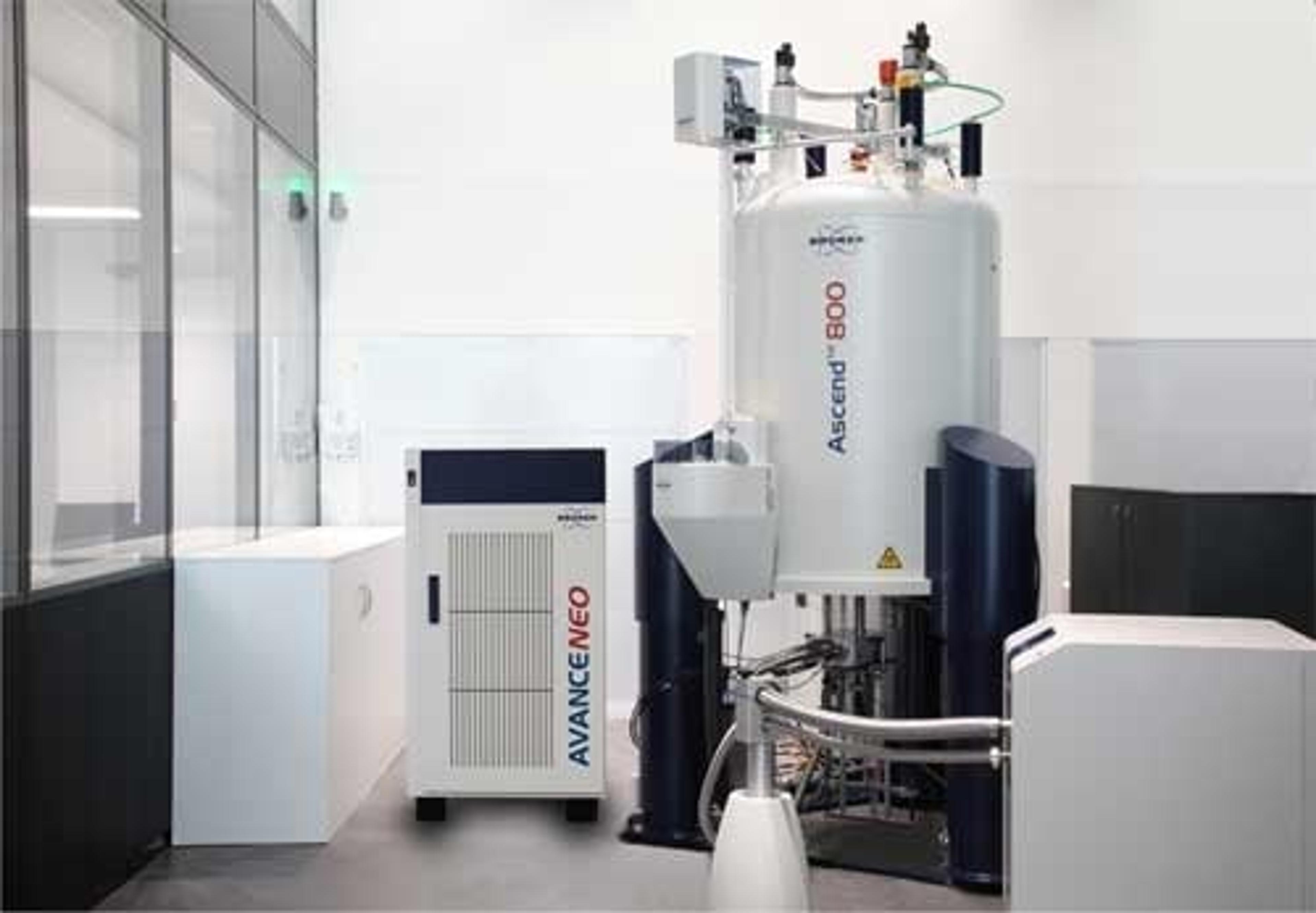
AVANCE NEO
Bruker BioSpinThe AVANCE NEO represents the next generation in the very successful AVANCE series product line, which has established Bruker as the global technology and market leader in NMR.