
New Bio-Inert 1.8µm Yarra® GFC/SEC Column Delivers Economical Biomolecule Characterization
12 Oct 2015
Phenomenex Inc., a global leader in the research and manufacture of advanced technologies for the separation sciences, introduces Yarra 1.8µm SEC-X150 – a high-resolution gel filtration (GFC)/aqueous size-exclusion (SEC) column for the separation of biomolecules on HPLC and UHPLC systems. The proprietary new Yarra surface chemistry, combined with bio-inert column hardware, reduces sample adsorption compared to other GFC/SEC columns currently on the market, providing improved recovery and more accurate quantitation of biomolecules.
With a wide molecular weight range (1 – 450 kDa) and high efficiency, Yarra SEC-X150 columns are well suited for the ultra-high-resolution separation and characterization of proteins and peptides including monoclonal antibodies (mAbs), antibody aggregates, antibody drug conjugates (ADCs), insulin and biosimilars on UHPLC systems.
Because Yarra SEC-X150 columns typically operate at backpressures below 3,500 psi, they can deliver improved performance (greater resolution, better peak shape and faster analysis time) for existing 3µm and 5µm GFC/SEC column methods on HPLC systems. Designed and manufactured for stability, reproducibility and long product life, the new Yarra SEC-X150 and the existing six Yarra 3µm/5µm phases are all supported by an unmatched product quality and performance guarantee.
“GFC/SEC columns currently available from other suppliers are expensive and have left customers frustrated with tedious, solvent- and sample-wasting column priming protocols,” explained Simon Lomas, strategic marketing manager for Phenomenex. “The new Yarra SEC-X150 utilizes greater inertness to overcome sample adsorption while offering an extended molecular range and increased efficiency for better biomolecule characterization, all at an extremely affordable price point.”
Related products
Request Quote for All Products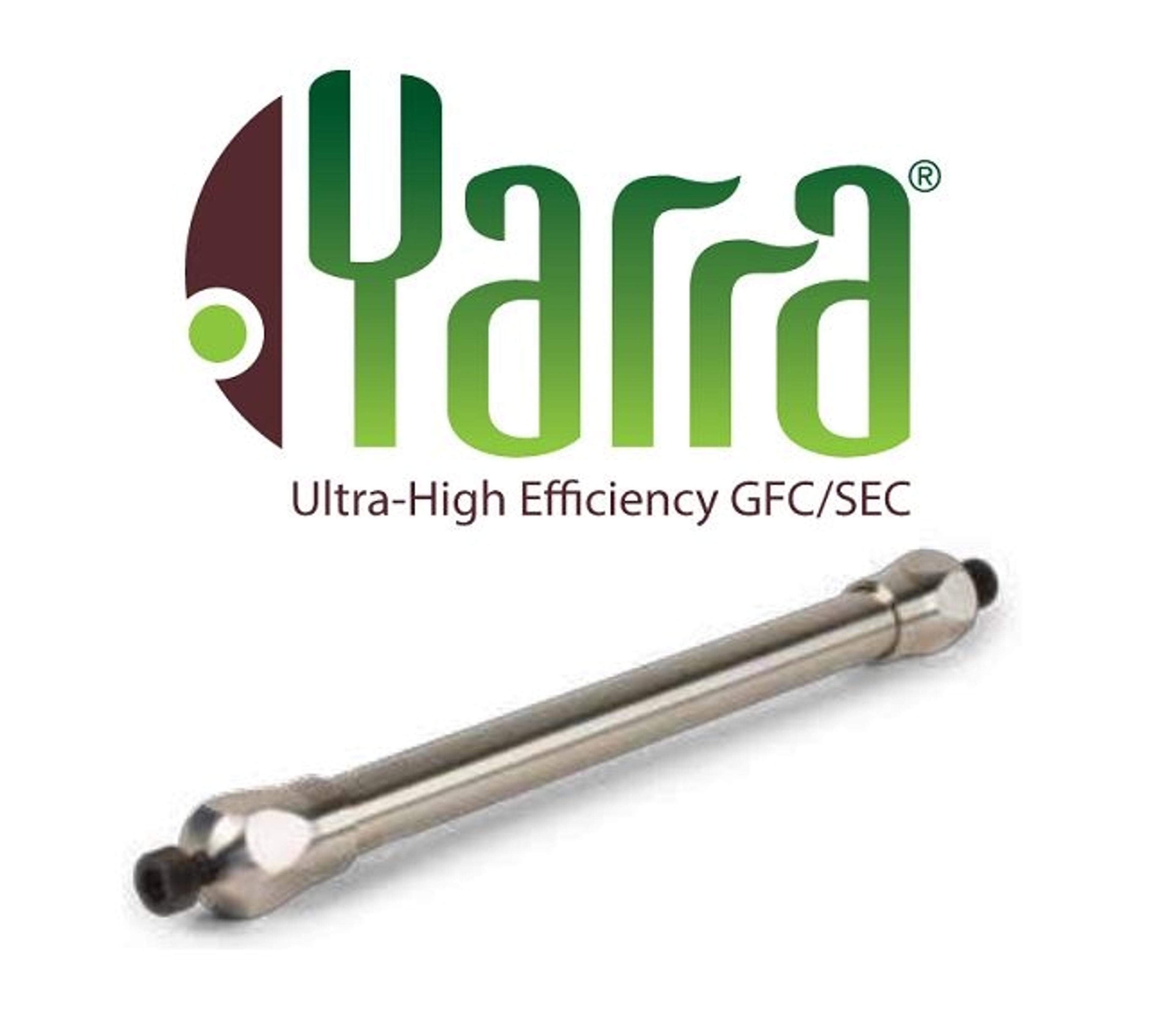
Yarra Ultra-High Efficiency Aqueous GFC/SEC Columns
Phenomenex IncStarting with 3 µm ultra-pure silica, Yarra particles are densely bonded with a proprietary surface chemistry. Coupled with tight particle and pore size distribution as well as strict packing and QC specifications, Yarra GFC columns allow for the highest efficiencies and resolution possible. Yarra columns are offered in three phases (SEC-2000, 3000, and 4000), and are ideal for the separation of small to large proteins, as well as biological therapeutics and biosimilars.