ResourceSpectroscopy

Mpact reduces acid consumption by around 90% with Milestone traceCLEAN

15 Sept 2026

Discover how Mpact, Southern Africa’s largest paper and plastics packaging and recycling business, has improved the efficiency and safety of its laboratory cleaning workflow with the implementation of Milestone traceCLEAN.

Trace-metal analysis plays an important role in Mpact’s regulatory compliance activities. The laboratory must measure very low concentrations of regulated metals in packaging materials and demonstrate compliance with food-contact requirements.

Before adopting traceCLEAN, Mpact relied on a conventional manual acid-cleaning procedure. In addition to being time-consuming, the process involved significant acid consumption, hazardous waste disposal costs, and potential operator exposure to corrosive acids and acid vapours.

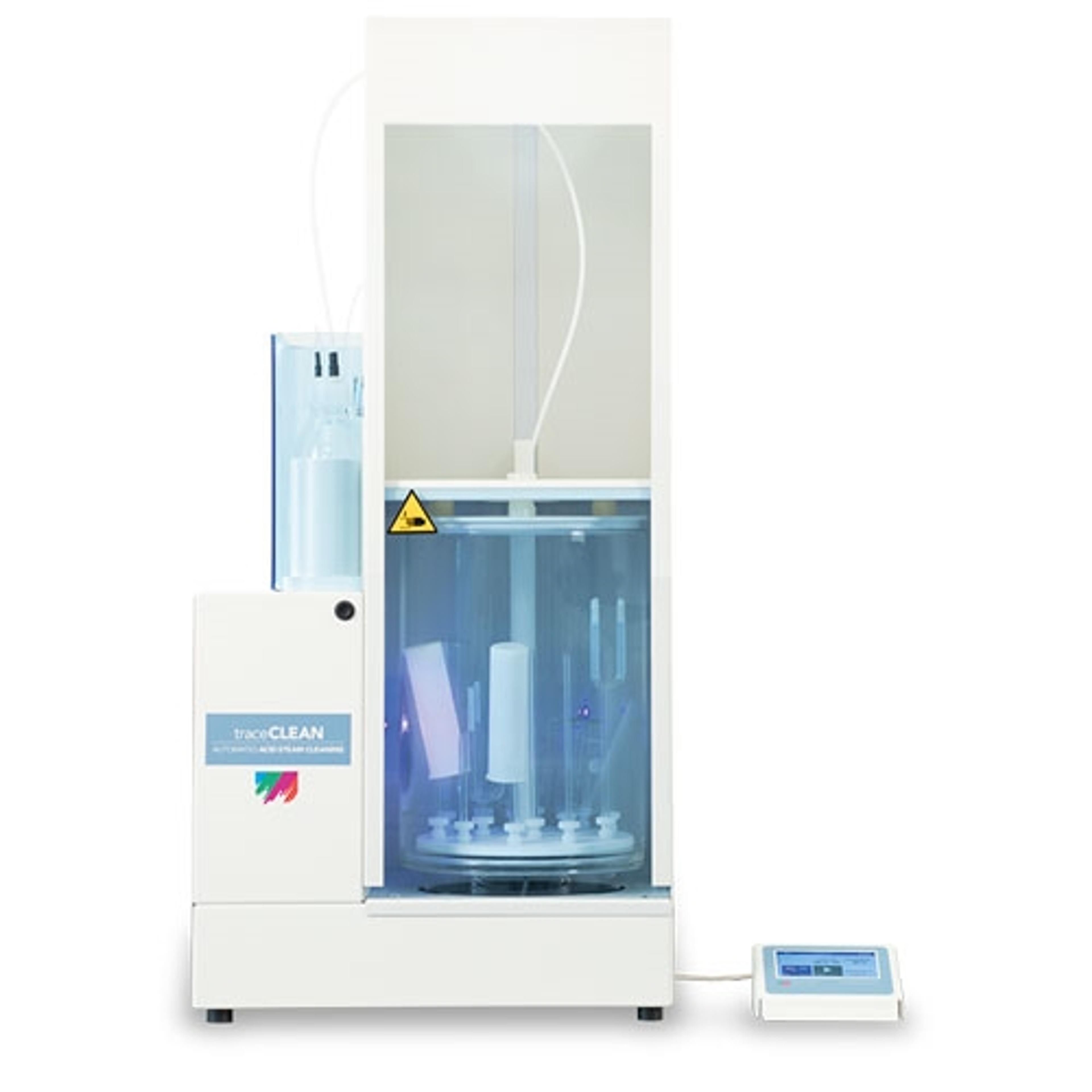
Milestone traceCLEAN automates the process using freshly distilled hot acid vapours inside a sealed chamber. According to Mpact, the system has reduced acid consumption by approximately 90%, from around 5 L to 500 mL for a batch of glassware. This reduction also translates into lower acid purchasing costs and significantly less hazardous chemical waste requiring treatment and disposal.

The closed, automated process also limits manual handling, helping improve operator safety and reduce the risk of cross-contamination.

Resource details:

Resource type: Case study
Page count: 3
Read time: 5 mins

traceCLEAN Acid steam cleaning system

Milestone

Cleaning various items used in ultra-trace analysis work is a critically important laboratory routine. traceCLEAN assures best cleaning quality of your TFM, glass and quartz parts for ICP/ICP-MS accessories. Any trace metal contaminants stay within the reservoir and do not come in contact with the cleaned trace accessories. The cleaning process with the traceCLEAN takes about an hour, enhancing the overall lab workflow. 

(0)

Links

Tags

Mass SpectrometryMass spectrometry (MS) is a powerful analytical technique used to identify and quantify molecules based on the mass-to-charge ratio of gas-phase ions. It provides detailed information about the structure, composition, and properties of compounds and is widely used across fields such as environmental monitoring, materials science, drug discovery and development, food and beverage testing, and wider chemical research. Key MS techniques include tandem mass spectrometry (MS/MS), liquid chromatography–mass spectrometry (LS-MS) and inductively coupled plasma (ICP-MS). Choosing from these wide range of techniques and technologies can be a daunting task, so keep up to date with scientific applications, performance expectations, and customer reviews here all in one place. Visit our product directory to receive quotes direct from the manufacturer. Atomic Absorption / Emission SpectroscopyAtomic absorption spectroscopy (AAS) and atomic emission spectroscopy (AES) — also called optical emission spectroscopy (OES) — are used to detect the elemental constituents in samples. Both techniques involve the atomization of a sample. Atomic absorption spectrometers may use a flame or furnace to create an atomic vapor of the sample before irradiation with spectral light. Optical emission spectrometers may use a flame, inductively coupled plasma (ICP), microwave plasma (MP) or spark arcs to atomize and excite the sample. At higher excitation energies, electrons can be emitted instead of photons, which can be useful for samples that can’t be atomized and for surface analysis. Explore electron spectroscopy equipment such as Auger spectrometers and photoelectron spectrometers for surface elemental analysis of samples. Find the best atomic absorption, photoelectron and optical emission spectrometers in our peer-reviewed product directory: compare products, check customer reviews and receive pricing direct from manufacturers.Washing EquipmentWashing equipment is more convenient than ever before with automated systems, integrated and multi-application systems available. For instance microplate washers can be programmable, combined with reagents dispensers and used for applications such as ELISA, multiplex assays and PCR clean up.