
MACHEREY-NAGEL, the manufacturer of NUCLEOSIL<sup>®</sup>, introduces the new NUCLEODUR<sup>®</sup> application booklet
15 Jan 2007The 53-page publication introduces all available NUCLEODUR® phases with various applications including HPLC columns, filled with the new high performance 1.8µm particles and a unique new C18 phase with outstanding shape selectivity (NUCLEODUR® C18 ISIS) for various separation problems.
Also introduced are NUCLEODUR® phases like the hydrophilic (polar) endcapped NUCLEODUR® C18 Pyramid phase and the the fully endcapped NUCLEODUR® 100-5 CN-RP HPLC column for reversed phase applications, which provide a broader scope in selectivity as C8 and C18 phases. The NUCLEODUR® C18 Pyramid can be used in mobile phase systems of up to 100% water and is particularly suited for the separation of polar compounds.
Moreover NUCLEODUR® C8 / C18 Gravity columns are presented. The special surface bonding technology and the low concentration of metal impurities make it possible to run the column at an extended pH working range from 1 – 11.
The dual mode NUCLEODUR® Sphinx RP phase is characterized by exceptional selectivity features generated by a well-balanced ratio of covalently bonded octadecyl- and phenyl groups. The combination of classical hydrophobic with π-π interactions (aromatic ring system) expands the scope of selectivity in comparison with conventional reversed phase packings. NUCLEODUR® Sphinx RP is particularly suited for the separation of molecules containing aromatic and multiple bonds. Different from standard phenyl phases NUCLEODUR® Sphinx RP is not susceptible to hydrolysis and is also suggested for LC/MS applications.
Further information can be found on the article webpage.
Related products
Request Quote for All Products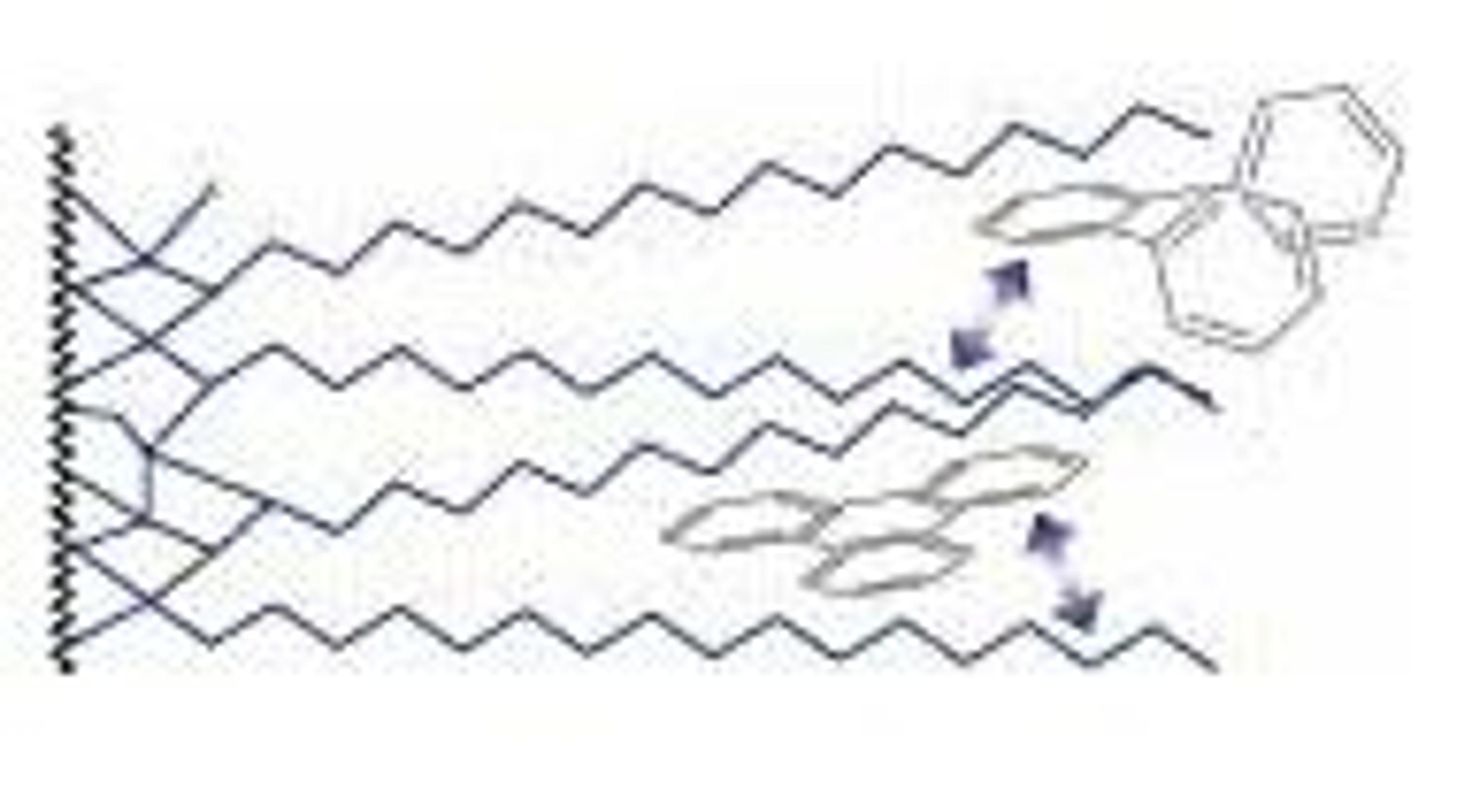
NUCLEODUR® C18 ISIS
MACHEREY-NAGEL GmbH & Co. KGA unique C18 phase with high steric selectivity • C18 phase with special polymeric surface modification • particle sizes 1.8 µm, 3 µm and 5 µm • exceptional steric selectivity • outstanding surface deactivation • pH stability 1 – 10 • broad range of applications: steroids, (o,p,m-) substituted aromatics, fat-soluble vitamins, positional isomers Surface modification By use of specific C18 silanes and appropriate polymeric bonding technologies a dense shield of alkyl chains protects the subjacent silica matrix. Elemental analysis of NUCLEODUR® C18 Isis shows a carbon load of 20%. The target crosslinking of the C18 chains on the surface enables the separation of compounds with similar molecular structure but different stereochemical properties. The separation of o-terphenyl and triphenylene is a concrete example to evaluate the selectivity potential of a reversed phase column in terms of the different shape of two molecules. The phenyl rings of o-terphenyl are twisted out of plane while triphenylene has a planar geometry. Surface deactivation The chromatography of basic analytes requires a high density of surface-bonded C18 silanes combined with a thorough endcapping procedure to keep silanol activity at a minimum. This ensures tailing-free elution of even strongly basic amino-containing compounds. Stability The applied special surface bonding technology also provides improved stability features for the NUCLEODUR® C18 Isis phase. The proof for this was given in a long-term test in which the decrease of plate counts for caffeine at pH 10 and 50 °C has been observed over a period of 200 hours and 2000 sample injections respectively.