Lumenera: INFINITY3S-1UR to Showcase at Neuroscience 2016

Ultra-Sensitive, 1.4 Megapixel CCD USB 3.0 Camera

25 Oct 2016

Lois Manton-O'Byrne, PhD
Executive Editor

Product news

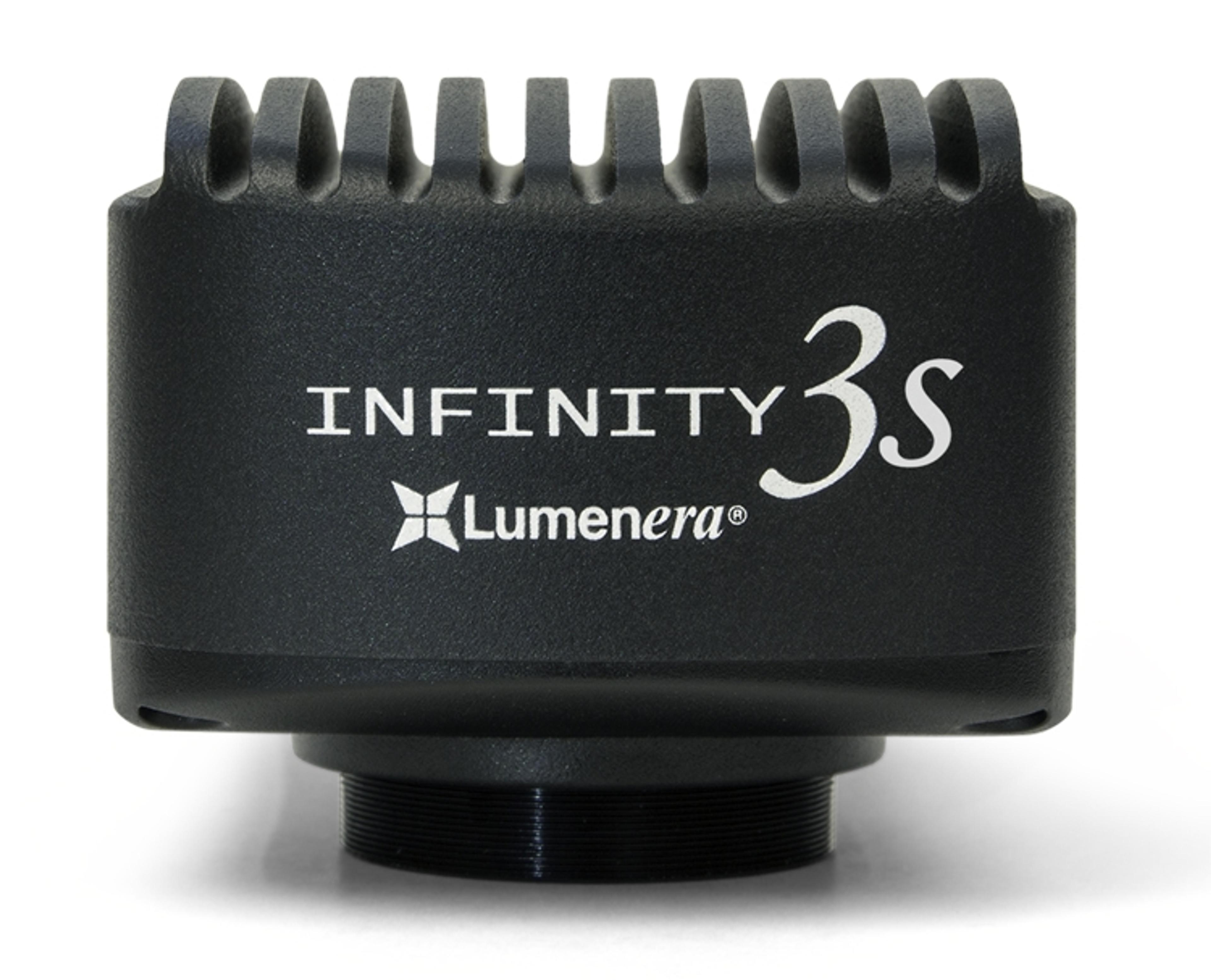
Lumenera’s INFINITY3S-1UR is a high-speed, ultra-sensitive research grade microscopy camera with 1.4 megapixel resolution. The camera incorporates Sony’s ICX825 CCD sensor, producing much higher dynamic range and sensitivity over the popular ICX285 sensor. The INFINITY3S-1UR has the unmatched light sensitivity needed for challenging low light applications such as fluorescence and NIR imaging. Lumenera's high-speed USB 3.0 data interface provides maximum allowable throughput where full resolution images can be sent to a host computer at an industry leading 60 fps, when using the monochrome camera model.

The Sony ICX825 CCD sensor produces a 53% improvement in sensitivity over the popular ICX285 sensor. This sensor technology offers extremely high quantum efficiency, high dynamic range, 6.45 x 6.45 μm pixels and very low noise of 5.9 e-. The research-grade designation of the INFINITY3S-1UR is a testament to low noise electronics, high-grade components and unique thermal management techniques.

  • 6dB increase in dynamic range vs ICX285
  • Increased sensitivity thus reducing exposure time and reducing photo bleaching in fluorescence applications
  • Increased frame rate of over 60fps vs 30fps for the ICX285

INFINITY Software: The INFINITY3S-1UR comes with Lumenera's fully-featured INFINITY ANALYZE, an image capture and analysis software package offering camera control, measurement, annotation, tiling and post capture enhancement. Camera and software combine to create a complete microscopy imaging solution for your application.

High Speed USB 3.0 Interface: The INFINITY3S-1UR uses the latest USB 3.0 technology at 5 Gbits/sec to deliver the fastest image transfer - even at its highest resolution. Lumenera's USB 3.0 cameras are backwards compatible with USB 2.0 for those not needing the full speed of the camera.

Visit us at booth #820

Links

Tags

Fluorescence SpectroscopyFluorometers and spectrofluorometers (also called fluorescence spectrometers) are used to measure the intensity and wavelength of fluorescent light emitted from a sample after excitation by illumination. Spectrofluorometers utilize monochromators to select the desired wavelengths, whereas filter fluorometers employ a set of filters. Spectrofluorometers for measuring steady-state fluorescence and lifetime fluorescence (or time-resolved fluorescence) are available, as well as fluorescence microscopes and microplate readers. Find the best fluorescence spectroscopy products in our peer-reviewed product directory: compare products, check customer reviews and receive pricing direct from manufacturers.Near Infrared SpectroscopyNear-infrared (NIR) spectroscopy measures the interaction of near-infrared light with a sample, including transmission, reflectance and absorbance, facilitating the identification of analytes. Measurements can be conducted using a Fourier-transform near infrared (FT-NIR) spectrometer, while there are also UV-Vis- NIR spectrophotometers that measure a broader spectrum of wavelengths. Find the best NIR spectroscopy products in our peer-reviewed product directory: compare products, check customer reviews and receive pricing direct from manufacturers.Light MicroscopyLight microscopes or optical microscopes are used to visualize microscale objects under magnification, including cells, clinical specimens and materials. Lab equipment for light microscopy includes confocal microscopes, fluorescence microscopes, zoom and stereo microscopes. Microscope slides and imaging reagents are available for visualizing samples, as well as various microscope stages and incubators for large or temperature-sensitive samples. Find the best light microscopes in our peer-reviewed product directory: compare products, check customer reviews and receive pricing direct from manufacturers.NeuroscienceNeuroscience research investigates the neurological mechanisms underlying behavior, neurodegenerative diseases, and other brain conditions. Learn about the innovative technologies for bioimaging, electrophysiology, cell culture, chromatography and other techniques used in this field.FluorescenceThe emission of fluorescence occurs when a photon of energy is supplied to a fluorescent chemical compound by an external source, causing it to become excited. Fluorescence can be detected and measured for different purposes using microplate readers, fluorescence microscopes, fluorescence scanners, and flow cytometers.CCD cameraDigital ImagingDigital imaging is a technique that captures images of biological and chemical samples in high resolution, often using advanced cameras and sensors. This technology is crucial in microscopy, diagnostics, and quality control. Explore digital imaging systems in our peer-reviewed product directory; compare products, check reviews, and get pricing directly from manufacturers.