
Leco Announce Chemical Ionization Source for Pegasus® GC-HRT
20 Mar 2013LECO Corporation is pleased to announce a chemical ionization (HR-CI) source for the Pegasus GC-HRT (high resolution time-of-flight mass spectrometer). This field upgradable option empowers users to dramatically change their high resolution GC/MS information with never before seen mass accuracy and resolution on pseudomolecular ions. The Pegasus GC-HRT is available with both electron ionization (EI) and HR-CI sources, providing the option of comparison with classic library spectra (EI), and preservation of the molecular ion (HR-CI).
"We are excited to announce the availability of this traditional source for our Pegasus GC-HRT,” said Dr. Lorne Fell, Product Manager, LECO Separation Science. “We believe that it will take molecular ion confirmation to a whole new level when combined with the power and capabilities of the GC-HRT."
“For scientists performing petroleum analyses or metabolomics research, the addition of HR-CI makes possible identification of molecular ions and permits the robust assignment of molecular formula enhanced by the resolution and isotope ratios,” said Dr. Jeff Patrick, Director of Marketed Technologies, LECO Separation Science. “This is useful in many other fields of analysis, including environmental, dioxins, and food safety.”
Together, the CI source and the Pegasus GC-HRT provide a complete package for high-throughput/high-information content analysis, with resolution up to 50,000 FWHM, mass accuracies less than 1 ppm, and acquisition rates up to 200 spectra/second—all with high-integrity isotopic abundance measurements to facilitate rich information content and high-confidence analyte identification. ChromaTOF-HRT® software utilizes True Signal Deconvolution® for accurate peak identification, seamless data handling, and compatibility with the NIST library.
Related products
Request Quote for All Products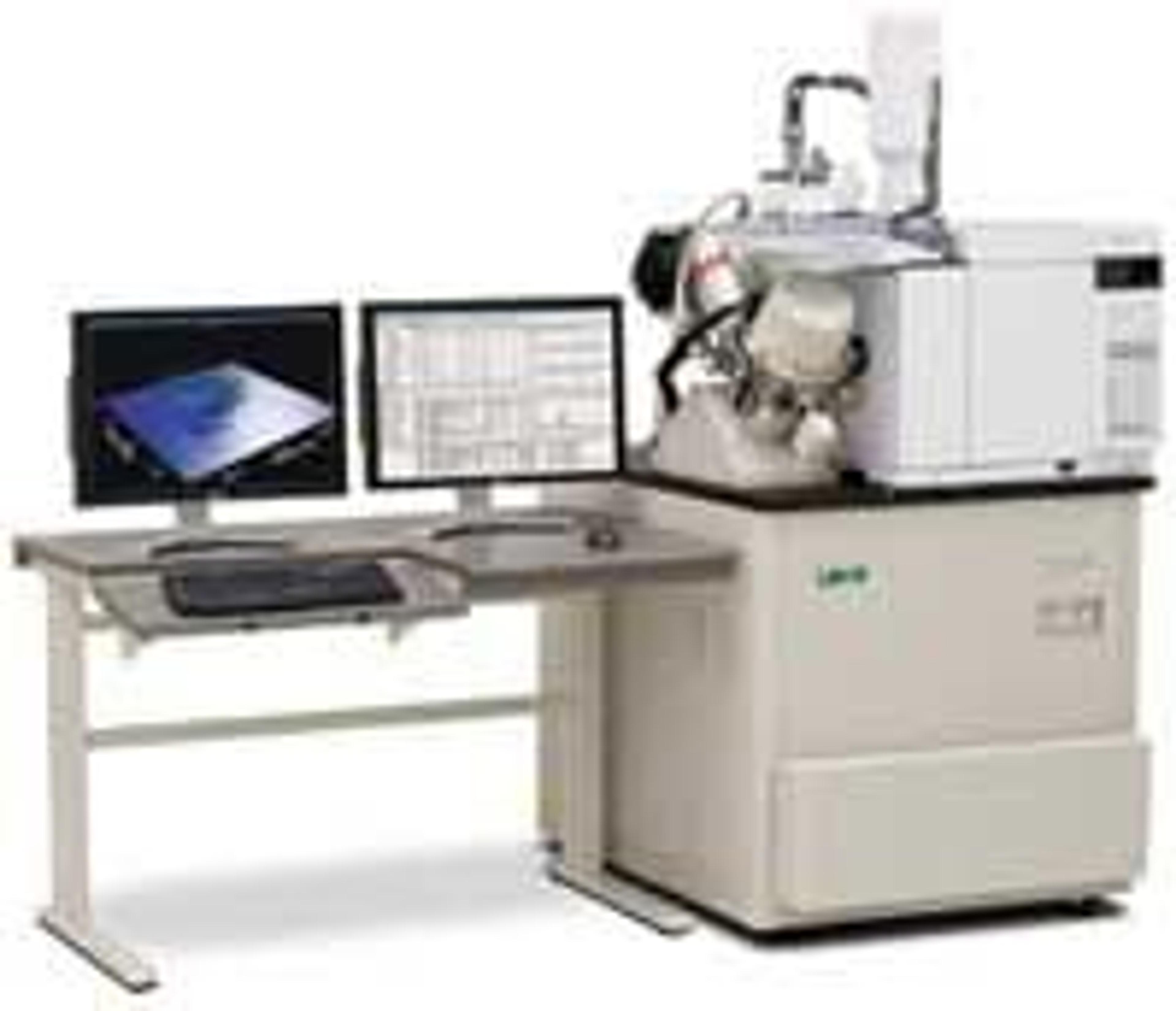
Pegasus® GC-HRT
LECO Corp.While some systems on the market offer users a choice between acquisition speed or resolution, the Pegasus GC-HRT provides scientists with an unprecedented combination of speed, resolution, mass accuracy, isotopic abundance, and dynamic range. This instrumentation utilizes LECO's own Folded Flight Path™ (FFP™) technology to allow users to achieve resolutions of up to 50,000. LECO's exclusive ChromaTOF-HRT™ software with Automated Peak Find and True Signal Deconvolution® provides seamless data handling and compatibility with the NIST Library.