Introducing CORTECS C8 and Phenyl Solid Core Particle Columns

Two new options for better HPLC separations

2 Feb 2016
Alex Waite
Editorial Assistant

Product news

Waters Corporation has added to its CORTECS® Columns product family with the introduction of two new chemistries.

Built on Waters proven solid-core particle technology, the Waters®CORTECS C8 and CORTECS Phenyl analytical columns are designed for scientists who need to expand their chromatographic separation space while maximizing the speed, resolution and sensitivity of their small molecule HPLC, UHPLC or UPLC®separations. Capable of operating at very high column efficiencies and low backpressures, the new columns give scientists additional selectivity choices and allow them to develop methods quickly, and generate more information with every analytical run. The CORTECS C8 and CORTECS Phenyl chemistries are available in two particle sizes, 1.6 and 2.7 micron, and are offered in a total of 50 unique column configurations.

“With the addition of these new columns, Waters now gives laboratories additional options for improving the resolution, speed, and sensitivity of their separations,” said Michael Yelle, Vice President - Consumables, Waters Technologies Corporation. “We are committed to expanding the selectivity space of the CORTECS solid-core column line while maintaining the market leading batch-to-batch reproducibility, robustness and quality our customers have come to expect from Waters.”

CORTECS C8 Columns exhibit a lower hydrophobicity when compared to typical bonded C18 phases and are useful for separating strongly hydrophobic compounds. They are also ideal for chemists looking to transfer or scale compendial C8 HPLC methods to a more robust column technology.

CORTECS Phenyl Columns are an excellent alternative to typically bonded C18 phases, particularly for aromatic compounds, based on the unique selectivity provided by the Phenyl bonded phase.

Both the 1.6 and 2.7 micron CORTECS C8 and CORTECS Phenyl columns are fully scalable for the seamless transfer of methods between the two particle sizes.

The CORTECS UPLC 1.6 micron particle columns are designed to yield maximum efficiency when used with the ultra-low dispersion Waters ACQUITY® UPLC® instrument platform. In the separations market space, CORTECS UPLC 1.6 micron columns offer to scientists previously unattainable levels of performance.

The CORTECS 2.7-micron particle columns are designed for maximum flexibility for use on both UHPLC and HPLC instrument platforms. CORTECS 2.7 micron columns run at lower backpressures while delivering high efficiencies, which allows for the use of longer column lengths to improve resolution or higher flow rates to speed instrument analysis times and increase throughput.

The two new chemistries complement the existing CORTECS C18+, C18, and HILIC chemistries in Waters current CORTECS product portfolio.

ACQUITY UPLC® BEH Phenyl Columns

Waters

ACQUITY UPLC® BEH Phenyl columns utilize a trifunctional C6 alkyl tether between the phenyl ring and the silyl functionality. This ligand, combined with the same proprietary endcapping processes as the ACQUITY UPLC™ BEH C18 and C8 columns, provides ultra-low column bleed, long column lifetimes and excellent peak shape. This unique combination of ligand and endcap on the 1.7 μm BEH particle creates a new dimension in selectivity and efficiency for challenging UPLC® separations.
(0)

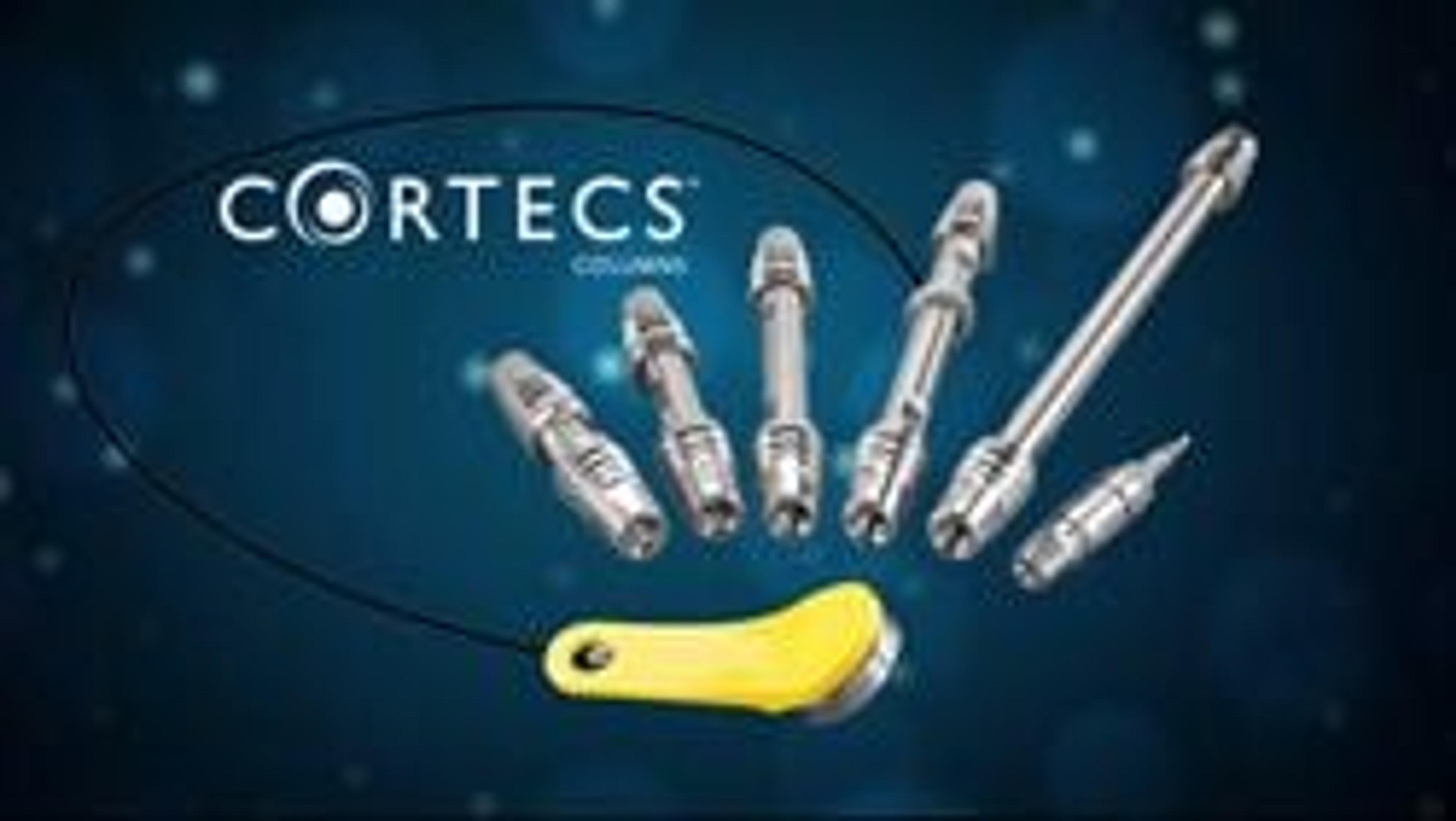
CORTECS® Columns

Waters

Unleash the power of your laboratory's instrumentation. CORTECS® 1.6 µm and 2.7 µm solid-core columns deliver new levels of performance. CORTECS Columns are available in both reversed-phase and HILIC options, giving you the flexibility and power to develop methods for challenging separations even faster. With different particle characteristics and innovative charged surface modifications, CORTECS Columns are suitable for use in a wide variety of applications. CORTECS Columns offer particle sizes ideal for HPLC, UHPLC, and UPLC platforms, assuring a simple, seamless method transfer with consistent results across different particle sizes and column configurations. CORTECS 1.6 µm and 2.7 µm solid-core columns are suitable for use in a wide variety of applications. CORTECS Columns offer particle sizes ideal for HPLC, UHPLC, and UPLC platforms, assuring a simple, seamless method transfer with consistent results across different particle sizes and column configurations.

(14)

Links

Tags

AutosamplersAutosamplers are automated sample loaders used with a number of separation and analytical techniques. HPLC autosamplers use automated partial or full-loop injection systems and place samples in vials or microplates for analysis. Autosamplers can also be used for elemental analysis. Features to consider include repeatability, syringe capacity, footprint and temperature controls.  Gas ChromatographyGas chromatography (GC) is an analytical technique used to separate and quantitate mixtures of small and volatile compounds. Gas chromatographs or GC systems include components such as GC columns, detectors, pumps and autosamplers. Choose from packed or capillary GC columns, flame ionization (FID), photoionization (PID) electron capture detectors and selective or non-selective detectors. Find the best gas chromatographs in our peer-reviewed product directory: compare products, check customer reviews and receive pricing direct from manufacturers.UHPLC and HPLCHigh performance liquid chromatography (HPLC) and ultra high performance liquid chromatography (UHPLC), also known as UPLC, are analytical techniques used to separate, identify and quantitate components of complex mixtures including biological samples such as proteins and lipids as well as chemical mixtures of pesticides, drugs and oils. Both techniques are liquid chromatographic methods but differ by operating pressures (HPLC < 6000 psi < UHPLC ). Components of HPLC and UHPLC systems include columns, detectors, pumps, autosamplers and column heaters. Explore a range of UHPLC and HPLC columns for your specific sample needs including reverse phase, normal phase, ion exchange, HILIC, ion exclusion and size exclusion columns. For more specialized HPLC, explore FPLC, countercurrent LC and simulated moving bed systems. Find the best UHPLC and HPLC equipment in our peer reviewed product directory: compare products, check customer reviews and receive pricing direct from manufacturers.Ion ChromatographyIon chromatography, also known as ion exchange chromatography, is a high-performance liquid chromatographic technique used for the separation and identification of ions or polar molecules in a sample, including proteins, nucleotides and amino acids. Equipment includes ion exchange columns, ion exclusion columns, ion chromatography systems, pumps, and detectors. Find the best ion chromatography equipment in our peer-reviewed product directory: compare products, check customer reviews and receive pricing direct from manufacturers.LC-MSLC-MS (liquid chromatography-mass spectrometry) systems and equipment are used for separation and quantitative analysis of complex mixtures, combining liquid chromatography and mass spectrometry. Quantify proteins, contaminants, pesticides or screen for drug metabolites with a high level of sensitivity. LC-MS systems and equipment include reverse phase, normal phase and specialized columns integrated with various MS detectors such as time-of-flight (TOF), quadrupole, orbitrap or ion trap mass analyzers. LC-MS/MS instruments equipped with a qTOF or triple quadrupole analyzer give greater sensitivity and resolving power to your analysis. Find the best LC-MS equipment in our peer-reviewed product directory: compare products, check customer reviews and receive pricing direct from manufacturers.Sample ManagementSample management systems include sample storage devices such as freezers and plate storers, sample environment enclosures and sample organization, retrieval and sorter systems. Useful system features include high-throughput, automation, robotic arms, automated liquid handling and associated database systems. Accessories in sample management include barcode scanners, heat sealers and tubes.NanoLCNano LC is a nano scale liquid chromatography technique typically used for proteomic applications. The nano refers to the very low flow rate of the mobile phase in the system. The advantage of nanoLC is its high sensitivity. Often the system is integrated with a mass spectrometer in nano LC-MS or nano LC-MS/MS. When using nanoLC equipment consider column choice, software and accurate and precise flow rate control.Robotic InstrumentsRobotic instruments can be used for high-throughput automation of many lab processes. Such processes use instruments for assays like cell based assays and ELISA, for sample preparation like shakers, centrifuges and incubators, and for analysis such as sequencing and western blot analyzers. Useful features of robotic instruments include speed, reproducibility, barcode readers, software and automation.Robotic WorkstationsRobotic workstations are automated platforms enabling the user to perform high-throughput, multi-application processes, from sample preparation tasks such as PCR set-up, DNA purification and NGS library preparation, to integrated sample prep and analysis workstations. Automation makes processes consistent, fast, precise and fully walk-away. Find the best robotic workstations in our peer-reviewed product directory: compare products, check customer reviews and receive pricing direct from manufacturers.GC-MS GC-MS (gas chromatography-mass spectrometry) instruments and equipment are used to separate, quantify and identify mixtures of small and volatile compounds, such as polycyclic aromatics, fatty acids and alcohols. Often used in drug detection, forensic investigation and environmental analysis for pesticides and contaminants, GC-MS is a powerful addition to your lab’s analytical capabilities. GC-MS/MS instruments equipped with a qTOF or triple quadrupole analyzers can give greater sensitivity and resolution to your analysis. Find the best GC-MS instruments and equipment in our peer-reviewed product directory: compare products, check customer reviews and receive pricing direct from manufacturers.HPLC Method DevelopmentIt is important to develop and validate HPLC methods in order to identify, quantify or purify compounds of interest in the most efficient way. Effective method development ensures optimization, quality control and cost effectiveness.Particle Size AnalysisParticle size analysis describes the size distributions from sub-nanometer to millimeter of particulate samples. Size is an important physical property and the technique is often utilized in a range of industries, such as chemical, environmental and agriculture.ChromatographyChromatography is a powerful technique used to separate and analyze components of mixtures based on their chemical properties. It is widely used in fields like biochemistry, pharmaceuticals, and environmental analysis. By exploiting differences in the interaction of substances with a stationary phase and a mobile phase, chromatography enables precise purification and quantification of compounds. Whether you're working with complex biological samples or industrial chemicals, chromatography is essential for obtaining high-quality results. Browse our peer-reviewed product directory to find the best chromatography systems, compare products, read customer reviews, and get pricing directly from manufacturers.HPLCHigh-performance liquid chromatography (HPLC) is a technique for separating, identifying, and quantifying components in mixtures. It is widely used in chemical, pharmaceutical, and environmental analysis to ensure purity and identify unknown compounds. Explore the best HPLC systems in our peer-reviewed product directory; compare products, read reviews, and get pricing directly from manufacturers.