
Improving mid-scale cell culture and purification workflows with the Clara System
PSL’s Clara™ 6 Well plate system is uniquely designed to provide the missing piece in mid-scale in vitro production and filtration, including isolation of biological material such as proteins and plasmid DNA from up to 50 mL of culture
19 Jun 2026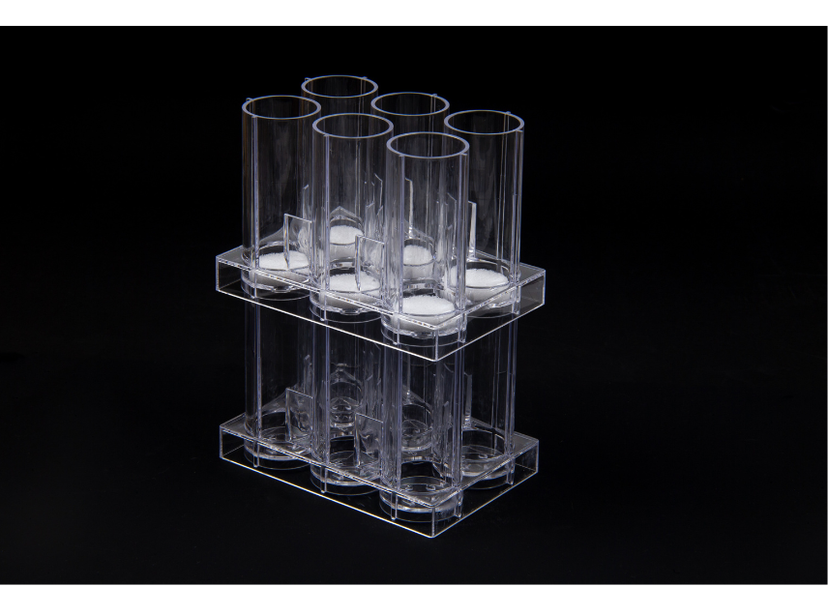
The Clara™ 6 Well plate system
Recombinant proteins have many uses in molecular biology, drug discovery and cancer research: from understanding fundamental regulatory mechanisms to testing the efficacy of therapeutics. Increasing the throughput of generating these proteins is vital for accelerating both our understanding of disease and developing effective treatments. Many systems are now available at small scale, for example 96 or 24 well plates, up to around 7 mL in volume. However, there remains a bottleneck for molecule discovery, development and production, particularly at the 30–50 mL scale. The Clara™ Cell Culture and filter plate system provides a fast and efficient solution for this challenge.
Instruments and consumables for the development and scale up of protein production, such as biological therapeutics, has not kept pace with the growth of the industry – until now. Porvair’s Clara™ 6 Well plate system is uniquely designed for mid-volume production and filtration, including isolation of biological material such as proteins and plasmid DNA from up to 50 mL of culture.
Developed with simple sample handling in mind, the Clara™ system combines Porvair Sciences Ltd's expertise in porous materials, filters and membranes for biological applications with their plate moulding experience, enabling creation of solutions for rapidly scalable and automatable workflows.
Versatile Clara™ Cell Culture plates are suitable for use with eukaryotic and prokaryotic cells. Perfect for mammalian cell lines, yeasts and E. coli cultures they provide the ideal solution for mid volume cell preparations for a variety of downstream applications including protein expression, plasmid propagation and transfection.
The unique round well design creates the optimal gentle media swirling motion during cell culture to prevent shear stress and cell damage during incubation, perfect for delicate cell lines. Designed for scale up during biologics development, the Clara™ Cell Culture plate is suitable for culturing up to 30 mL of cell suspension per well, making it ideal for working with challenging molecules with low expression levels.
Coupled with the Clara™ 6 well 30 mL or 50 mL Filter Plate Set to purify a wide range of molecules, the Clara™ 6-well system has a simple high throughput hardware option for any workflow. With customisable porous plastic filtration supports (polyethylene, polypropylene or PTFE in a wide range of pore sizes) and options for membranes (PES/PVDF/glass fibre in 0.22 or 0.45 µm) the Clara™ 6-well system allows quick, simple and scalable purification of a wide range of biological molecules.
The Clara™ 6 well system enables the culture, expression and purification of product from up to 30 mL of mammalian, bacterial, yeast or plant cell line suspensions in multi-well format. All cell culture and filter plates are manufactured from virgin polystyrene ensuring high optical clarity, allowing easy observation of cell suspension optical density and filtration progress and efficiency.
The dual grip handling ports of culture and filter plates enables automated handling by a wide range of robotic handling systems. With a standard SLAS/ANSI footprint the Clara™ system is compatible with manual and automated incubators, deep vacuum manifolds and extended height positive pressure manifolds making the plates ideal for both manual and automated methods. Plus, unique plate barcoding allows sample tracking and traceability.
Whatever the biological molecule research and development the Clara™ 6 well system has a solution.
Want the latest science news straight to your inbox? Become a SelectScience member for free today>>
Links
Tags
Frequently asked questions
Show frequently asked questions
How does the Clara 6 Well plate system accelerate recombinant protein production at the 30–50 mL scale?
The Clara™ 6 Well plate system is specifically designed to address the bottleneck in recombinant protein generation at the mid-volume 30–50 mL scale. It enables culture, expression and purification of product from up to 30 mL of mammalian, bacterial, yeast or plant cell suspensions per well, and up to 50 mL when used with the 50 mL Filter Plate Set.
By combining cell culture plates with matching filter plates in a multi-well format, the system supports higher-throughput workflows than traditional single-vessel formats. This accelerates production of recombinant proteins used in molecular biology, drug discovery, cancer research and therapeutics development.
What biological applications and cell types are supported by the Clara Cell Culture and Filter Plate system?
The Clara™ Cell Culture and Filter Plate system is suitable for eukaryotic and prokaryotic cells, including mammalian cell lines, yeasts and E. coli cultures, as well as plant cell line suspensions. It is designed for mid-volume cell preparations for downstream applications such as protein expression, plasmid propagation and transfection.
The system can isolate biological material including proteins and plasmid DNA from up to 50 mL of culture, making it useful for biologics development and for working with challenging molecules that have low expression levels.
What design features make the Clara 6 Well system compatible with automated, high-throughput biologics workflows?
The Clara™ 6 Well system incorporates several features to support automated, high-throughput workflows in biologics research and development. The culture and filter plates have dual grip handling ports for use with a wide range of robotic handling systems and share a standard SLAS/ANSI footprint, ensuring compatibility with manual and automated incubators, deep vacuum manifolds and extended height positive pressure manifolds.
Customisable porous plastic filtration supports (polyethylene, polypropylene or PTFE with a range of pore sizes) and membrane options (PES, PVDF or glass fibre in 0.22 or 0.45 µm) enable scalable purification of diverse biological molecules. Plates are manufactured from virgin polystyrene for high optical clarity, allowing easy observation of cell suspension optical density and filtration progress, and unique plate barcoding provides sample tracking and traceability.