
How to Optimize Centrifuge Performance for Your Application

Are you using the best centrifuge for your application?

6 Dec 2016

Lucy Vass
Administrator / Office Personnel

Editorial article

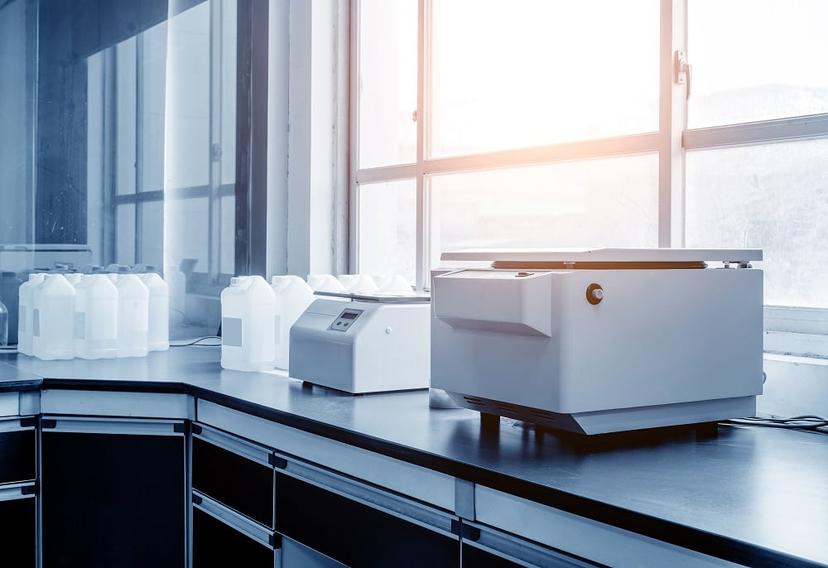
Image credit: Shutterstock/centrifuge - Copyright gyn9037

Whether you perform protocols in cell biology, biochemistry, molecular biology, bio-production, or microbiology, when choosing a centrifuge, it is important to determine how it will meet the needs of your application. With a range of mini- to ultra-centrifuges and a variety of accessories available, there are several factors to consider to ensure you are using the best centrifuge for both your current and future applications. NuAire has produced a white paper to help you choose the right laboratory centrifuge for your application, here we present an overview of the most important considerations.

1. Maximum Speed

The speed that your application requires (revolutions per minute (RPM) or Relative Centrifugal Force (RCF)) determines the category of centrifuge you will need; low-speed, high-speed or ultracentrifuge.

2. What and How Much will be Spun?

Consider the type, size and quantity of tubes you will need to spin in one cycle to identify the centrifuge capacity you require.

3. Laboratory Space

With floor and benchtop models available, maximize your lab space by choosing a model with a high capacity-to-footprint ratio.

4. Versatility

Consider your current and future applications. If you will be performing lots of different applications, look for a centrifuge capable of operating at many speeds with different rotors to enable different protocols.

5. Easy Operation

Features such as user-friendly controls and touchscreen display may help to make operation more efficient.

6. Reliability and Servicing

Centrifuges are reliable, but do occasionally need service. Service contracts are advisable in addition to regular maintenance of the centrifuge by laboratory staff. Look for accessible designs that enable fast servicing.

7. Power

The quality and reliability of electrical power can cause performance fluctuations in internal components of a centrifuge. Look for models that are designed to compensate for fluctuations in power to protect your work.

Download the white paper for more tips on how to optimize your centrifuge.

Links

Tags

CentrifugesCentrifuges are used to separate particulates suspended in a liquid via the application of a centrifugal force including cells, macromolecules, nanoparticles and precipitates. Centrifuges come in three sizes: microcentrifuges, benchtop and floor-standing centrifuges, depending on the volume and number of samples that require separation. When choosing a centrifuge, consider its maximum separation power indicated by its relative centrifugal force (RCF) value. Low force centrifuges reach a maximum RCF of 8,000 g, high-force centrifuges can reach maximum RCF values of 80,000 g. For extremely high forces, consider ultracentrifuges (up to 800,000 g). Refrigerated and vacuum centrifuges also known as concentrators are available for more specialized applications. A range of volumes are available for centrifuge tubes and microfuge tubes, depending on sample sizes. Find the best centrifuges in our peer-reviewed product directory: compare products, check customer reviews and receive pricing direct from manufacturers.MicrobiologyMicrobiology is the study of microorganisms including protists, prokaryotes, fungi, and, often, viruses. Microorganisms are a useful research tool as genetic vectors and, in immunology, for antibiotic susceptibility testing, cellular biology and genetics. Microorganisms commonly grow readily in incubators with microbial culture media; this can contain chromogenic supplements to differentiate between cell lines. Estimate your culture’s density of microorganisms with colony counters, or screen and select colonies for desirable clones with automated colony pickers. Additionally, equipment is available to monitor environments for the presence of microbes and identify with microbial identification instruments. Find the best microbiology products in our peer-reviewed product directory: compare products, check customer reviews and receive pricing direct from manufacturers.DNA / RNA Extraction and PurificationPurified DNA and RNA are required for numerous downstream molecular biology applications. Consequently, the importance of high-quality DNA/RNA extraction and purification equipment cannot be underestimated. Many purification kits are available and are typically optimized for nucleic acid type and source, including plasmid DNA, genomic DNA, mRNA, RNA and viral nucleic acid purification kits. Automated extraction and purification of nucleic acids can be implemented with magnetic bead separator instruments or high-throughput purification workstations. Find the best DNA/RNA extraction and purification equipment in our peer-reviewed product directory: compare products, check customer reviews and receive pricing direct from manufacturers.Protein PurificationProtein purification is a vital step in drug discovery, therapeutics, biotech and life science research. The purification process typically involves subcellular or membrane protein extraction with cell lysis kits, separation of proteins from cell debris by filtration or spin columns, and the isolation of proteins of interest from other proteins and impurities with affinity purification (including fusion protein tags and antibody binding proteins A, G and L), immunoprecipitation or chromatographic methods, such as ion exchange, size exclusion and immobilized metal affinity chromatography. All purification methods come in multiple formats for your laboratory needs, including agarose or magnetic beads, resins, columns and filter plates. Find the best protein purification equipment in our peer-reviewed product directory: compare products, check customer reviews and receive pricing direct from manufacturers.Gene Expression and Molecular CloningMolecular cloning is a set of techniques that utilizes vectors to transfer recombinant DNA into host cells and is an essential tool for investigating the expression of genes and proteins in bacterial or mammalian cells. A variety of vectors optimized for gene cloning and expression in a range of host organisms are available, alongside competent cells for genetic replication. Here, you can explore a range of molecular tools, high-quality genomic and cDNA libraries, premade clones, transformation and transfection reagents and mutagenesis or gene expression detection assays and expression arrays. Find the best gene expression and molecular cloning products in our peer-reviewed product directory: compare products, check customer reviews and receive pricing direct from manufacturers.Next Generation SequencingNext-generation sequencing (NGS), also known as whole-genome sequencing, high-throughput sequencing and massive parallel sequencing, produces and analyses thousands to millions of nucleotide sequences at once. Sequencing systems operate via varying technologies depending on the manufacturer, including sequencing by synthesis, ligation, pyrosequencing, ion semiconductor and single-molecule real-time sequencing. For NGS, library preparation is paramount to successful sequencing. In this section, explore a range of library preparation kits, from targeted, amplicon-based or hybridization-based kits including epigenomic, transcriptomic and genomic workflows to fragmentation kits. Find the best next-generation sequencing products in our peer-reviewed product directory: compare products, check customer reviews and receive pricing direct from manufacturers.Lab EssentialsLab essentials include laboratory consumables that are vital to the operation of all laboratories.Process OptimizationProcess optimization involves improving the efficiency, cost-effectiveness, and quality of processes in various industries, including manufacturing, pharmaceuticals, and biotechnology. Explore process optimization solutions in our peer-reviewed product directory; compare products, check reviews, and get pricing directly from manufacturers.
How to Optimize Centrifuge Performance for Your Application