How intrinsically disordered proteins (IDPs) play a key role in cellular processes

Join this upcoming webinar to learn how nuclear magnetic resonance (NMR) spectroscopy can provide structural data, at an atomic level

10 Jan 2020

Sophie Ball
Publishing / Media

Expert insights

In this SelectScience webinar, Professor Jane Dyson from the Scripps Research Institute will discuss the important role that intrinsically disordered proteins (IDPs) play in cellular processes. Dyson will explain how to apply high-resolution nuclear magnetic resonance (NMR) spectroscopy to provide structural data, at an atomic level, obtained in the proteins’ native state.

For more this topic, watch Dyson discuss the benefits of using NMR for the study of these IDP mechanisms, in this exclusive video interview with The Scientists' Channel.

Register Now

Watch this webinar to learn about:

  • The importance of intrinsic disorder in proteins for cell function and dysfunction
  • How NMR has become the primary tool of investigation for IDPs
  • Experimental approaches revealing IDP function, dynamics, and interaction

Who should attend:

  • Researchers in academia and the pharmaceutical industry interested in IDPs and how to study these by using NMR

The live webinar takes place on Tuesday, January 21, 2020, at:

16:00 GMT
11:00 EST
08:00 PST
17:00 CET

Scheduling conflict? No matter, register to receive an on-demand link to watch later>>

TCI CryoProbe

Bruker BioSpin

The TCI CryoProbe is proton-optimized triple resonance NMR 'inverse' probe, featuring three fully independant channels (plus lock channel) for simultaneous decoupling on multiple nuclei.  
(0)

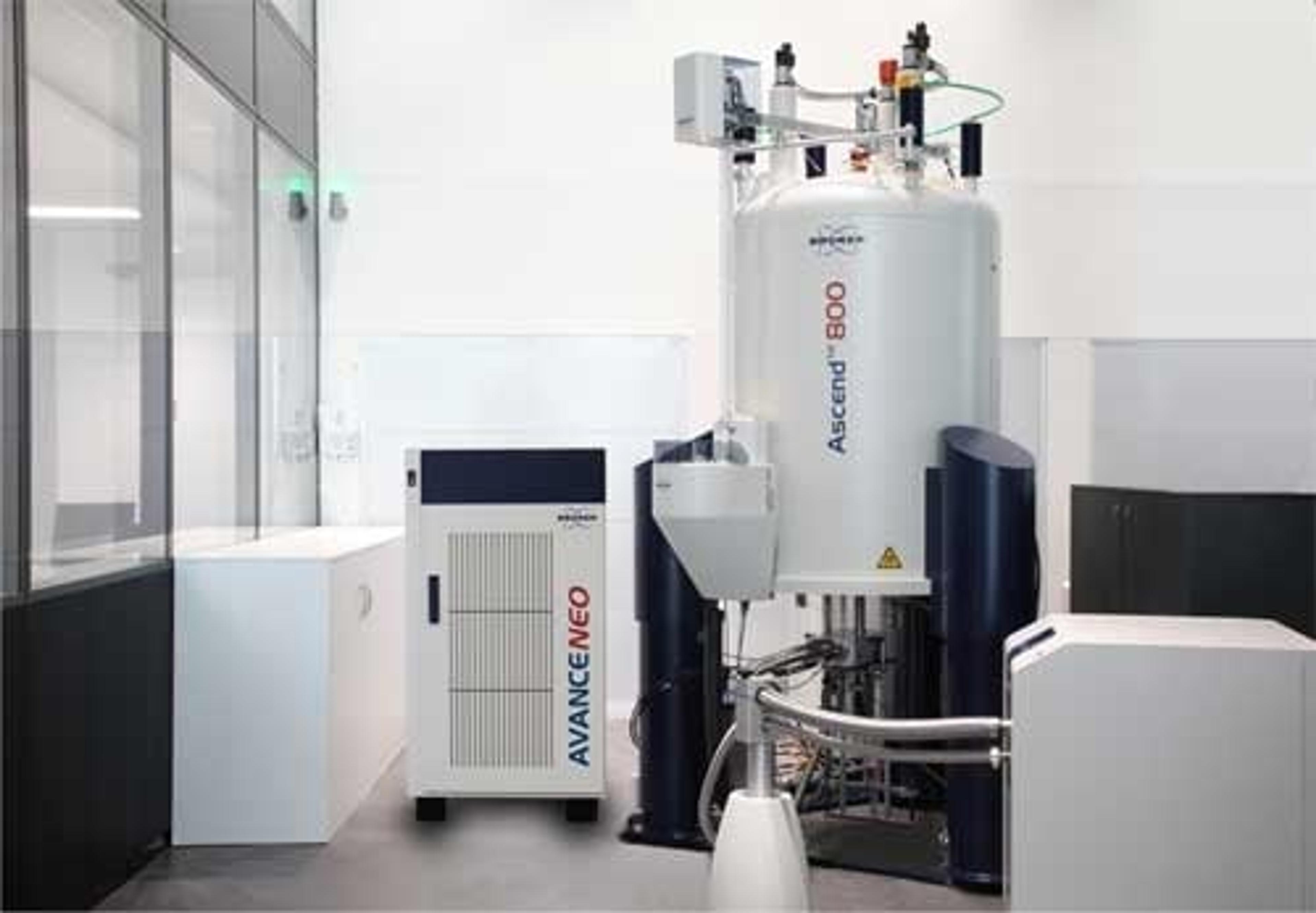
AVANCE NEO

Bruker BioSpin

The AVANCE NEO represents the next generation in the very successful AVANCE series product line, which has established Bruker as the global technology and market leader in NMR.

(6)

Links

Tags

NMR and EPR SpectroscopyNuclear magnetic resonance (NMR) spectroscopy is used to resolve the local chemical environment of atomic nuclei with spin, revealing information on molecular structure, dynamic processes and chemical reactions of organic molecules, from proteins to synthetics. Electron paramagnetic resonance (EPR) also known as electron spin resonance (ESR) spectroscopy is used to detect and quantify paramagnetic species in a sample, including free radicals as transition metal ions. By immersing the sample in a strong magnetic field, both NMR and EPR spectrometers probe the sample with either radio waves or microwaves respectively. A range of benchtop, solid-state and time domain NMR spectrometers & EPR spectrometers are available, as well as NMR tubes, NMR solvents, software, coils, and magnets. Find the best NMR & EPR equipment in our peer-reviewed product directory: compare products, check customer reviews and receive pricing direct from manufacturers.Protein StructureProtein structure refers to the three-dimensional arrangement of amino acids in proteins, determining their function. Understanding protein structure is key in drug discovery, enzymology, and molecular biology. Explore protein structure analysis tools in our peer-reviewed product directory; compare products, check reviews, and get pricing directly from manufacturers.SpectroscopySpectroscopy is a technique that analyzes the interaction of light with matter to study molecular properties, concentrations, and structural information. Widely used in chemical, pharmaceutical, and environmental analysis, spectroscopy offers insights into molecular composition and helps identify unknown compounds. It plays a key role in quality control, research, and diagnostics. Browse our peer-reviewed product directory to compare spectroscopy tools, read reviews, and get prices directly from manufacturers.
How intrinsically disordered proteins (IDPs) play a key role in cellular processes