
From sample to solution: the frontline workers you never see
In this guest editorial, Jon Sherlock, Senior Director, Product Management at Thermo Fisher Scientific explores why supporting laboratory professionals is the key to bridging the gap between innovation and patient outcomes
19 Apr 2026Medical Laboratory Professionals Week is a timely reminder that the lab sits at the center of our healthcare ecosystem, and modern care only works when the lab works.
Lab teams connect the investment and innovation that goes into instruments, assays, reagents and workflows to the clinicians, patients and families who ultimately rely on answers. Without the people in the middle, even breakthrough innovations would fall short of their promise — diagnostics would sit on shelves instead of informing timely decisions, and life-saving treatments would be delayed.
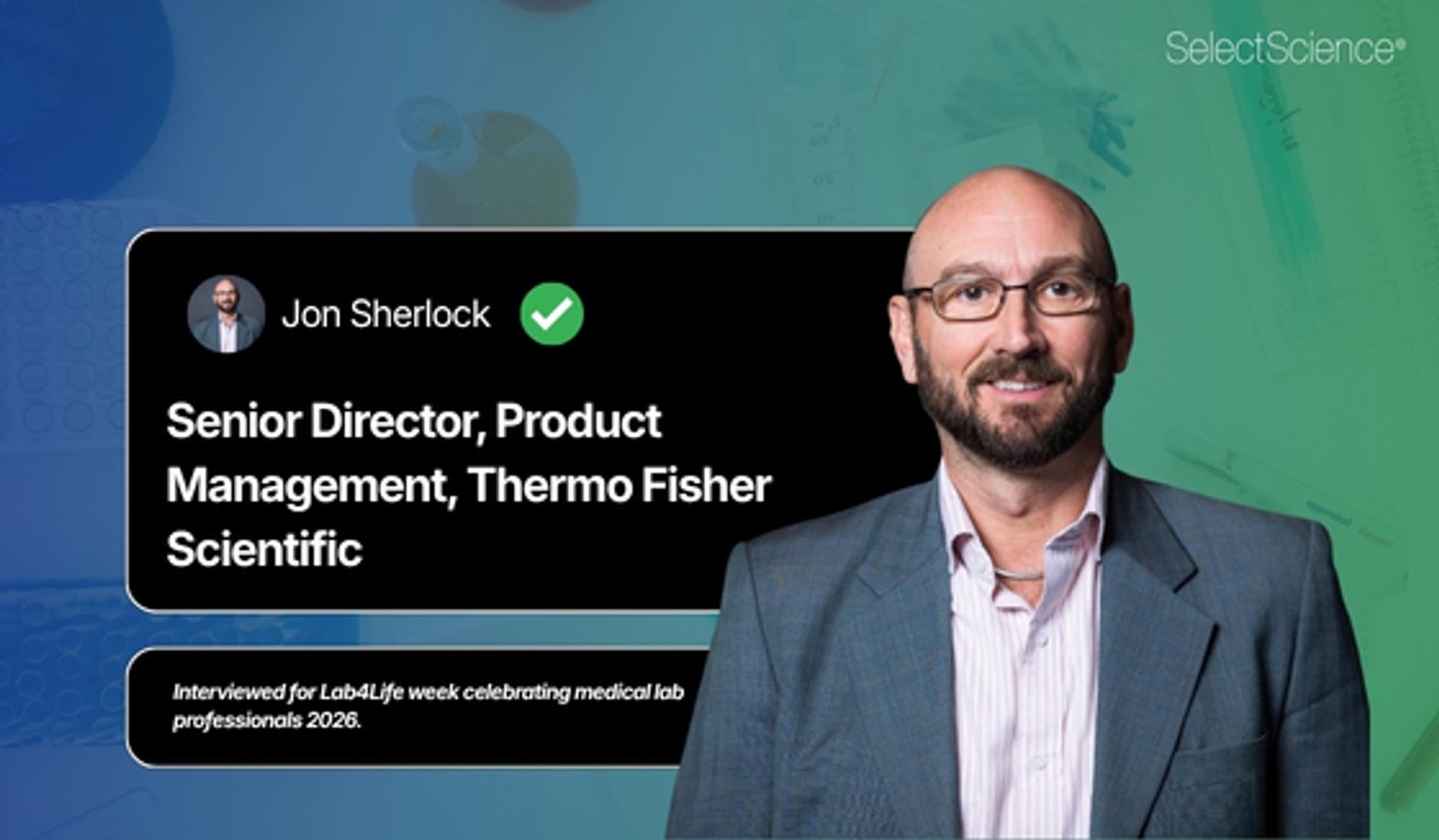
Jon Sherlock, Senior Director, Product Management, Thermo Fisher Scientific
Often, lab professionals and technicians rarely see the human impact of their work, like how a faster result or a more accurate assay can alter a potentially life-changing treatment plan or offer hope to families facing a tough diagnosis. The same holds true for hospital and reference lab staff performing routine pipetting and sample handling every day; each step they take directly shapes a diagnosis, and ultimately, a patient's entire care path. That's why making this connection visible matters.
The invisible work that makes progress possible
From the outside, the lab can look like a series of repetitive tasks, but the people inside know that every 'routine' step carries responsibility. Sample handling, pipetting, quality control, troubleshooting, verification, documentation and the judgment calls that happen around the edges are not just operational procedures. A single verified result can change what a clinician does next, shortens the time to the next step, reduces uncertainty and can set a patient on a different path.
That is why recognition matters, especially for the professionals across the care continuum that do not always get to see the downstream impact of what they made or processed. It is easy to be so focused on executing the work that the human consequence gets lost in the diligent labor.
Senior leaders and clinical teams should care deeply about the lab experience because turnaround time, quality systems, workflow resilience, and staff sustainability are not just 'lab problems'. They impact patient care and define both what the rest of the healthcare system can achieve and how confidently it can act.
Collaboration that never leaves the bench
The strongest partnerships in laboratory medicine do not start with a solution looking for a problem, but establishing real needs or gaps worth fulfilling.
As a diagnostic partner, this means engaging directly with laboratory professionals and asking the questions that only they can answer: what is painful in the day-to-day workflow; where do errors, delays or rework tend to happen; what would make the work more reliable, more efficient and more sustainable?
A practical example of what it means to build with labs, not just for them, is the use of early access networks, where select laboratory partners are engaged at the prototype stage to test new assays, instruments or digital tools in real-world workflows. When laboratories evaluate a prototype in their own environment, they can compare performance to what they already run in-house. The end result is not only a better workflow, but one that is shaped by the people who will rely on it under real constraints.
There is also a simple truth behind why collaboration matters: if significant time and money are invested in building something that doesn't fit how labs actually operate, everyone loses. Manufacturers face costly redesigns and delayed launches, labs struggle with workarounds, clinicians lose confidence in their results and patients wait longer for the benefits of innovation to reach them.
Empowering lab teams through faster workflows, sustainable practices, and advocacy
Emerging technologies, including AI, are rapidly expanding what’s possible while raising expectations just as quickly. At the same time, labs are under significant pressure to deliver more complex testing with greater precision and faster turnaround times.
At Thermo Fisher, we meet these challenges through a mission-driven partnership focused on advancing innovation while ensuring the work remains manageable for the people behind it.
A key aspect of this is enabling more rapid workflows. When a process is quicker, repeating a step if something goes wrong becomes more sustainable, rather than spending days of reworking, errors can be corrected in real-time.
Tools designed with the lab in mind help minimize the hands-on time required to run diagnostics, freeing up lab teams to focus on higher-value work while reducing day-to-day operational strain. A truly optimized workflow acknowledges a reality that lab leaders understand well: hours of repetitive manual work can be taxing, and it is not the best use of a scientist’s time when automation can safely and reliably offer support.
Finally, celebrating the profession requires meaningful visibility. A strong partner helps elevate scientists and their work; this can be by creating platforms for them to present at conferences and seminars, and by highlighting examples of terrific work and research contributions. Recognition is more than a morale booster, it's how the profession's expertise becomes better understood and valued across healthcare.
Building what’s next, together
Laboratory medicine sits at the heart of healthcare's ability to move forward. It turns scientific progress into clinical action, and clinical action into real outcomes for patients and families.
As pressures mount and technologies grow more complex, collaborating with an experienced partner becomes essential. The right partnership eases pain points by supporting processes that are both manageable for lab professionals and capable of driving real breakthroughs.
It is no surprise that the most valuable innovations start at the bench. Advancing the profession in a way that is both innovative and sustainable requires keeping an open dialogue because progress happens not in isolation, but together.
This piece was submitted to SelectScience for Lab4Life week 2026.
Explore the full feature.