
Flow chemistry synthesis of well defined polymers
12 Mar 2021
Uniqsis reports researchers at the Helmholtz-Zentrum Institute of Membrane Research (Geesthacht, Germany) are using a FlowLab Plus flow chemistry system with glass static mixer reactor blocks to synthesise well-defined polymers.
Synthesizing well-defined polymers, with a narrow Molecular Weight distribution, has traditionally been achieved by using anionic polymerization methodologies. However, precise control of Molecular Weight achieved in this way is accompanied by very high sensitivity to impurities, temperature changes and fast polymerization rates, which leads to high demands on the process control along with challenging laboratory work. More recently radical polymerization methods such as the Reversible Addition-Fragmentation chain Transfer (RAFT) polymerization technique have been the focus of polymer research as alternative methods to synthesize well-defined polymers from a variety of monomers.
In a new paper, published by the Helmholtz Institute, a model-assisted approach to develop and optimize a flow chemistry reaction system for the RAFT polymerization of MMA is presented. A reaction kinetics and a heat-transfer model were used together with in-line NMR spectroscopy to gain insight into the polymerization process in order to develop strategies for the process optimization. A screening method was used to investigate a broad range of different residence times in a single experiment. Adjustments were made to the composition of the reaction mixture, the temperature and the flow chemistry reactor setup.
Designed by chemists for chemists - FlowLab Plus™ is a versatile modular flow chemistry system built around the Uniqsis Binary Pump™ dual channel reagent delivery system. The system is configured to run both manual and automated flow chemistry reactions. The system may be configured with any combination of up to 4 individual reactor modules. A wide variety of configurations are possible.
To achieve highly reproducible flow chemistry scale-up the control of mixing and temperature is essential, particularly for polymerization reactions. Precision machined from inert borosilicate glass to withstand a wide temperature range - Glass Static Mixer (GSM) chip reactor blocks from Uniqsis are proven to produce a highly efficient, turbulent mixed reagent stream.
Do you use Uniqsis products in your lab? Write a review today for your chance to win a $400 Amazon Gift Card>>
Related products
Request Quote for All Products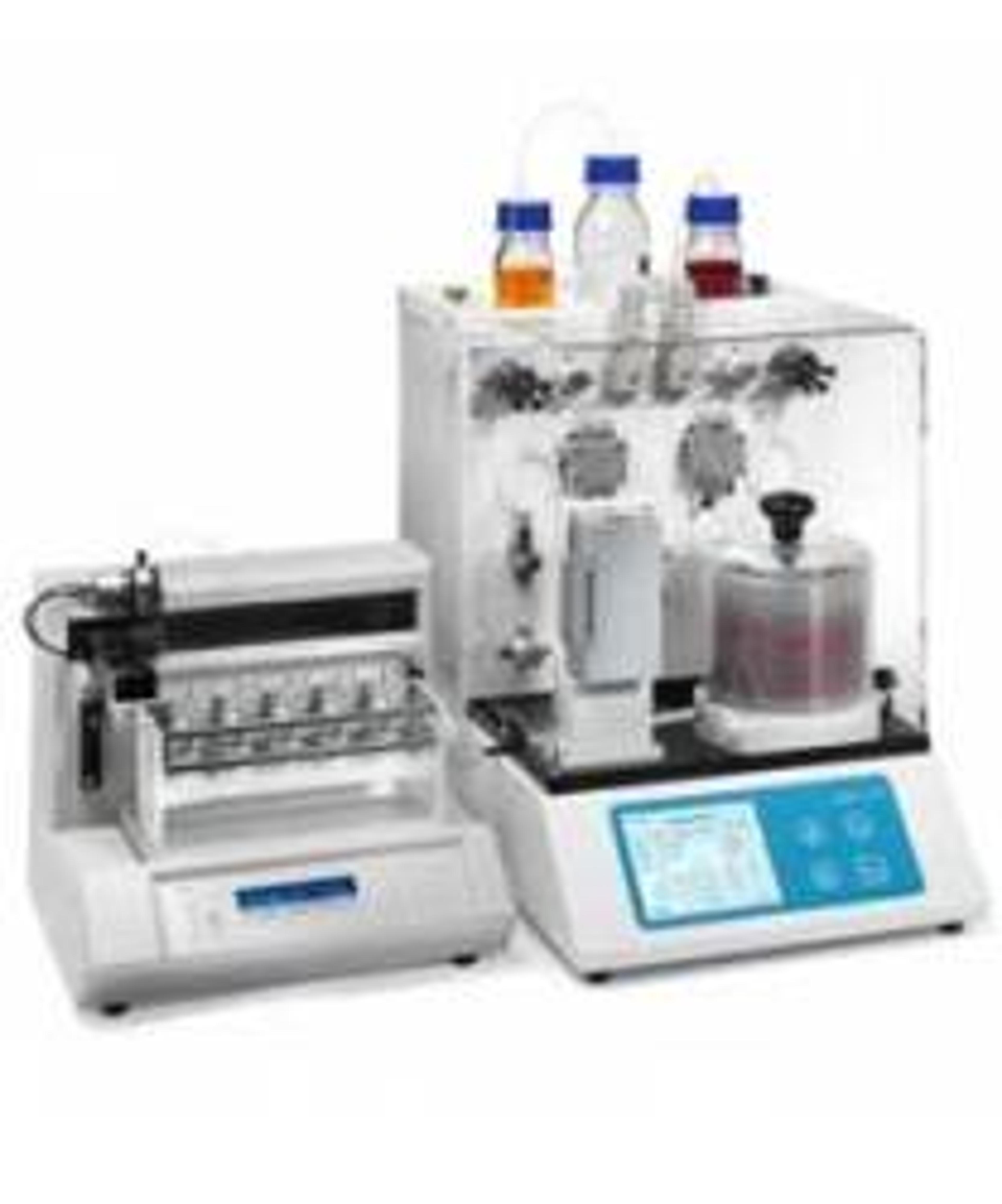
FlowSyn Continuous Flow Reactor
Uniqsis LtdFlowSyn - Making Flow Chemistry Simple FlowSyn is a fully integrated continuous flow reactor with everything you need to start doing flow chemistry including reaction optimization, synthesis and scale up. To provide maximum flexibility, a wide range of mixer and reactor options are available as well as additional modules for performing multiple experiments, or sub-ambient chemistry. • Ability to perform continuous flow chemistry under microwave-like conditions (up to 260oC). • Perform sub-ambient continuous flow chemistry using the 'Cold Coil'. • Run up to 10 automated sequential experiments with the 'Automated Experiment Package'.A pair of high pressure pumps are used to deliver reagent solutions from either stock bottles or sample injection loops through a 'T'-mixer into the electrically heated flow reactors. Reactions can be heated to 260?C and 150?C in the coil and column reactor modules respectively. Back pressure regulators of up to 1000 psi are used to pressurise the system and thus perform superheating of solvents, allowing the chemist to access'microwave like' conditions with no limitation on scale. FlowSyn is very easy to use with a high resolution user interface. The user is guided through the process for setting up a flow chemistry reaction by inputting parameters for reagent volumes, temperatures and reaction times. The user can choose to collect all of the reaction plug, or only the 'steady state' part. FlowSyn will then equilibrate and run the reaction, and finally flush the system through with solvent. Throughout FlowSyn will monitor the pressure of the system, and shut down if a problem occurs allowing FlowSyn to be safely run unattended.