
Exploring microbial evolution and the power of neurodiversity
Forage Evolution co-founder Cameron Kitzinger talks with SelectScience to celebrate Medical Laboratory Professionals Week 2026
19 Apr 2026
Medical Laboratory Professionals Week is an opportunity to celebrate the diverse minds driving scientific breakthroughs. This year, we speak with Cameron Kitzinger, COO and Co-Founder of Forage Evolution, based in Ithaca, New York. Cameron’s journey from a clinical diagnostics background to leading a biotech startup highlights the essential role of curiosity and "built-in novelty" in the laboratory.
From investigating how microbes interact with minerals to advocating for earlier science education, Cameron shares a unique perspective on the "behind the scenes" reality of microbiology. As part of our Lab4Life coverage, he discusses why the industry must prioritize diversity of thought and how the tools provided by evolution can solve modern challenges in sustainability and supply chain resiliency.
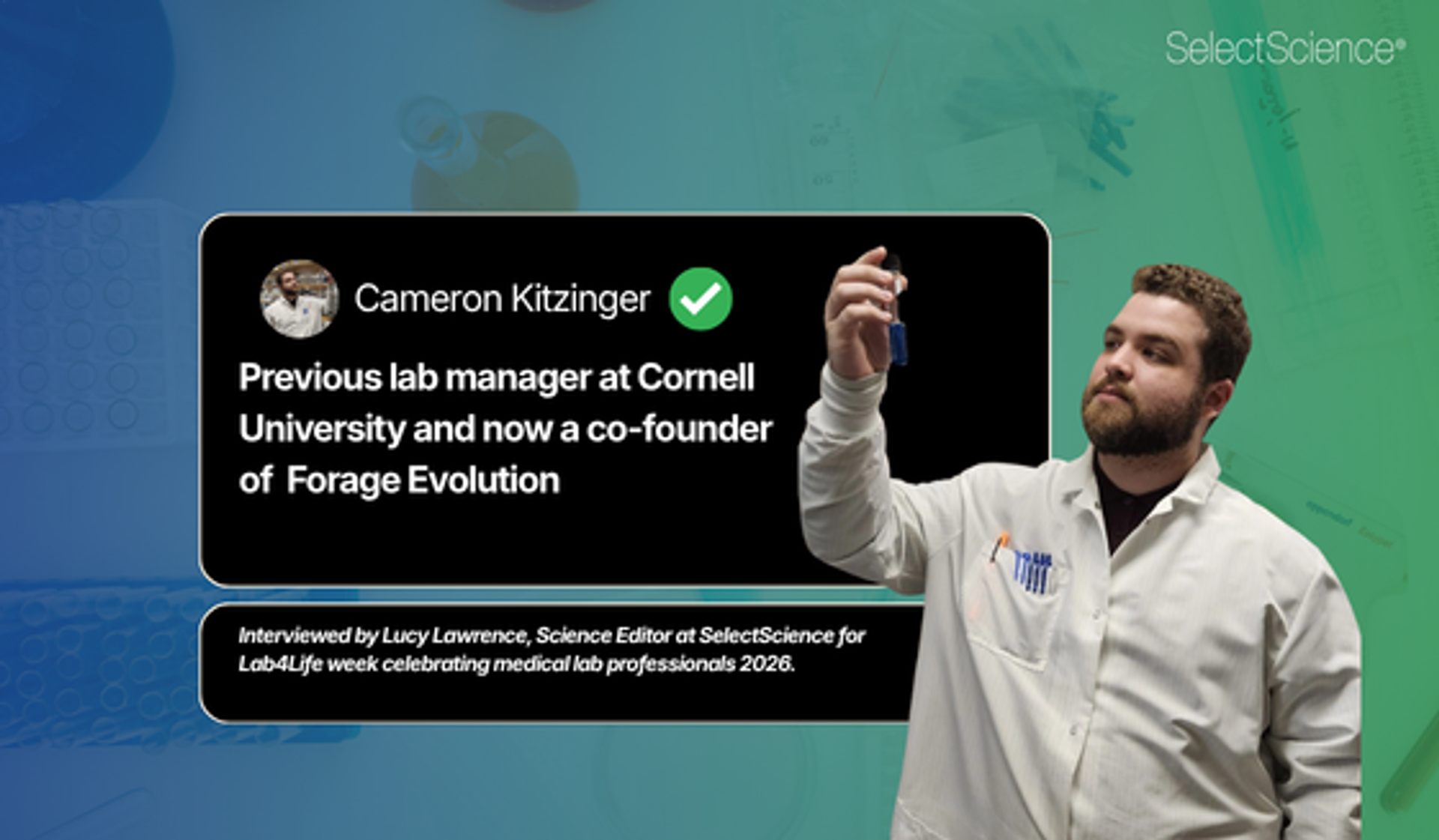
Cameron Kitzinger, previous lab manager at Cornell University and now co-founder
of Forage Evolution.
Lucy Lawrence (LL): Could you tell us about your background and what first drew you to the lab?
Cameron Kitzinger (CK): Working in a lab is great for someone with ADHD. There is an abundance of tasks to do, and most protocols have you moving around or trying new equipment. Working with biology, especially, comes with built-in novelty. I was originally drawn to the lab because I could not sit still in my regular classes, but I was always locked in when we were doing any sort of protocol or demonstration.
The reason I keep going every day is that I am helping to advance our understanding of the natural world—how it works, and how we can use the tools that evolution has provided to improve people’s lives.
LL: If you could highlight one behind the scenes reality of clinical or research diagnostics that you wish the general public understood better, what would it be?
CK: When I worked in clinical diagnostics, I was always shocked by the lack of general knowledge about microbes. They take time to grow—I can’t rush certain tests, no matter how much you pay. Even among physicians who should know better!
Bacteria and fungi are all around us, and it is about time we raise the baseline level of knowledge that the general population has about them. This extends beyond clinically relevant microbes; I think everyone should know what species are involved in pickling, alcohol fermentation, and the most common species found around the home.
LL: Without giving away confidential details, what is an area you are currently working on that you’re particularly excited about?
CK: We are investigating how microbes interact with minerals in their environment. Several species are known to interact with metals through enzyme cofactors, efflux pumps, and chelation. We get to sample fascinating locations, from the Mojave Desert to fish tanks, to find "new-to-humanity" metal-interacting genes. This could have major implications for sustainability and supply chain resiliency.
LL: We focus a lot on technical expertise, but what soft skill is actually the secret to being a truly great scientist?
CK: I have learned more from conversations with researchers than I ever could from reading papers or textbooks. Learning how to hold a conversation and ask probing questions is critical to success. Science is becoming more interdisciplinary, and many types of researchers will be increasingly necessary to answer questions moving forward.
LL: How can the industry better advocate for and support the next generation of scientists?
CK: We should focus on developing baseline competency in all people, starting with early childhood education. Getting more people curious about the world around them will ideally lead to greater investment in research, which will open the field to a larger number of people. Prioritizing diversity of thought is critical to accelerating research, so supporting young researchers from all backgrounds is essential.
Cameron Kitzinger, COO and Co-Founder Forage Evolution was speaking with Lucy Lawrence, Science Editor for SelectScience.
Explore the full feature.