
Engineered knockout cell lysates for reproducible proteomic analysis
Abcam's new offering enables proteomic studies by providing
2 Dec 2019
Abcam’s new engineered knockout cell lysates enable proteomic studies by providing researchers with “true negative” controls.
Acquiring reliable off-the-shelf knockout mouse models or cell lines that match specific experimental requirements can be challenging, and often need to be sourced directly from individual researchers or labs. Abcam’s newly-launched collection addresses this issue by providing access to over 2,800 diploid KO cell lysates, the largest selection currently available to researchers.
The lysates are useful for studies requiring loss-of-function phenotypes at the proteomic level as well as routine applications such as Western blotting and mass spectroscopy. They also can be used to support antibody and target validation. The use of diploid cells makes the lysates well suited to the more complex studies often carried out in cancer research.
Derived from commonly used immortalized cell lines, KO lysates have been engineered using CRISPR-Cas9 and are accompanied by Sanger sequencing and Western blotting validation data. Corresponding wild-type controls are also provided so that the biological impact of each KO lysate can easily be assessed within a consistent cellular background.
Abcam’s KO cell lysates deliver:
- Access to thousands of CRISPR-Cas9-engineered KO cell lysates of interest, without needing to generate or purchase a KO cell line, saving on average 4–12 weeks’ work in the lab
- Minimal preparation required
- Diploid KO lysates derived from commonly used cell lines including HeLa, HEK293T, A549, HCT116, Hep G2 and MCF
Want more of the latest science news straight to your inbox? Become a SelectScience Member for free today>>
Related products
Request Quote for All Products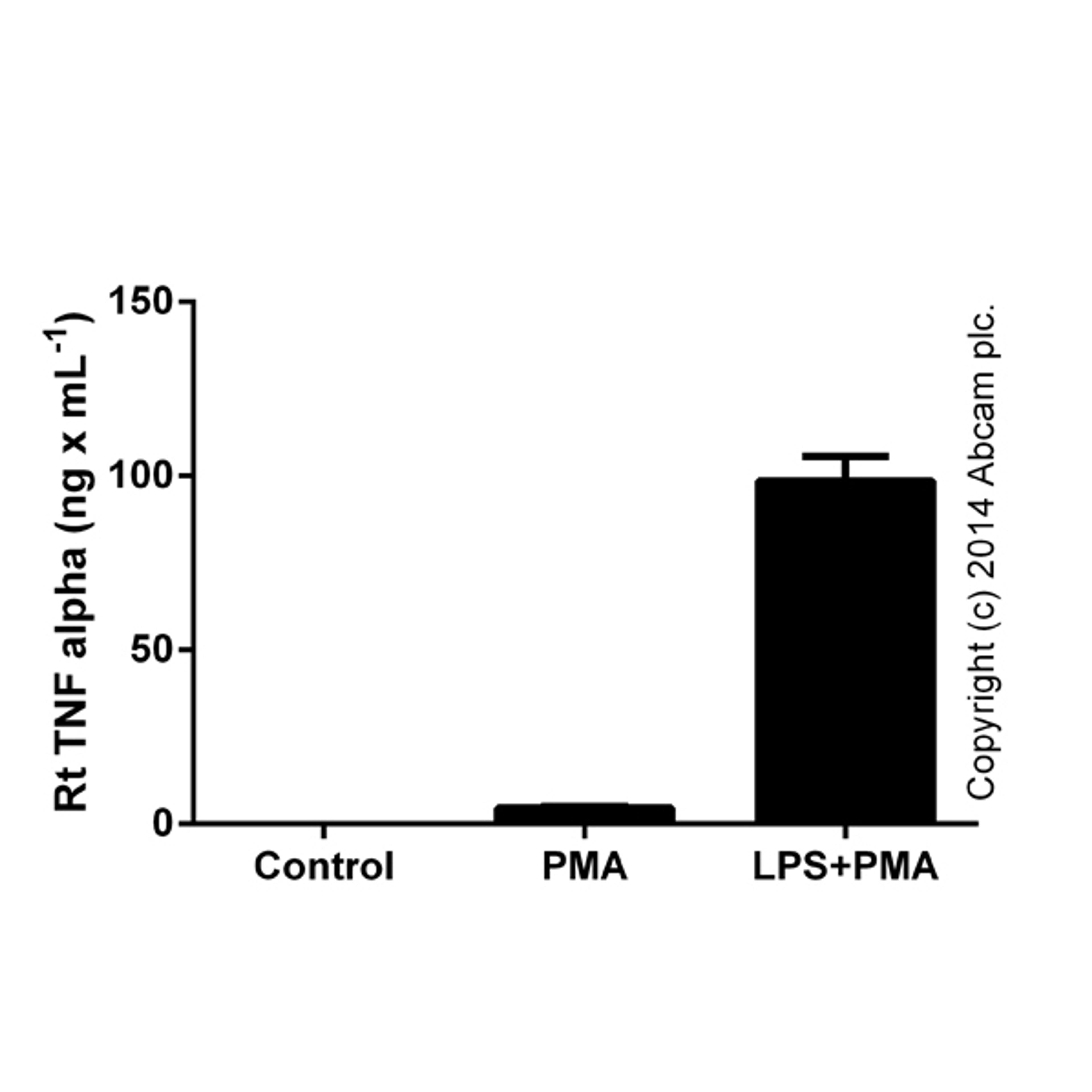
Rat TNF alpha ELISA Kit (ab46070)
Abcam plcAbcam’s TNF alpha Rat in vitro ELISA (Enzyme-Linked Immunosorbent Assay) kit is designed for the quantitative measurement of Rat TNF alpha in cell culture supernatants, serum and plasma samples. A monoclonal antibody specific for TNF alpha has been coated onto the wells of the microtiter strips provided. Samples, including standards of known TNF alpha concentrations, control specimens or unknowns are pipetted into these wells. During the first incubation, the standards or samples and a biotinylated monoclonal antibody specific for TNF alpha are simultaneously incubated. After washing, the enzyme Streptavidin-HRP, that binds the biotinylated antibody is added, incubated and washed. A TMB substrate solution is added which acts on the bound enzyme to induce a colored reaction product. The intensity of this colored product is directly proportional to the concentration of TNF alpha present in the samples. This kit will recognize both endogenous and recombinant rat TNF alpha. Sample type: Cell culture supernatant, Serum Assay type: Sandwich (quantitative) Sensitivity: < 15 pg/ml Range: 31.25 pg/ml - 1000 pg/ml Assay time: 3h 45m Assay duration: Multiple steps standard assay Species reactivity: Rat