
ELRIG announces new leadership to drive continued growth and collaboration in drug discovery

ELRIG appoints Dr. Del Trezise as Chair of the Board

9 Apr 2025
Industry news

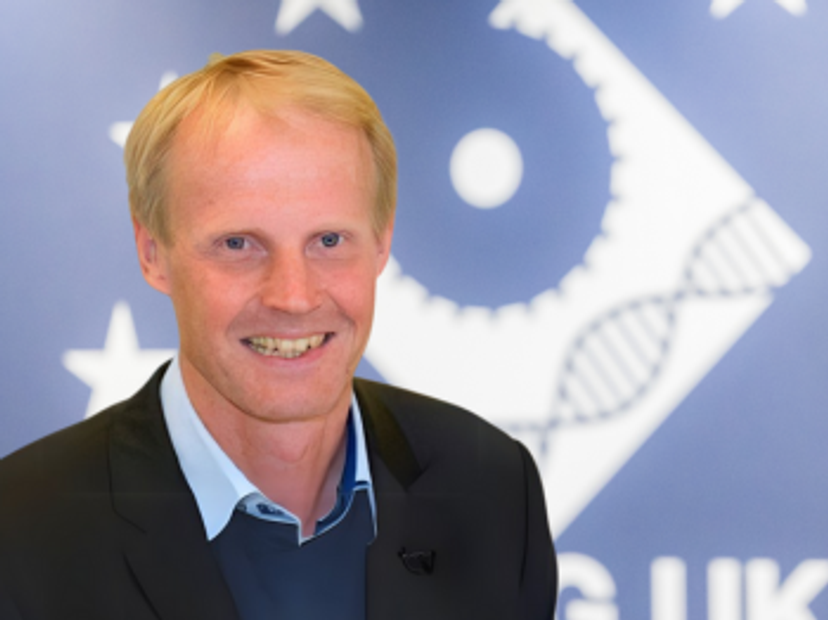
Photo of Dr. Del Trezise

Dr. Del Trezise, Chair of ELRIG, and Strategy Development, Laboratory Products and Services at Sartorius

ELRIG, a not-for-profit, volunteer-led organization dedicated to the drug discovery community, has appointed Dr. Del Trezise as Chair of the Board. In this role, he will lead ELRIG’s mission to foster collaboration, innovation, and knowledge-sharing through scientific conferences, networking events, webinars, and digital content. Dr. Trezise succeeds Melanie Leveridge, who successfully completed her four-year term as Chair.

With over 30 years’ experience in academic, biotech, and biopharma settings, Dr. Trezise brings a wealth of expertise to ELRIG. He currently holds leadership, non-executive director, and advisory roles at Sartorius, Axol Bioscience, Semarion, and Refeyn. In 2009, he co-founded the European arm of Essen BioScience, playing a pivotal role in developing industrial-scale, live-cell imaging technology for drug discovery. Previously, he held senior director positions at GlaxoSmithKline R&D, leading teams in biological reagents, assay development, and compound profiling. A long-time supporter of ELRIG, Dr. Trezise has been an active volunteer since 2013, contributing as Scientific Programme Chair, Early Career Professionals Work Group Leader, and Head of the Innovation Work Group. He joined the ELRIG Board in 2017 and remains dedicated to driving scientific innovation and industry engagement. As Chair, Dr. Trezise’s first major role will be to host Drug Discovery 2025 in Liverpool, UK, October 21–22.
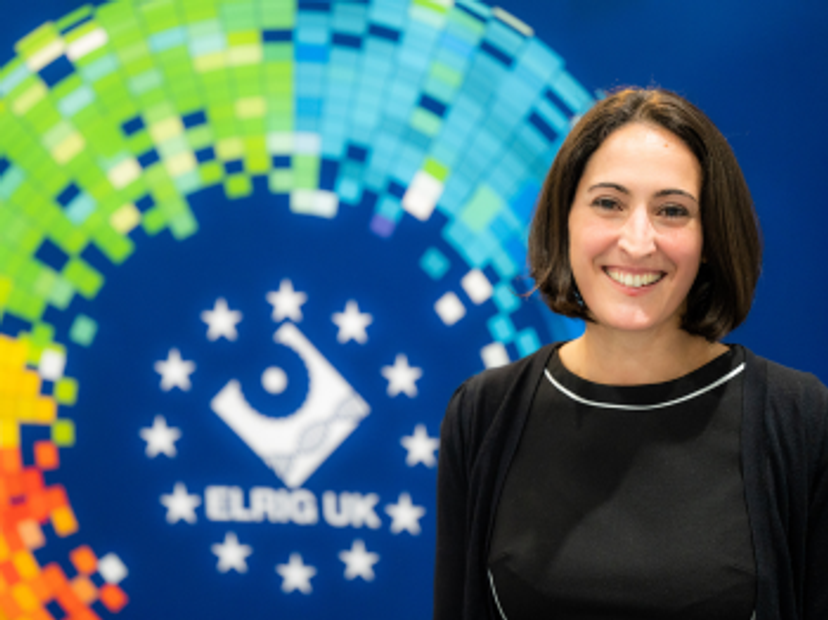
Photo of Melanie Leveridge

Melanie Leveridge, Outgoing Chair of ELRIG, and Vice President Assays, Profiling & Cell Sciences at AstraZeneca

Melanie Leveridge, Outgoing Chair of ELRIG, and Vice President of Assays, Profiling & Cell Sciences at AstraZeneca, commented: “Del is widely respected for his scientific and business leadership across biotech and pharmaceutical R&D. Over the past decade, he has helped shape ELRIG, particularly in supporting early-career professionals and startups. It has been an honor to serve as Chair, and I look forward to seeing ELRIG continue to grow under Del’s guidance.”

Dr. Del Trezise, Chair of ELRIG, and Strategy Development, Laboratory Products and Services at Sartorius, said: “Mel has been an outstanding leader, guiding ELRIG through significant growth, including navigating the COVID-19 pandemic, expanding the professional team, and embedding meaningful EDI principles. I’m excited to build on this foundation by further strengthening collaboration between our community partners through our world-class conferences and events. I look forward to working with the highly talented ELRIG Board, leadership team and volunteer network in fulfilling this ambition.”

ELRIG serves a global network of over 22,000 life science professionals from biopharma, biotech, contract research organizations (CROs), academia, and industry vendors. The Board, composed of experts from across the ELRIG community, sets the organization’s strategy and delegates initiatives to dedicated work groups. Dr. Trezise’s appointment follows several recent additions to the Board, including:

  • Dr. Laura Ajram, Chief Executive, British Neuroscience Association – Awards Work Group Leader
  • Dr. Lisa Mohamet, Senior Scientific Director, GSK – Innovation Work Group Leader
  • Dr. Rob Howes, Senior Director, Charles River Laboratories – Sustainability Work Group Leader
  • Alison Leightley, Event Marketing Manager, Redgate Software – Engagement Strategy Work Group Leader

For more information about the ELRIG team, visit: https://elrig.org/the-team/

Want the latest science news straight to your inbox? Become a SelectScience member for free today>>

Links

Tags

Cell-Based AssaysCell-based assays are used to monitor the presence, quantity and activities of a desired cellular analyte including drug molecules or biomarkers. This can reveal information on cell health (apoptosis, cytotoxicity, viability and proliferation assays), cell metabolism, cell migration and cell signaling mechanisms. Find the best cell-based assay products, kits and equipment with our peer reviewed product directory: compare products, check customer reviews and receiving pricing direct from manufacturers.Robotic WorkstationsRobotic workstations are automated platforms enabling the user to perform high-throughput, multi-application processes, from sample preparation tasks such as PCR set-up, DNA purification and NGS library preparation, to integrated sample prep and analysis workstations. Automation makes processes consistent, fast, precise and fully walk-away. Find the best robotic workstations in our peer-reviewed product directory: compare products, check customer reviews and receive pricing direct from manufacturers.High-Content ScreeningHigh-content screening (HCS), also known as high-content analysis (HCA), is a high-throughput technique used in drug discovery to identify substances that alter the phenotype of cells. HCS uses fluorescent microscopic imaging and automated image analysis to investigate cellular events such as apoptosis, cell viability, GPCR activation, oxide production, neurite outgrowth, and cell signaling. Find the best fluorescent labeling reagents, cellular assays, and high-content imaging systems in our peer-reviewed product directory: compare products, check customer reviews and receive pricing direct from manufacturers.Automated Liquid HandlingAutomated liquid handling equipment is used to mix, dilute and dispense allotted volumes of liquid into microplates and other vessels automatically. The robotic, liquid handling arms can dispense from single channel to 3456 multichannel as well as operate nanoliter dispensing, enabling high throughput of samples. Find the best automated liquid handlers in our peer-reviewed product directory: compare products, check customer reviews and receive pricing direct from manufacturers.Microplate Readers / DetectorsMicroplate readers are used to automate the detection and analysis of labeled or label-free components in microplates during assays or live-cell monitoring. Microplate readers are generally distinguished by their mode of detection. Types include absorbance, luminescence, fluorescence intensity, fluorescence polarization, TRF / FRET and multimode microplate readers. Microplate readers deliver a high throughput of samples by reading multiple wells simultaneously, with the 96-well format the most commonly used. As a result, microplate readers are often used in the drug discovery, bioassays, research and pharmaceutical industries for screening applications. Microplate loading can also be automated, with robotic microplate stackers to increase throughput. Find the best microplate readers in our peer-reviewed product directory: compare products, check customer reviews and receive pricing direct from manufacturers.Drug DiscoveryDrug discovery is the process of identifying potential new medications, involving stages such as target identification, compound screening, and preclinical development. It relies on cutting-edge technologies like high-throughput screening, artificial intelligence, and molecular modeling to accelerate the identification of drug candidates. Drug discovery plays a pivotal role in developing new therapies for diseases ranging from cancer to rare genetic disorders. Browse our peer-reviewed product directory to find the latest drug discovery technologies, compare options, check customer feedback, and get pricing directly from manufacturers.Drug DevelopmentDrug development refers to the process of bringing a new drug to market.
ELRIG appoints Dr Del Trezise as Chair of the Board