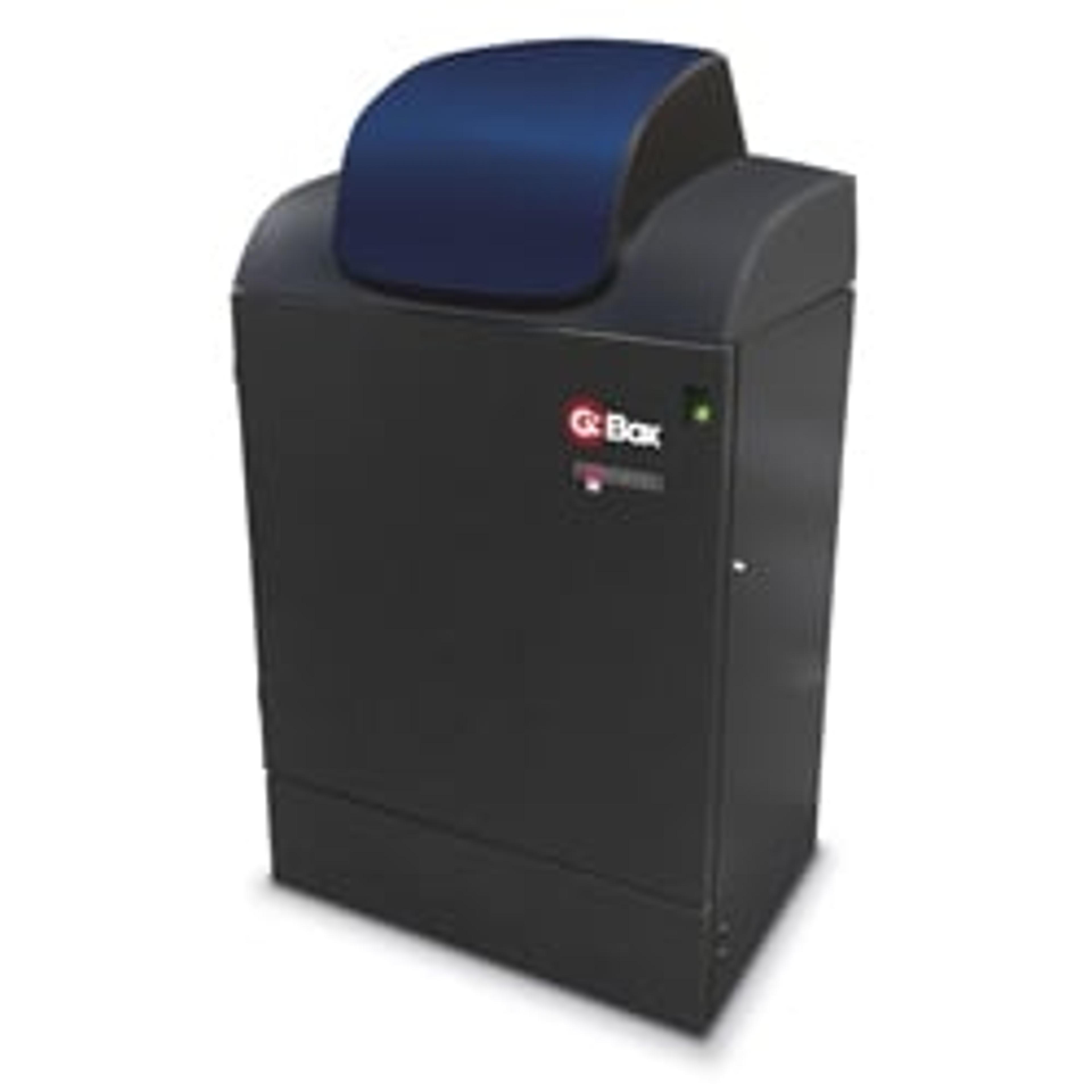
Dyversity 2D Gel Image Analyser used at Major UK University To Help Accurately Detect Proteins Associated with Stem Cell Differentiation

14 Aug 2008

Product news

Syngene, a world-leading manufacturer of image analysis solutions, is pleased to announce that one of the UK’s top universities, Imperial College London, is using Dyversity, Syngene’s innovative 2D gel imaging system, to assist in precise identification of proteins associated with directing embryonic stem cells (ESCs) to a particular cell lineage.

Scientists in the Institute of Biomedical Engineering at Imperial College are using Dyversity to rapidly image 2D DIGE (Differential Gel Electrophoresis) gels containing Cy dye labelled proteins. The proteins were isolated from two different conditioned media, where both media direct murine ESCs to differentiate into mesoderm lineages. Therefore, by identifying and analysing any common proteins seen on the Dyversity images, researchers at the Institute of Biomedical Engineering in collaboration with the stem cell bio-processing group in the Department of Chemical Engineering, hope to determine which signalling factors direct differentiation.

Dr Judit Nagy, Director of Proteomics Facility, Institute of Biomedical Engineering, commented: “Due to the potential for ESCs to develop into any cell line, they could become a good source of bone tissue, for example. However, before we can use ESC in this way, we have to find out which proteins direct differentiation and this is where we hope our proteomics approach using 2D DIGE gels and MALDI-TOF analysis will provide some clues.”

“We use Dyversity as part of this work because it is capable of generating high res-olution images of our 2D DIGE gels in a few minutes, which is very important when we compare different gels to locate common proteins,“ concluded Dr Nagy.

Laura Sullivan, Syngene’s Divisional Manager stated: “We are delighted to see our Dyversity system being used as part of critical stem cell research at such a prestigious university like Imperial College. Their application shows that Dyversity is a high performance system capable of imaging very complex 2D protein gels & should be seen as an invaluable tool for any proteomics research programmes.

G:BOX Chemi XX9

Syngene

G:BOX Chemi XX9 gel imaging system has a high resolution camera for imaging multiple sample types and sizes, from fluorescence 1D to 2D gels to chemiluminescent blots. Your lab’s imaging system shouldn’t control how you detect proteins on Western blots. Chemiluminescence is great if you want sensitive detection of picogram or femtogram amounts, while fluorescence lets you quantify and detect multiple different proteins on one blot. 

(1)

Links

Tags

ElectrophoresisElectrophoresis equipment is used to separate mixtures of protein, DNA or RNA, based on their electric charge, size and other physical characteristics, by passing them through a medium such as a polyacrylamide gel, an agarose gel or a capillary tube. Electrophoresis equipment includes horizontal and vertical gel electrophoresis chambers, isoelectric focusing systems, 2D electrophoresis and capillary electrophoresis instruments. Precast gels with a gradient can be used or gels can be hand cast. Samples are run alongside ladders or markers to identify the approximate size of a molecule. Separated proteins and nucleic acids in the gel can be stained or probed with fluorescent markers and then imaged and detected using gel documentation instruments, transilluminators, densitometers and scanners. Find the best electrophoresis equipment in our peer-reviewed product directory: compare products, check customer reviews and receive pricing direct from manufacturers.ProteomicsProteomics is the systemic bioinformatics study of proteins and amino acids, including their structure, size, function and identification. Tools used in proteomics include chromatography, blotting and gels, protein arrays, mass spectrometry and ELISA and associated analysis software. Analyzers and proteomic systems should be sensitive, high resolution, fast and may be automated for high-throughput.Cell Lines Stem Cells and Primary CellsPrimary cell cultures, established cell lines and stem cells are vital for <i>in vitro</i> and <i>ex vivo</i> experimentation. High-quality cells, optimized for your applications, alongside optimized cell substrates, growth medium and supplements, are critical for experimental success. Explore a range of cells suitable for your applications, including isogenic cell lines, competent cells, induced pluripotent stem cell (iPSC)-derived cell lines, fungal/bacterial/mammalian cell lines, stem cells and cancer cell lines. Find the best cells for your research in our peer-reviewed product directory: compare products, check customer reviews and receive pricing direct from manufacturers.Gel Doc / Image AnalysisGel documentation (gel doc) or gel imaging systems are used for the analysis of proteins, antibodies and nucleic acid immobilized in polyacrylamide or agarose gels, membranes or microarrays. Explore a range of a gel imaging systems, densitometers, scanners, transilluminators or UV lamp + CCD cameras for your image analysis solutions. Colorimetric, fluorescent and/or radioisotopic samples can be visualized and documented for further analysis. See gel doc / Image analysis software for quantitative 1D and 2D analysis of your samples. Find the best gel doc / image analysis products in our peer-reviewed product directory: compare products, check customer reviews and receive pricing direct from manufacturers.