Chemical Ionization (HR-CI) Source Introduced by LECO for Pegasus® GC-HRT

5 Mar 2013

Sarah Thomas
Associate Editor

Product news

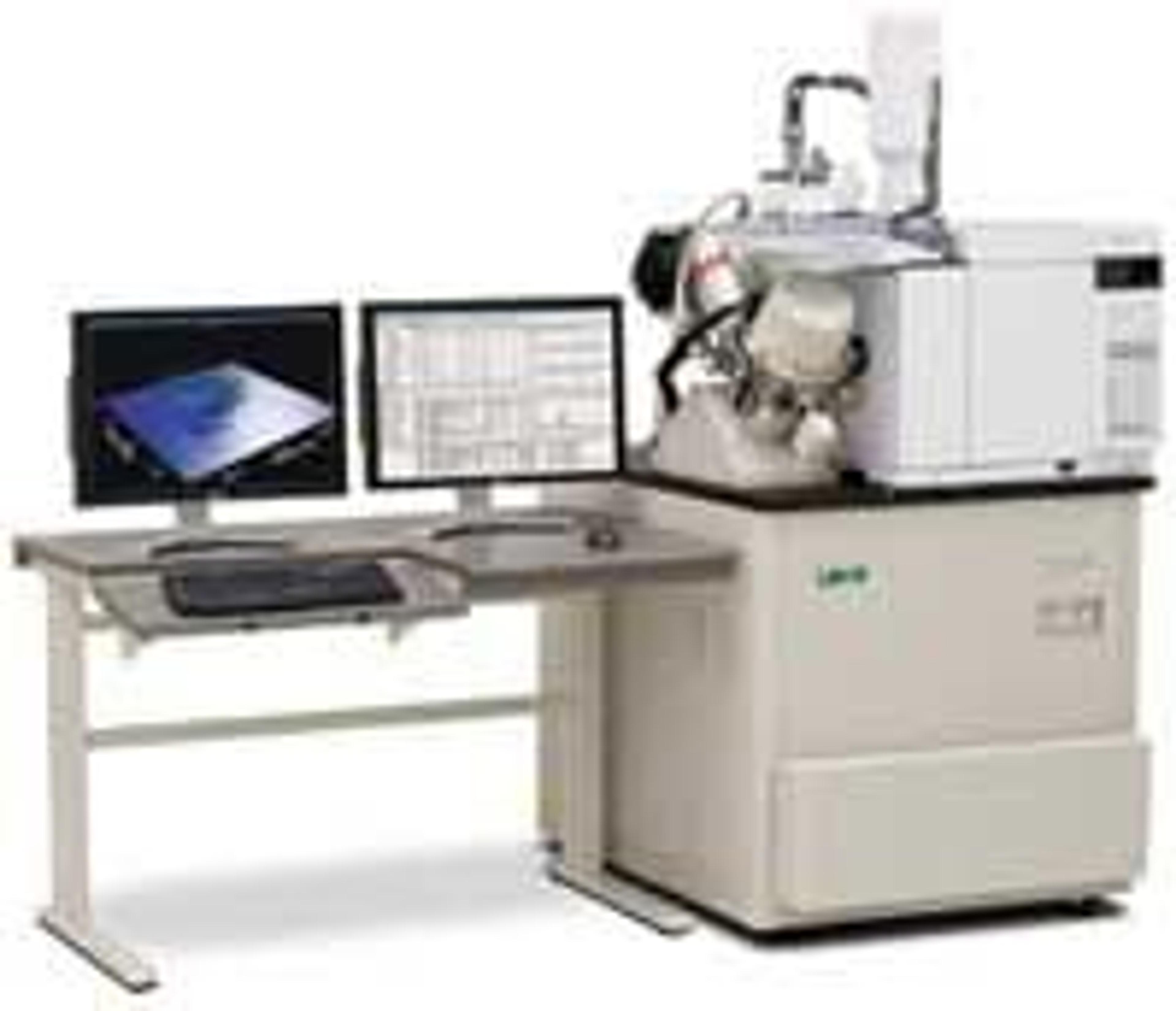
LECO Corporation is pleased to announce a chemical ionization (HR-CI) source for the Pegasus GC-HRT (high resolution time-of-flight mass spectrometer). This field upgradable option empowers users to dramatically change their high resolution GC/MS information with never before seen mass accuracy and resolution on pseudomolecular ions. The Pegasus GC-HRT is available with both electron ionization (EI) and HR-CI sources, providing the option of comparison with classic NIST spectra (EI), and preservation of the molecular ion (HR-CI).

"We are excited to announce the availability of this traditional source for our Pegasus GC-HRT,” said Dr. Lorne Fell, Product Manager, LECO Separation Science. “We believe that it will take molecular ion confirmation to a whole new level when combined with the power and capabilities of the GC-HRT."

“For scientists performing petroleum analyses or metabolomics research, the addition of HR-CI makes possible identification of molecular ions and permits the robust assignment of molecular formula enhanced by the resolution and isotope ratios,” said Dr. Jeff Patrick, Director of Marketed Technologies, LECO Separation Science. “This is useful in many other fields of analysis, including environmental, dioxins, and food safety.”

Together, the CI source and the Pegasus GC-HRT provide a complete package for high-throughput/high-information content analysis, with resolution up to 50,000 FWHM, mass accuracies less than 1 ppm, and acquisition rates up to 200 spectra/second - all with high-integrity isotopic abundance measurements to facilitate rich information content and high-confidence analyte identification. ChromaTOF-HRT® software utilizes True Signal Deconvolution® for accurate peak identification, seamless data handling, and compatibility with the NIST library.

Pegasus® GC-HRT

LECO Corp.

While some systems on the market offer users a choice between acquisition speed or resolution, the Pegasus GC-HRT provides scientists with an unprecedented combination of speed, resolution, mass accuracy, isotopic abundance, and dynamic range. This instrumentation utilizes LECO's own Folded Flight Path™ (FFP™) technology to allow users to achieve resolutions of up to 50,000. LECO's exclusive ChromaTOF-HRT™ software with Automated Peak Find and True Signal Deconvolution® provides seamless data handling and compatibility with the NIST Library.

(3)

Links

Tags

Gas ChromatographyGas chromatography (GC) is an analytical technique used to separate and quantitate mixtures of small and volatile compounds. Gas chromatographs or GC systems include components such as GC columns, detectors, pumps and autosamplers. Choose from packed or capillary GC columns, flame ionization (FID), photoionization (PID) electron capture detectors and selective or non-selective detectors. Find the best gas chromatographs in our peer-reviewed product directory: compare products, check customer reviews and receive pricing direct from manufacturers.Ion ChromatographyIon chromatography, also known as ion exchange chromatography, is a high-performance liquid chromatographic technique used for the separation and identification of ions or polar molecules in a sample, including proteins, nucleotides and amino acids. Equipment includes ion exchange columns, ion exclusion columns, ion chromatography systems, pumps, and detectors. Find the best ion chromatography equipment in our peer-reviewed product directory: compare products, check customer reviews and receive pricing direct from manufacturers.Mass SpectrometryMass spectrometry (MS) is a powerful analytical technique used to identify and quantify molecules based on the mass-to-charge ratio of gas-phase ions. It provides detailed information about the structure, composition, and properties of compounds and is widely used across fields such as environmental monitoring, materials science, drug discovery and development, food and beverage testing, and wider chemical research. Key MS techniques include tandem mass spectrometry (MS/MS), liquid chromatography–mass spectrometry (LS-MS) and inductively coupled plasma (ICP-MS). Choosing from these wide range of techniques and technologies can be a daunting task, so keep up to date with scientific applications, performance expectations, and customer reviews here all in one place. Visit our product directory to receive quotes direct from the manufacturer. Particle CharacterizationParticle characterization instruments are used to determine particle size distribution, shape, surface area, zeta potential, density and porosity of particles and materials. Multiple tecchniques are available for determining particle size, shape and count including dynamic light scattering (DLS), laser diffraction, electrozone (Coulter technique), imaging particle analysis and single particle optical sensing. Determine the density of your material with a gas pycnometer or examine its surface area and porosity with gas adsorption analyzers and mercury porosimeters. Find the best particle characterization instruments in our peer-reviewed product directory: compare products, check customer reviews and receive pricing direct from manufacturers.GC-MS GC-MS (gas chromatography-mass spectrometry) instruments and equipment are used to separate, quantify and identify mixtures of small and volatile compounds, such as polycyclic aromatics, fatty acids and alcohols. Often used in drug detection, forensic investigation and environmental analysis for pesticides and contaminants, GC-MS is a powerful addition to your lab’s analytical capabilities. GC-MS/MS instruments equipped with a qTOF or triple quadrupole analyzers can give greater sensitivity and resolution to your analysis. Find the best GC-MS instruments and equipment in our peer-reviewed product directory: compare products, check customer reviews and receive pricing direct from manufacturers.Chemical Process AnalysisChromatographyChromatography is a powerful technique used to separate and analyze components of mixtures based on their chemical properties. It is widely used in fields like biochemistry, pharmaceuticals, and environmental analysis. By exploiting differences in the interaction of substances with a stationary phase and a mobile phase, chromatography enables precise purification and quantification of compounds. Whether you're working with complex biological samples or industrial chemicals, chromatography is essential for obtaining high-quality results. Browse our peer-reviewed product directory to find the best chromatography systems, compare products, read customer reviews, and get pricing directly from manufacturers.Process DevelopmentProcess development aims to optimize the performance of manufacturing systems. This involves the assessment of quality and efficiency of both processes and products. This is particularly important in the scale-up of chemical processes.