
Cancer and Immunology Research Summit: Poster highlights

Explore the latest research from scientific posters presented at the SelectScience Virtual Cancer and Immunology Research Summit 2022

23 Aug 2022


Dora Wells
Clinical Content Editor

Editorial article

cancer and immunology research posters

This year’s SelectScience® Virtual Cancer and Immunology Research Summit 2022 saw a range of thought-provoking scientific posters presenting the latest research findings in the field. Discover the hot topics in our top picks below to gain insights on a new format of monoclonal antibody (mAb) conjugates.


Vectorized conjugates of monoclonal antibodies: Diagnostic and therapeutic applications
Vectorized conjugates of monoclonal antibodies: Diagnostic and therapeutic applications

mAbs have revolutionized the landscape of cancer treatment with indispensable applications in various malignancies. This poster displays an adaptable rebridging (conjugation) approach to develop a new format of mAbs conjugates (biomodified) with a multitude of applications.


Download poster


Transmission electron microscopy of the liver mitochondria of N-Nitrosodibutylamine treated mice
Transmission electron microscopy of the liver mitochondria of N-Nitrosodibutylamine treated mice

Nitrosamines are known to exhibit carcinogenic activity, and dibutylnitrosamines (DBN) is one of the most carcinogenic nitrosamines known, after diethylnitrosamines. This poster investigates the effect on liver mitochondria of mice exposed to DNB.


Download poster


Cancer genomics: A modern approach to cancer treatment using cutting-edge genetic engineering

Cancer genomics: A modern approach to cancer treatment using cutting-edge genetic engineering

Cancer is the division of cells in an uncontrolled manner caused by aberrant modification of the DNA sequence. This poster summarizes an advanced biotechnology technique that could be used as a treatment of cancer through genetic engineering.


Download poster


Changes in breast cancer care in New York during the COVID-19 pandemic
Changes in breast cancer care in New York during the COVID-19 pandemic

New York has an unusually high incidence of breast cancer compared to the rest of the United States. Furthermore, the COVID-19 pandemic has caused changes in diagnostic and treatment procedures and frequencies. This poster assesses changes in breast cancer diagnoses, treatments, and patient perspectives in New York during the COVID-19 pandemic.


Download poster


Patients feedback on the quality of patient navigator’s services at Amorvard Medical Services, Nigeria
Patients feedback on the quality of patient navigator’s services at Amorvard Medical Services, Nigeria

Lack of access to care, funding limitations, and cultural and social barriers are associated with adverse cancer outcomes. This poster evaluates the feedback of breast cancer patients on the quality of patient navigator services at the One-Stop Breast Clinic, Amorvard Medical Services Limited.


Download poster


Modulation of the immune system by melatonin: Implications for cancer therapy
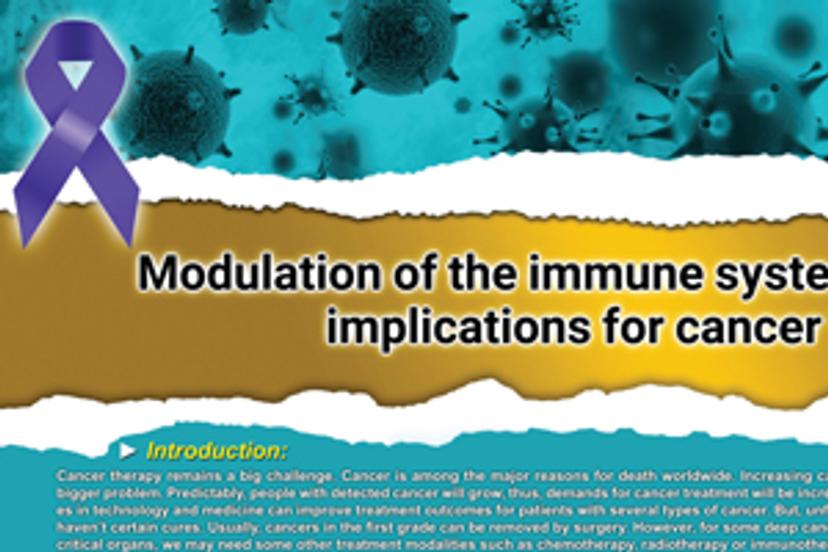
Modulation of the immune system by melatonin: Implications for cancer therapy

Melatonin is known as the most important regulator of the circadian rhythm, and elevated melatonin during day and night can reduce oxidative stress and genomic instability markers. This poster discusses how melatonin affects immune responses in both normal tissues and malignancies.


Download poster


Want to see more from our Cancer and Immunology Research Summit 2022? Click here to discover research from our brilliant lineup of guest speakers, the latest news in oncology, and more!

Links

Tags

AntibodiesAntibodies are used in techniques such as confocal and fluorescence microscopy, flow cytometry, ELISA, ELISPOT, immunohistochemistry, western blotting and immunopreciptation. Select specific antigen reactivity, high specific affinity, low non-specific binding, monoclonal or polyclonal, primary or secondary antibodies and associated conjugates such as an enzyme or dye for visualization.Cell / Tissue CultureCell culture or tissue culture is used to study the biology of cells or tissues and to isolate cellular products in an environment which can be manipulated and well defined. Accurately control your culture environment with bioreactors or culture incubators, bind your cells to a surface or together with an extracellular matrix. Distinguish cell types with differential media or proliferate cells with certain characteristics using selective media. Enrich your media with supplements such as growth factors, sera and vitamins. Find the best cell and tissue culture products, kits and equipment in our peer-reviewed product directory: compare products, check customer reviews and receive pricing direct from manufacturers.Combinatorial ChemistryCombinatorial chemistry, also known as combichem, is a technique used in drug discovery to create libraries of structurally related compounds. A library is generated by synthesis with a chemical reactor system or by computer-based modeling of compound combinations. When undertaking combinatorial chemistry consider reagents, buffers, resins and standards.Cell Lines Stem Cells and Primary CellsPrimary cell cultures, established cell lines and stem cells are vital for <i>in vitro</i> and <i>ex vivo</i> experimentation. High-quality cells, optimized for your applications, alongside optimized cell substrates, growth medium and supplements, are critical for experimental success. Explore a range of cells suitable for your applications, including isogenic cell lines, competent cells, induced pluripotent stem cell (iPSC)-derived cell lines, fungal/bacterial/mammalian cell lines, stem cells and cancer cell lines. Find the best cells for your research in our peer-reviewed product directory: compare products, check customer reviews and receive pricing direct from manufacturers.ImmunologyImmunological techniques measure and characterize immune responses. Immunology kits and analysis systems often use techniques such as ELISA, radioimmunoassay (RIA) and immunodiffusion assays, Immunohistochemistry, and flow cytometry. Immunologists use equipment such as flow Cytometers, plate readers, plate washers and fluorescent microscopes.Cellular PathologyCellular Pathology deals with the microscopic analysis of tissue samples and cells. Sample preparation and processing includes fixation, staining, sectioning and slide mounting, using equipment such microtomes and cryostats. In choosing immunohistochemistry and immunocytochemistry kits, consider chromogens, staining method, antibodies, microscopes and imaging.Cell-Based AssaysCell-based assays are used to monitor the presence, quantity and activities of a desired cellular analyte including drug molecules or biomarkers. This can reveal information on cell health (apoptosis, cytotoxicity, viability and proliferation assays), cell metabolism, cell migration and cell signaling mechanisms. Find the best cell-based assay products, kits and equipment with our peer reviewed product directory: compare products, check customer reviews and receiving pricing direct from manufacturers.Point-of-CarePoint-of-Care Testing (POCT) or Near Patient Testing (NPT) products are available for urine, blood and other clinical chemistry analyses. POCT includes: blood glucose testing, blood gas and electrolytes analysis, rapid coagulation testing (PT / INR), rapid cardiac markers diagnostics, drugs of abuse screening, urine strips testing, pregnancy testing, fecal occult blood analysis, food pathogens screening, hemoglobin diagnostics, infectious disease testing and cholesterol screening.BiomarkersBiomarkers are biological markers which can be measured and evaluated to indicate a biological state. The use of biomarkers in research and diagnosis can indicate a normal or disease state or drug response of cells / tissues. Biomarkers include genetic markers, cell surface markers such as antigens, antibodies or receptors and secreted molecules such as cytokines. An assay system is required for identification of biomarkers. :Clinical TrialsClinical Trials, an essential part of drug discovery process, assess the safety and effectiveness of a new medication or device in the pharmaceutical industry. Clinical Trials are a phased process (Phase 0, Phase I, Phase II, Phase III and Phase IV) which begins after initial preclinical testing.Cancer DiagnosticsThere are a wide variety of diagnostic tests for cancer available, and this range continues to expand as our knowledge of cancer improves. Current diagnostic methods include biopsy, imaging and blood tests for known biomarkers. New methods in research development include liquid biopsies and cancer breathalyzers.BiopharmaceuticalsBiopharmaceuticals are proteins and other compounds (such as nucleic acids) produced by living organisms that have uses as therapeutics or for in vivo diagnostics. The most well known example of a biopharmaceutical product, and the first to be approved for therapeutic use, was recombinant human insulin.TherapeuticsTherapeutics are treatments designed to alleviate or cure diseases. These include pharmaceuticals, biologics, and gene therapies, which work by targeting specific disease mechanisms. Advances in personalized medicine and biologics offer new hope for patients with conditions that were previously difficult to treat. Browse our peer-reviewed product directory to find therapeutic solutions for various diseases; compare products, check user reviews, and get pricing directly from manufacturers.Breast CancerBreast cancer is a type of cancer that begins in the cells of the breast and can spread to other parts of the body. Early detection, accurate diagnosis, and targeted treatments are essential for improving patient outcomes. Browse our peer-reviewed product directory to find the best breast cancer research and diagnostic tools, compare products, check reviews, and get pricing directly from manufacturers.Cancer ResearchAlthough cancer is often referred to as a single condition, it actually consists of more than 100 different diseases. Microscopy, mass spectrometry, high throughput sequencing and flow cytometry are some of the most common techniques employed in cancer research labs.