
Bionomous releases Sortivo for automated screening and sorting of complex biological entities
Bionomous launches Sortivo at SLAS Europe to accelerate the adoption of New Approach Methodologies (NAMs)
21 May 2026At SLAS Europe in Vienna, Austria, Bionomous launched Sortivo™, an automated benchtop platform for the gentle screening, sorting and plating of complex biological entities. Designed for zebrafish embryos, organoids and other large, delicate samples from 300 µm to approximately 2 mm, Sortivo aims to accelerate the adoption of New Approach Methodologies (NAMs) in toxicology and pre-clinical research by replacing manual, labour-intensive workflows.
Automating zebrafish embryo and organoid workflows
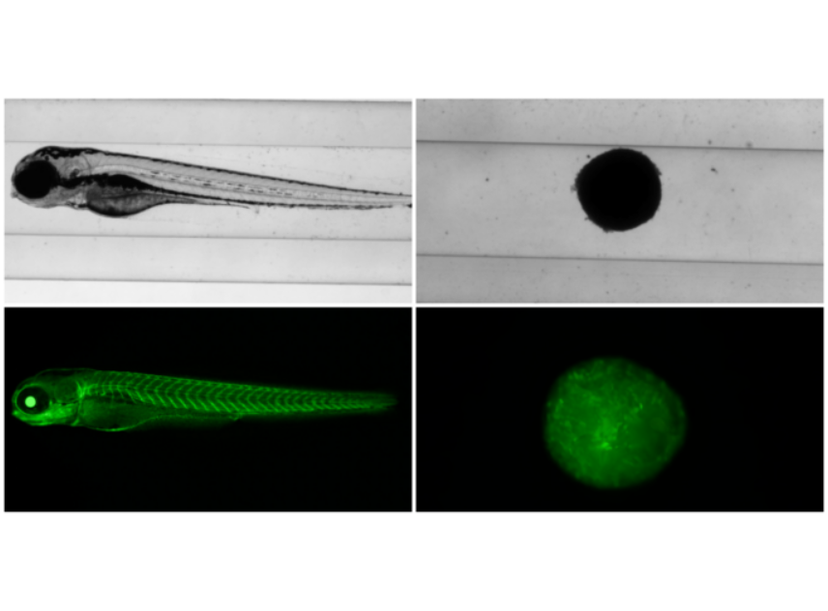
Brightfield and fluorescence images of zebrafish embryos used in automated screening workflows
Sortivo is engineered to automate the screening, sorting and plating of complex biological entities that have traditionally required hours of manual pipetting under a stereomicroscope. The platform handles entities ranging from 300 µm to around 2 mm, including zebrafish embryos and organoids, which are increasingly used as non-mammalian, non-animal alternatives in life science research.
By integrating high-resolution brightfield and multi-channel fluorescence imaging with AI-based classification, Sortivo delivers image-driven selection and gentle handling in a compact benchtop system. This combination is designed to standardize and scale workflows that are currently constrained by manual sorting, while maintaining the viability and integrity of delicate samples.
Image-based picking and large-particle sorting in one platform
Sortivo combines the capabilities of image-based picking and large-particle sorting in a single device. This approach brings individualized, large-scale screening to larger and more fragile biological entities, in a way that parallels how flow cytometry transformed single-cell analysis.
The platform is designed to provide:
- Automated, image-based screening of individual entities
- AI-driven classification using brightfield and fluorescence imaging
- Gentle handling and standardized plating of large, delicate samples
By uniting these capabilities, Sortivo enables researchers to perform high-throughput, reproducible experiments on zebrafish embryos, organoids and similar models.
Supporting the shift toward New Approach Methodologies (NAMs)
The launch of Sortivo comes at a time when regulators are actively encouraging the adoption of New Approach Methodologies (NAMs) in toxicology and pre-clinical studies. NAMs prioritize non-mammalian, non-animal alternatives that offer ethical, sustainability and scientific advantages over traditional rodent or non-human primate models.
Zebrafish embryos and organoids are central to this transition, but their broader use has been limited by the manual, labour-intensive workflows required for their handling and analysis. By automating these processes, Sortivo is intended to help academic laboratories, pharmaceutical companies and contract research organizations (CROs) integrate NAMs into routine, reproducible research pipelines.
Designed with input from biologists and engineers
Frank Bonnet, CEO and co-founder of Bionomous, explains the motivation behind the platform, “Sortivo represents the next step in our mission to automate and accelerate life science research. Our customers told us very clearly: zebrafish and organoid workflows have outgrown manual sorting. They need a platform that combines gentle handling with image-based AI and standardised plating, and that they can actualy afford and operate every week. Sortivo is our answer.”
Want the latest science news straight to your inbox? Become a SelectScience member for free today>>
Tags
Frequently asked questions
Show frequently asked questions
How does Bionomous Sortivo automate zebrafish embryo and organoid workflows in life science research?
Sortivo™ is an automated benchtop platform developed by Swiss-based start-up Bionomous to replace manual, labor-intensive zebrafish embryo and organoid workflows. It automates the gentle screening, sorting and standardized plating of complex biological entities ranging from 300 µm to approximately 2 mm.
By integrating high-resolution brightfield and multi-channel fluorescence imaging with AI-based classification, Sortivo enables image-driven selection and gentle handling of zebrafish embryos, organoids and similar large, delicate samples, allowing researchers to perform high-throughput, reproducible experiments.
What role does Sortivo play in supporting New Approach Methodologies (NAMs) in toxicology and pre-clinical research?
Sortivo™ is designed to accelerate the adoption of New Approach Methodologies (NAMs) in toxicology and pre-clinical studies by automating workflows for non-mammalian, non-animal models such as zebrafish embryos and organoids.
Regulators are actively encouraging NAMs because they offer ethical, sustainability and scientific advantages over traditional rodent or non-human primate models. By automating the previously manual, labor-intensive handling and analysis of these models, Sortivo helps academic laboratories, pharmaceutical companies and contract research organizations (CROs) integrate NAMs into routine, reproducible research pipelines.
What key features distinguish the Sortivo platform for image-based picking and large-particle sorting of complex biological entities?
Sortivo™ combines image-based picking and large-particle sorting in a single compact device, bringing individualized, large-scale screening to larger and more fragile biological entities. Its key features include automated, image-based screening of individual entities; AI-driven classification using brightfield and fluorescence imaging; and gentle handling with standardized plating of large, delicate samples. This integrated approach parallels how flow cytometry transformed single-cell analysis, but is tailored for complex entities such as zebrafish embryos and organoids, maintaining their viability and integrity while scaling up experimental throughput.