
Best practices for bioanalytical method development
Explore top tips for oligonucleotide analysis and learn how to optimize your sample prep and LC-MS acquisition
9 Jun 2021
In recent years, the development of next-generation oligonucleotide therapies with high target specificity and stability has greatly increased, yet the precise and productive analytical testing of these molecules has remained a significant challenge.
In this SelectScience webinar, now available on demand, Mary Trudeau, principal applications scientist at Waters Corporation, describes how to address the analytical challenges posed by therapeutic oligonucleotides and outlines approaches to optimize sample prep and LC-MS acquisition for maximum sensitivity and selectivity.
Watch on demandThink you’d benefit but missed the live event? Register now to watch the webinar at a time that suits you and read on to find highlights from the live Q&A session.
Q: What are the common parameters that need to be evaluated while validating a method for oligonucleotides?
MT: We use small molecule LC-MS method validation guidance, which includes dynamic range, linearity, precision, accuracy, inter/intra assay performance and minimal matrix assessment.
Q: To analyze an oligonucleotide with a mass of more than 100kb, which mass spectrum is suitable?
MT: This would be a balance of LC performance and MS detection choice. Multiple charged precursors allow us to use tandem quadrupole with ease-of-use benefit. However, high-resolution mass spectrometry (HRMS) allows quantitative and qualitative analysis. Intact analysis still can be limited on HRMS though. If size is an issue, oligonucleotide digestion would be the next plausible analysis technique.
Can I use a MS with mass range up to 2,000 m/z for detection of a 3kb oligonucleotide?
MT: Absolutely. Much like peptide analysis, due to their charged ionic backbone, we can predict the multiply charged precursors, as I showed with the MassPrep ODT standard (15-35T). In this example, the 4- and 5- precursors were in the mass range of our tandem MS quadrupole m/z 2050 on both quadrupoles.
What m/z ratio needs to set for an oligonucleotide with more than 50 base pairs?
MT: One can theoretically assume the charge states feasible for tandem quadrupole m/z range 2050 would be most likely -9,-10, -11 and up. The trade-off is the larger oligonucleotides will often have less MS sensitivity due to dilution of signal across all charge states.
Q: Do your ion-pair reagents cause problems when trying to use the MS system in positive ion mode, or do you need to dedicate an MS system for this method?
MT: For oligonucleotide analysis, we are focused on negative ion mode. But in general, yes. Ion pairing reagents often cause MS suppression. For this reason, we often try to balance the amount of IP reagent required for adequate retention and separation of the analytes of interest.
Q: What are the most common solvents used while running LC-MS for oligonucleotides?
MT: There are many reported in the literature and often the choice will depend on the oligonucleotide and whether the detection is optical or MS. Common reagents are hexylamine, triethylamine, triethylammonium acetate, acetic acid, hexafluoroisopropanol, with methanol or acetonitrile. In our labs, it is common for us to use TEA/HFIP, HA/HFIP, or DIEA/HFIP.
Q: What is the function of HFIP in mobile phase?
MT: HFIP is the buffering reagent with an effective pH 7.9-8.5. It improves the selectivity of LC separation and often can be used in very low concentration (10-50 mM ) and causes much less MS suppression compared to other buffering reagents like acetic acid.
Q: What are all the foreseeable sources of non-specific binding during oligo analysis?
MT: Non-specific binding associated with metal adsorption will vary with oligo properties such as size and phosphorylation, and LC conditions. With lower mass loads, oligo loss will be more pronounced. We must also be mindful of size, larger oligonucleotides may also run into solubility issues and hydrophobic losses. For these reasons, we often profile adsorptive loss potential at many mass loads, various sample diluents, and collection/sample vessels with low bind and glass vs. polypropylene. We advise avoiding glass, and we use QuanRecovery Vials and Plates for our oligonucleotide analysis.
Q: What lysis buffer composition is used for LLE to minimize non-specific binding?
MT: We use a 50 mM MES solution (pH 5.5-6.7), 100 mM Ammonium Sulfate, 6M guanidine solution, and 1% Triton X.
Q: Is the approach for reducing non-specific absorption and carryover for oligonucleotides also applicable to dinucleotides?
MT: There are various approaches to mitigate adsorption mechanisms that are due to ionic interaction with metal surfaces that are similar to that of oligonucleotides: paying attention to pH, using additives like phosphoric acid or phosphate buffer, or chelating reagents like EDTA in the sample or the system. These are not permanent, making it hard to achieve robust LC methods. Thus, ACQUITY Premier Systems and Columns with MaxPeak HPS Technology ensure consistent performance for a diversity of analytes such as organic acids, phosphate steroids, nucleosides, nucleotides, acidic and/or phosphorylated peptides.
Q: How can you purify long oligonucleotides using HPLC?
MT: Try wider pore columns like BEH 300Å, you may need to digest to smaller oligonucleotide fragments.
Q: For larger oligonucleotide sizes, does desalting impact the analysis? If so, how can you limit this impact?
MT: The advantage of solid-phase extraction (SPE) is that it is the most universal technique for oligonucleotides and whether you use reversed-phase (Oasis HLB) or anion-exchange (Oasis WAX), they are both effectively desalting the sample. It is typical to need more wash steps or volumes to improve the removal of surfactants and detergents often used in sample preparation of oligonucleotides.
Q: How does the micro-elution system work? How do you recover and concentrate the oligonucleotides?
MT: The micro elution SPE plate is fundamentally the same as our SPE cartridges and plates, but with much smaller sorbent beds. A micro elution plate holds 2 mg of sorbent. We have the ability to load 750µL undiluted sample and recover in only 25µL (3 column volumes). This is up to 15 X concentration. Capacity would only be of concern for urine, and this would require larger macro plates (10, 30 or 60 mg sorbent bed size).
SelectScience runs 10+ webinars a month across various scientific topics, discover more of our upcoming webinars>>
Related products
Request Quote for All Products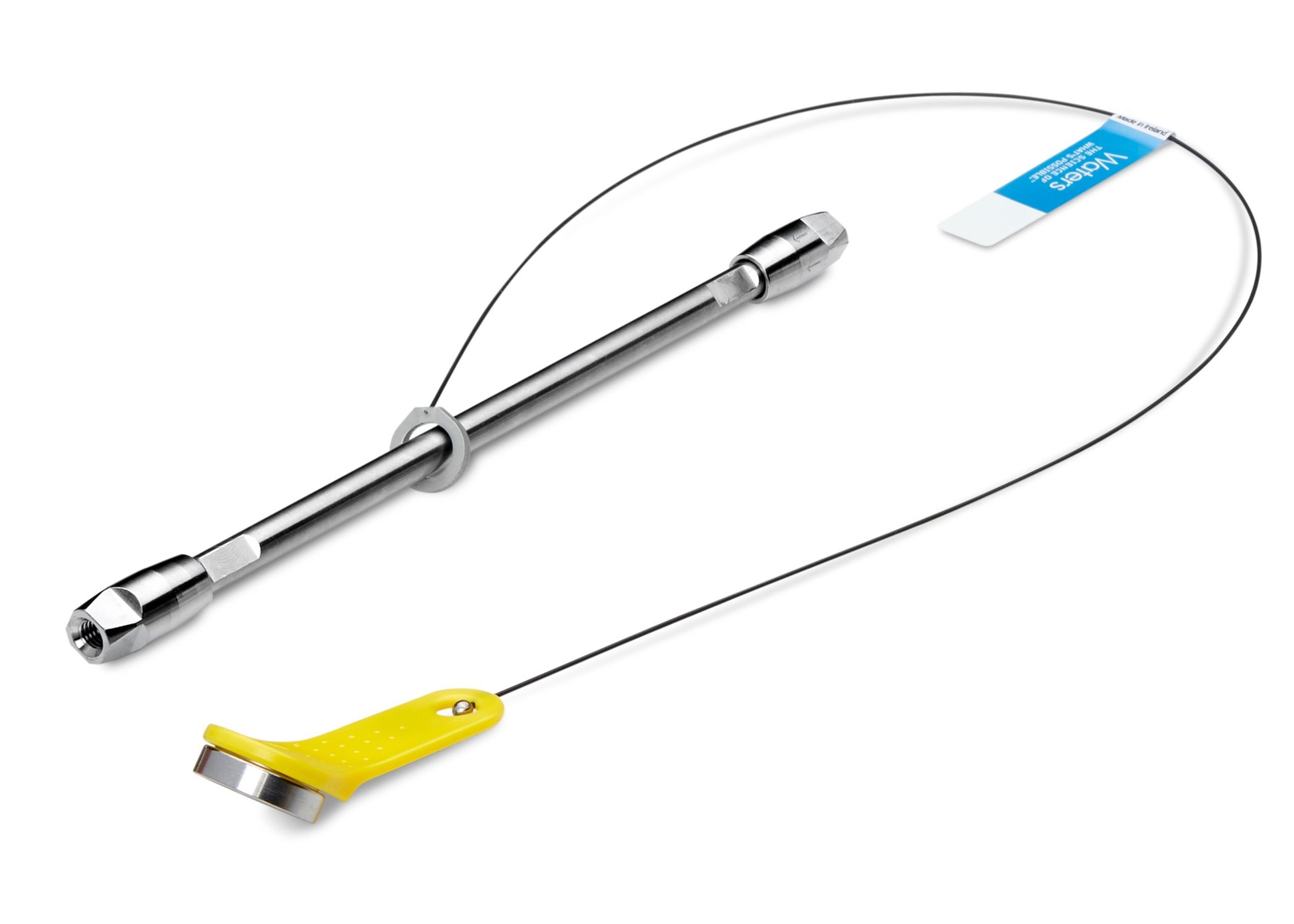
ACQUITY Premier Columns
WatersACQUITY Premier Columns with MaxPeak High-Performance Surface (HPS) technology reduce analyte/surface interactions.
ACQUITY Premier System
WatersAlong with the reliability, ruggedness, high quality, and configuration flexibility you expect from the ACQUITY™ UPLC™ PLUS Series, the Waters™ ACQUITY Premier System delivers a step change in chromatographic performance, lab efficiency, and risk control.

QuanRecovery Vials and Plates with MaxPeak HPS
WatersProtect peptides/proteins from non-specific binding losses. Autosampler ready QuanRecovery Vials and Plates with MaxPeak High Performance Surfaces (HPS) are designed to enable scientists to meet challenging sensitivity and reproducibility requirements in LC-MS peptide and protein quantification by reducing sample losses due to non-specific binding (NSB) and ionic interactions.