BellBrook Labs Receives Grant for Novel HTS Assay

Fluorescent light switch engineered into bacterial metabolite sensor to leap-frog limitations of conventional reagents

8 Sept 2016

Finn Price
Administrator / Office Personnel

Industry news

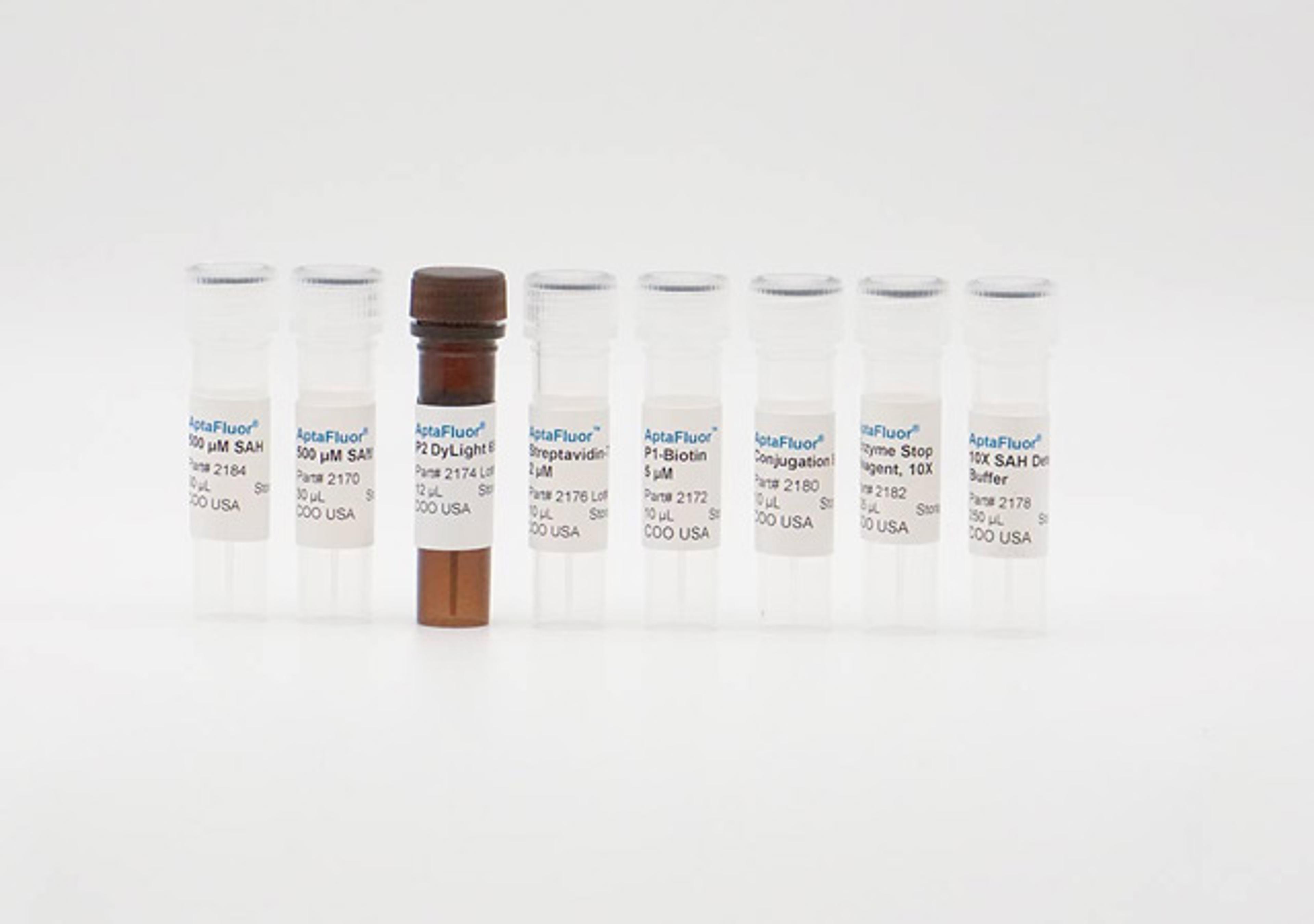
The National Institutes of General Medical Sciences (NGMS) has awarded a Phase II $860,000 Small Business Innovative Research (SBIR) grant to BellBrook Labs, LLC for the commercialization of an innovative high-throughput screening (HTS) assay for histone methyltransferases. The AptaFluor™ Methyltransferase Assay overcomes the limitations of existing detection technologies by using a microbial sensor, or “riboswitch,” to transduce methyltransferase enzyme activity into a fluorescent signal.

The chemical modification of gene expression known as epigenetics has become a promising area for new drug discovery. Methyltransferases are the largest class of epigenetic enzymes, and many researchers are attempting to develop drugs that impede their pathogenic activities. While there is great potential to treat disease, methyltransferases have proven difficult to work with. BellBrook Lab’s aim is to commercialize an automated, high throughput screening platform for methyltransferases to be used for industrial drug discovery.

AptaFluor™ SAH Methyltransferase Assay

BellBrook Labs

The AptaFluor® SAH Methyltransferase Assay Kit enables ultra-sensitive, direct detection of SAH—the universal product of methyltransferase reactions—using a riboswitch-based TR-FRET format. With no coupling enzymes required, it delivers high signal-to-background, Z’ ≥ 0.7, and is fully HTS-compatible for drug discovery and inhibitor screening.

(0)

Links

Tags

Cell-Based AssaysCell-based assays are used to monitor the presence, quantity and activities of a desired cellular analyte including drug molecules or biomarkers. This can reveal information on cell health (apoptosis, cytotoxicity, viability and proliferation assays), cell metabolism, cell migration and cell signaling mechanisms. Find the best cell-based assay products, kits and equipment with our peer reviewed product directory: compare products, check customer reviews and receiving pricing direct from manufacturers.Gene Expression and Molecular CloningMolecular cloning is a set of techniques that utilizes vectors to transfer recombinant DNA into host cells and is an essential tool for investigating the expression of genes and proteins in bacterial or mammalian cells. A variety of vectors optimized for gene cloning and expression in a range of host organisms are available, alongside competent cells for genetic replication. Here, you can explore a range of molecular tools, high-quality genomic and cDNA libraries, premade clones, transformation and transfection reagents and mutagenesis or gene expression detection assays and expression arrays. Find the best gene expression and molecular cloning products in our peer-reviewed product directory: compare products, check customer reviews and receive pricing direct from manufacturers.Epigenetic AnalysisEpigenetic analysis products are used to study heritable phenotype changes that do not alter the DNA sequence, such as DNA modifications affecting gene activity. Determine whether genes have been methylated with DNA methylation quantification kits or methylation microarrays. Assess epigenetic regulation with histone modification kits or ChIP-on-chip microarrays. Kits are also available for bisulfite conversion and amplification of your samples, as well as epigenomic library preparation kits for next-generation sequencing (NGS). Find the best epigenetic products in our peer-reviewed product directory: compare products, check customer reviews and receive pricing direct from manufacturers.FluorescenceThe emission of fluorescence occurs when a photon of energy is supplied to a fluorescent chemical compound by an external source, causing it to become excited. Fluorescence can be detected and measured for different purposes using microplate readers, fluorescence microscopes, fluorescence scanners, and flow cytometers.Fluorescence Based AssayFluorescence based assays are widely used in life science research and high-throughput screening to measure a broad range of cellular activities.High ThroughputHigh throughput experiments allow the simultaneous processing of several samples. This parallelization reduces the cost per experiment and increases reproducibility and output volume of data.Assay DevelopmentThe process of proving an assay to be sensitive with respect to the target is known as assay development. The assay should be able to characterize novel compounds and measure the potency of these compounds against a validated biological target.Cell Based AssaysCell-based assays use living cells to measure biological responses to various treatments or stimuli. They are essential for drug discovery, toxicology testing, and understanding cellular mechanisms. These assays are used to assess cell viability, proliferation, gene expression, and other cellular activities. Browse our peer-reviewed product directory to find the best cell-based assay tools and reagents, compare products, read customer reviews, and get pricing directly from manufacturers.EnzymesScreeningUsing robotics, data processing and control software, liquid handling devices and sensitive detectors, screening allows a researcher to quickly conduct millions of chemical, genetic or pharmacological tests.