
Beckman Coulter Receives CE Mark on Vitamin D Total Assay
22 Oct 2013
Beckman Coulter, Inc. announces the CE Mark approval of Access 25 (OH) Vitamin D Total assay for use on the Access 2 and UniCel DxI series of immunoassay systems. Offering enhanced performance, the new assay is an important addition to the company’s bone metabolism assay menu.
“European CE Mark of our Vitamin D assay allows us to provide laboratories with the assurance needed to properly diagnose and manage Vitamin D deficiency-related diseases,” said Arnd Kaldowski, president, Beckman Coulter Diagnostics. “The new assay provides several enhancements to current vitamin D assays. As one of the first assays standardized to the NIST-Ghent ID-LC-MS/MS reference method, the new assay offers greater diagnostic confidence in patient results as well as enhanced stability and ease-of-use as a result of new innovative packaging.”
The new assay delivers accurate clinical assessment of vitamin D status through measurement of total 25 (OH) vitamin D with equimolar measurement of 25 (OH) vitamin D2 and 25 (OH) vitamin D3.
With a unique, opaque reagent pack, designed to prevent light-induced reagent degradation, the assay offers excellent stability and reproducibility combined with greater storage convenience. Laboratories will also benefit from the convenient assessment of suspected deficient and elevated patient populations through a broad dynamic range, as well as from the speed and flexibility provided by the company’s numerous instrumentation options.
Related products
Request Quote for All Products
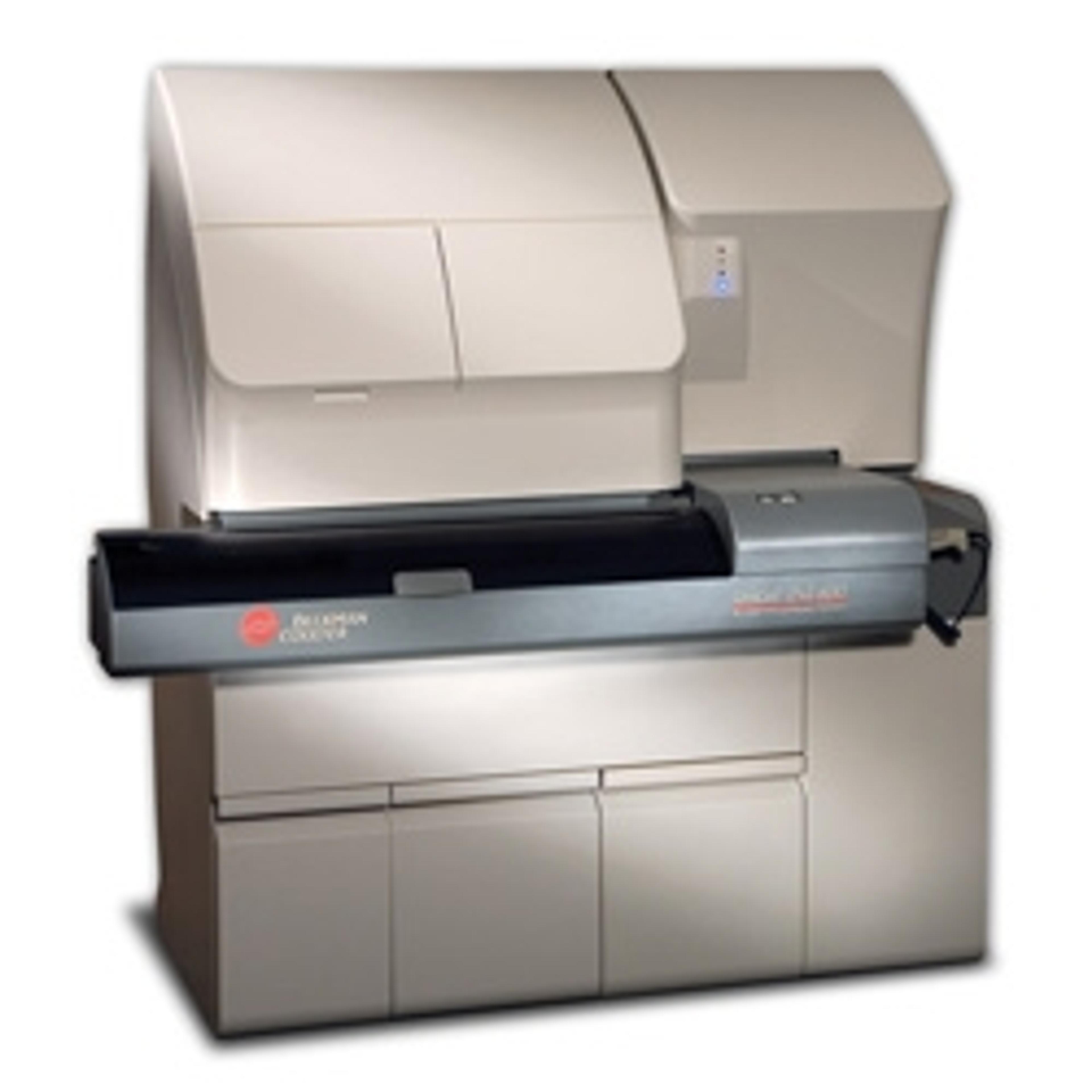
UniCel DxI 600 Access Immunoassay System
Beckman Coulter DiagnosticsEfficient operation for exceptional productivity in the hospital lab