
Assay Development for Regulation of Genetically Modified Organisms
Optimization of genetic analyses using digital PCR
31 Mar 2016
Dr Melina Pérez Urquiza, Scientific Coordinator of Centro Nacional de Metrologia (CENAM), MC Dalmira Felix Urquidez and Dr Josefina León Felix of CIAD Culiacán, and M.C. Abraham Acatzi Silva of (CNRDOGM) in Mexico told SelectScience® about their research published last year. The group developed, optimized and evaluated a digital PCR (dPCR) based assay to quantify genetically modified DNA in maize with greater accuracy and reliability.

Cultivation of genetically modified organisms (GMOs) is tightly regulated around the world, with set thresholds for maximum allowable levels of GMO-derived content. Standardized and reliable analytical methods to detect genetically modified content of plants are of great importance. The CENAM based research group in collaboration with CIAD Culiacán and CNRDOGMs (SENASICA) groups, established a novel duplex digital PCR established a novel duplex digital PCR assay for the absolute detection of T-nos/hmg copy number ratio in maize.
Importance of Accurate DNA Detection for Certified Reference Materials and GMO Regulation
CENAM is Mexico’s national laboratory of metrology, responsible for establishing and maintaining national standards, as well as liaising with other national laboratories and international bodies to ensure that international standards of metrology are recognized in Mexico, including those for GMO testing measures. Certified reference materials (CRMs) combined with reliable analytical methodology are required to accurately determine GMO content and comply with national and international regulations. Copy number ratios, where the GMO content is quantified in terms of the haploid copy number, are often used in CRM production.
Traditionally, quantitative PCR has been used to quantify DNA for copy number ratios but this relative measure relies on the proportionality of the number of amplification cycles to the starting copy number of the target.
Digital PCR is a far more precise detection method. The sample is partitioned into nano-liter sized droplets and target amplification is performed within each droplet, using specific primers and fluorescently labelled probes. Fluorescent droplets are scored as positive for the target sequence, whilst droplets lacking fluorescence are scored as negative. This provides an absolute quantification of target DNA within the sample.
This precision is why Dr Pérez Urquiza and colleagues chose to use dPCR, “it is important to determine the absolute quantification of several molecular targets as specified by national and regional standards in multiple biological matrices. We find this molecular approach to have the highest metrological quality.” The research team used BioRad’s QX200 Digital Droplet PCR system as it “can increase precision, sensitivity and reproducibility.” The team was able to simultaneously and accurately quantify both T-nos and hmg copy number, providing an optimized and validated method for the characterization of candidate CRMs.
Future Perspectives
The team is now working on expanding this research methodology to develop CRMs for the measurement of pathogenic microorganisms as indicators of food, water or soil quality. The precision of dPCR methodology makes it suitable for a wide-range of food safety and quality assays.
Read the full article, published by Analytical Chemistry, to learn more about the assay optimization and evaluation. Find out more about digital PCR in this video.
Image: hywards/Shutterstock
Related products
Request Quote for All Products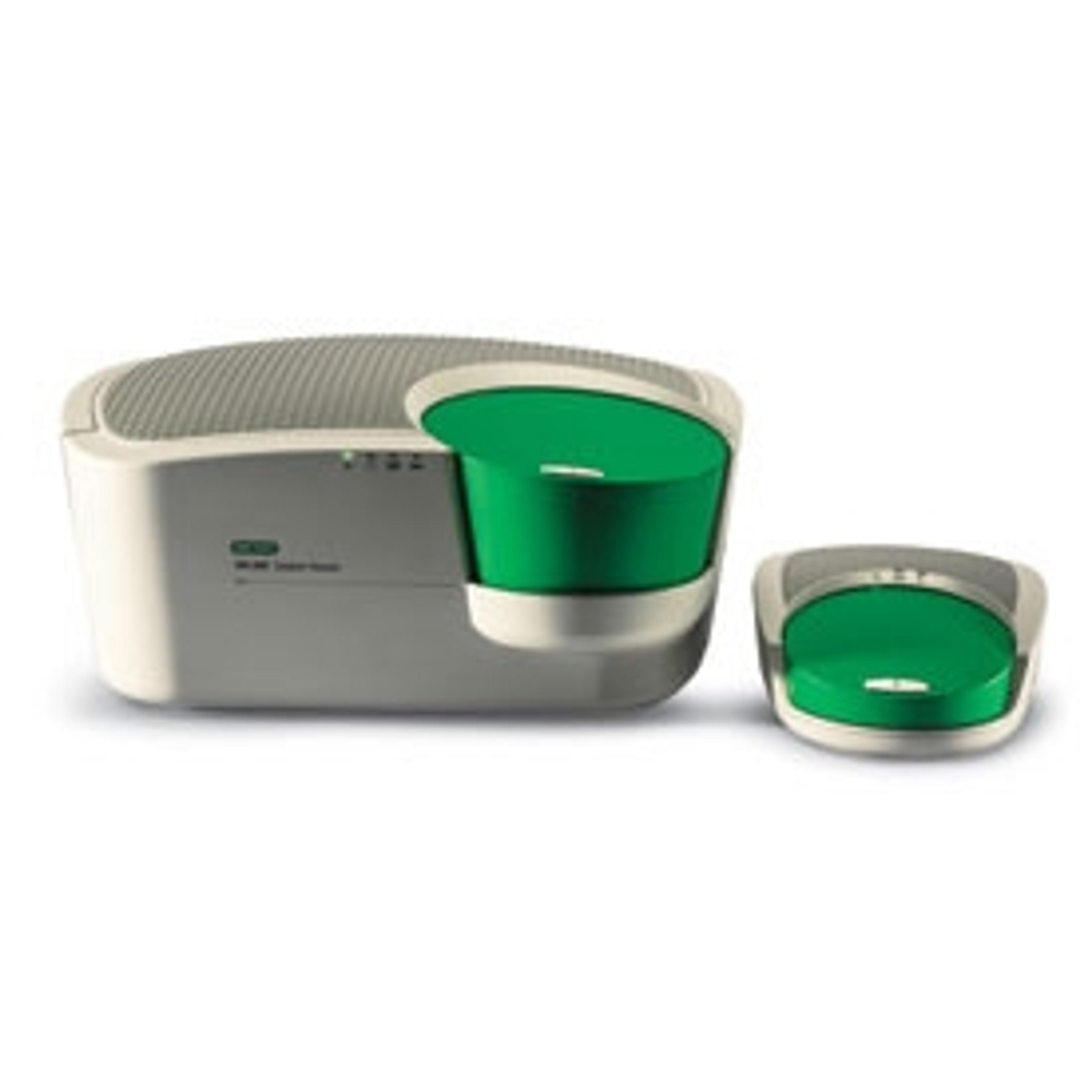
QX200™ Droplet Digital PCR System
Bio-RadDroplet Digital PCR System, includes droplet generator, droplet reader, laptop computer, software, associated component consumables, for EvaGreen or probe-based digital PCR applications