
Amplifying Adenoviral Particles in the Corning HYPERStack Cell Culture Vessel
19 Nov 2017Adenoviruses are now being used routinely in research, for example, for the delivery of transgenes and in cell therapy and vaccine production. This has lead to an increase in the demand to produce more virus as efficiently as possible. This application note demonstrates the utility of the Corning HYPER technology in adenovirus production. It is shown that adenoviral particles can be amplified in the HYPERStack vessel at similar titers compared to traditional tissue culture vessels, allowing for greater virus production in a smaller footprint.
Related products
Request Quote for All Products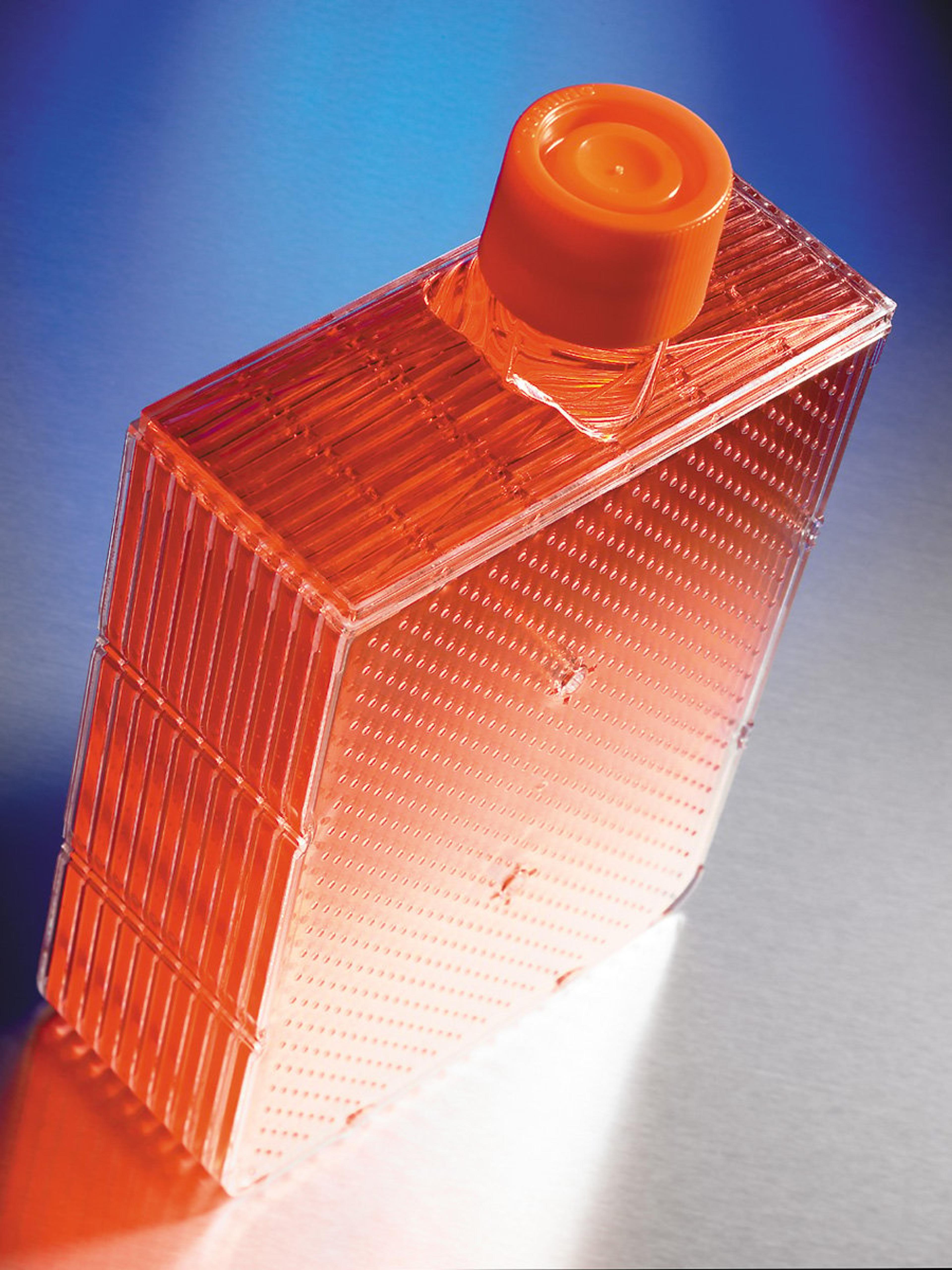
Corning® CellBIND® Surface HYPERFlask® Cell Culture Vessel
Corning Life SciencesThe High Yield PERformance Flask (HYPERFlask) cell culture vessel has 1720 cm2 available growth area on a polystyrene gas permeable surface. Treated for optimal cell attachment and gamma sterilized. Bar coded and compatible for use on Cell Culture Automation Platforms. Solid cap with liner on a straight neck designed for filling with growth medium. Made with USP Class VI Materials – molded and assembled in a Certified Class 100,000 clean room Sterile – gamma irradiated to sterility assurance level (SAL) 10⁻⁶ Clean Room Packaging – each pack is double bagged. Innovative 10Layer Design – 10 interconnected polystyrene growth surfaces Optimal Growth – Corning CellBIND® Surface treated gas permeable polystyrene for superior cell attachment and growth Increase Cell Yield – 10-fold higher cell yield increases productivity and capacity Time and Space Savings – Reduce processing time and incubator storage space by handling one flask compared to 10 traditional 175 cm2 flasks