
ResourceSpectroscopy
Measuring multiple elements in nanoparticles using spICP-MS
29 Jul 2021In this application note, Agilent Technologies demonstrates how to acquire nanoparticle data for up to 16 elements in Rapid Multi-Element Nanoparticle Analysis Mode, utilizing the Agilent 7900 ICP-MS.
Related products
Request Quote for All Products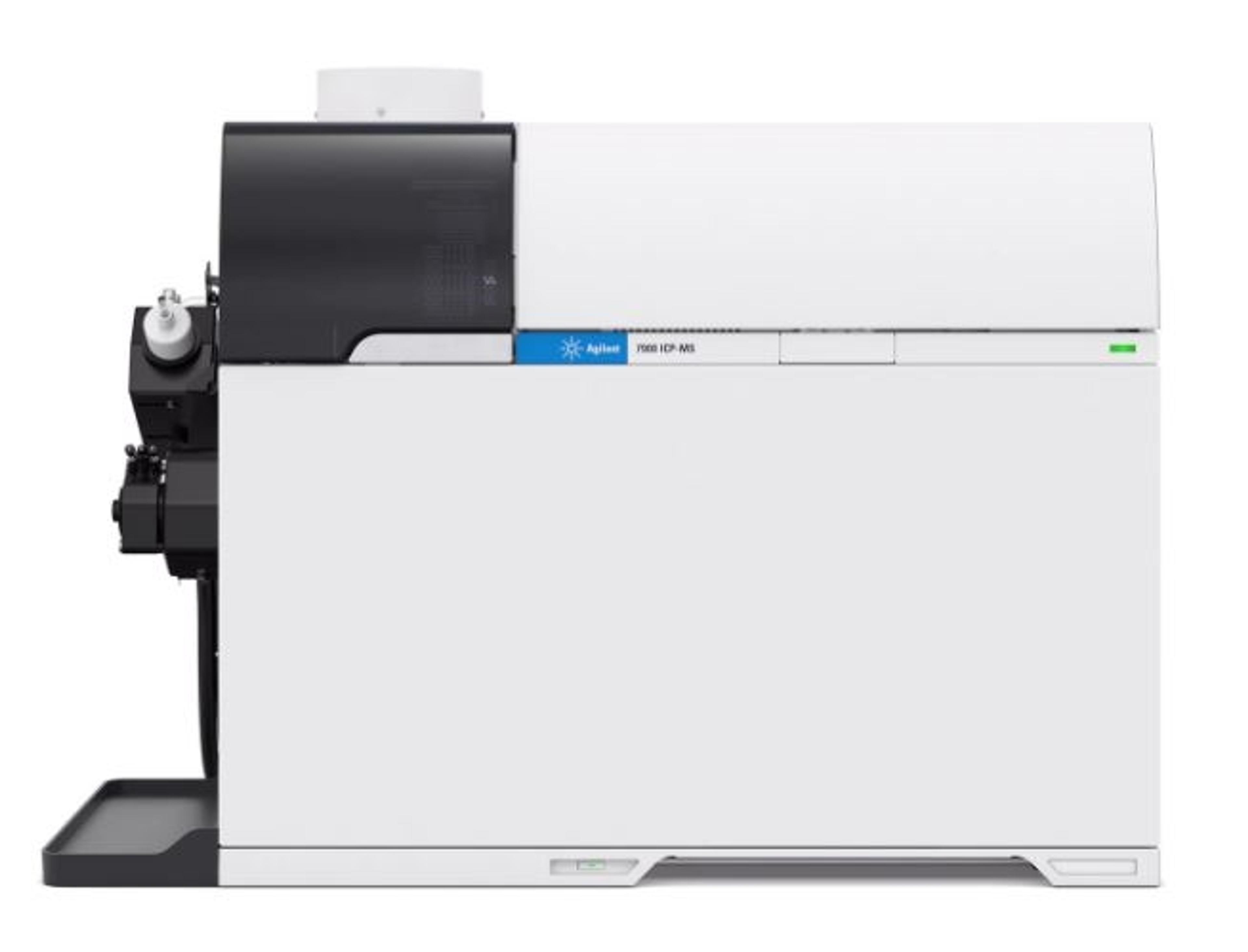
Agilent 7900 ICP-MS
Agilent TechnologiesThe Agilent 7900 ICP-MS is a flexible single quadrupole ICP mass spectrometer that provides the industry’s best matrix tolerance, most effective helium collision mode, lowest detection limits, and widest dynamic range. As a result, you can be confident you are reporting accurate data every time, even at trace levels, whatever your sample types.
Links
Tags
Mass SpectrometryMass spectrometry (MS) is a powerful analytical technique used to identify and quantify molecules based on the mass-to-charge ratio of gas-phase ions. It provides detailed information about the structure, composition, and properties of compounds and is widely used across fields such as environmental monitoring, materials science, drug discovery and development, food and beverage testing, and wider chemical research. Key MS techniques include tandem mass spectrometry (MS/MS), liquid chromatography–mass spectrometry (LS-MS) and inductively coupled plasma (ICP-MS). Choosing from these wide range of techniques and technologies can be a daunting task, so keep up to date with scientific applications, performance expectations, and customer reviews here all in one place. Visit our product directory to receive quotes direct from the manufacturer.
ICP-MSInductively Coupled Plasma Mass Spectrometry (ICP-MS) is a powerful analytical technique used to determine the concentrations of elements and their isotopes in a variety of samples, including water, soil, and biological tissues. It involves ionizing elements in the samples with extremely high-temperature Argon (Ar) plasma and then using a mass spectrometer to measure the number of ions based on their mass-to-charge ratio (m/z). Explore ICP-MS systems in our peer-reviewed product directory; compare products, check reviews, and get pricing directly from manufacturers.NanoparticlesNanoparticles are between 1-100nm in size. Nanoparticles can be used for a wide variety of applications including biomedical, catalysis and electronics.