
Anti-Opsin Antibody, Red/Green
The full range of color discrimination in humans is based on the presence and function of three cone photoreceptor mechanisms. Each cone type possesses a photo-sensitive pigment-protein complex consisting of 11-cis retinal and a unique opsin protein, which gives sensitivity in the short (S cone, peak sensitivity about 420nm), middle (M cone, peak sensitivity about 530nm with polymorphism; Winderckx et al., 1993; Neitz & Neitz, 1998), and long (L cone, peak sensitivity about 560nm with polymorphism; Neitz & Jacobs, 1990) wavelengths of the light spectrum. All three opsins are transmembrane proteins with seven membrane-spanning regions. Genes for the three types of cone opsins and the rod photoreceptor rhodopsin gene seem to be homologous with varying amounts of conservation. Strongest conservation is between the middle (green) and long (red) wavelength sensitive pigments on the X chromosome, suggesting a relatively recent duplication/divergence event (Nathans, 1989; Nathans et al., 1992). The S cone (blue) opsin is located on chromosome 7 and seems to have stronger conservation with rhodopsin. Cone photoreceptor distribution in humans is dominated by the M and L cone pigments
Product Details
- Cat. No.
- AB5405
- Type
- Primary Antibody
- Clonality
- Polyclonal
- Host
- Rabbit
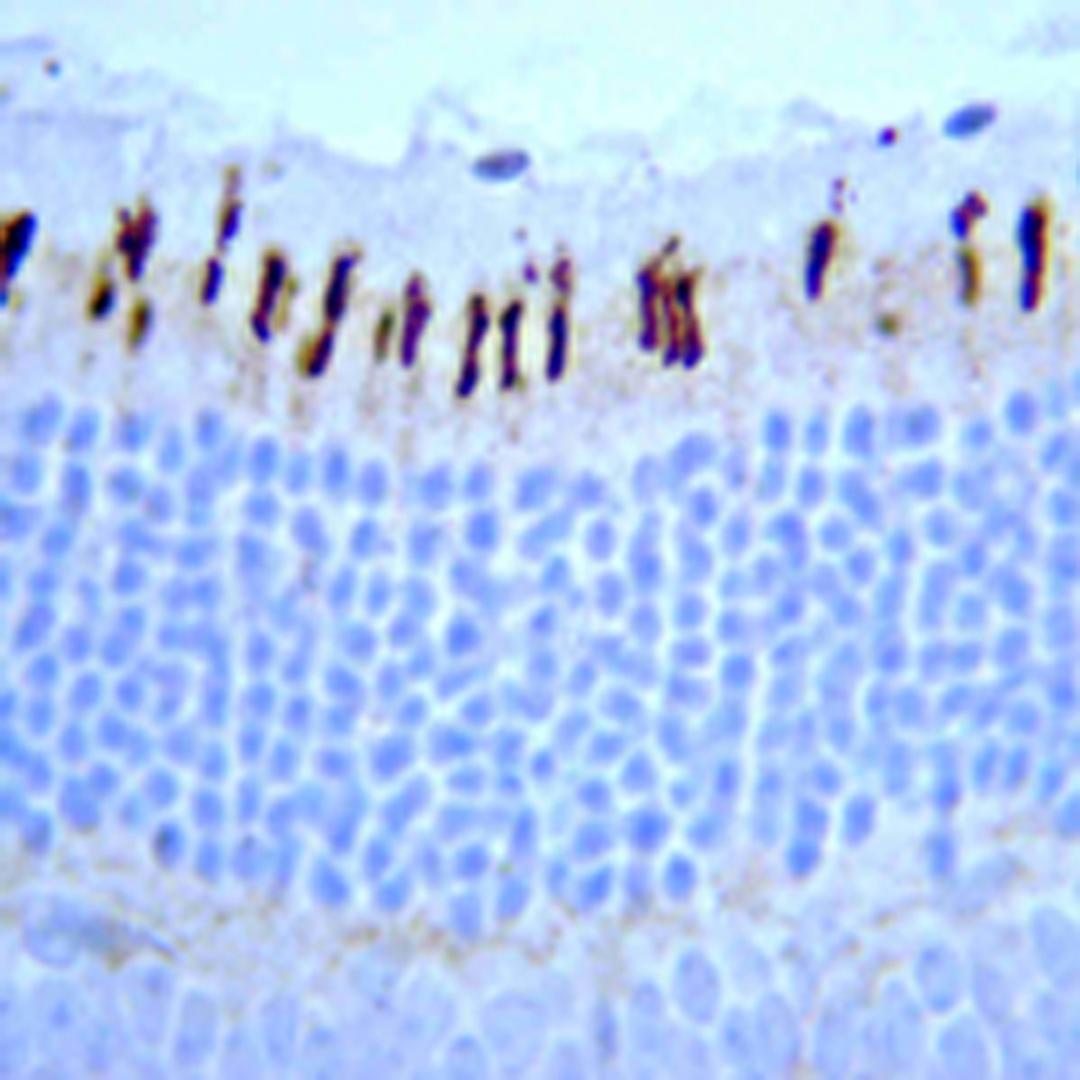

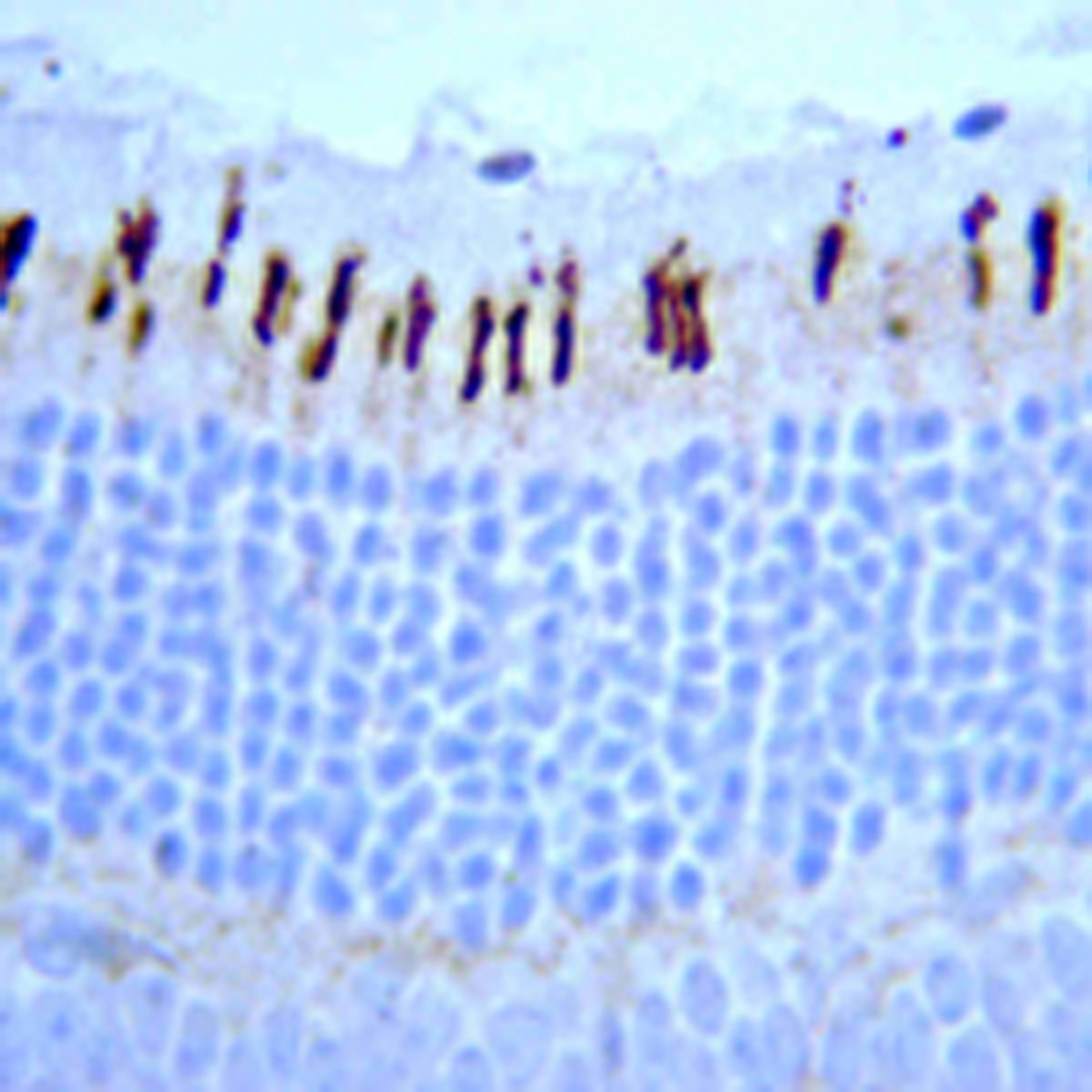
The supplier does not provide quotations for this antibody through SelectScience. You can search for similar antibodies in our Antibody Directory.
Reviews
Works well without much variability.
Immunohistochemistry
Easy to use and able to achieve high quality results.
Review Date: 2 Jun 2020 | Merck KGaA, Darmstadt, Germany
Applications
- Immunohistochemistry (Paraffin-Embedded Sections) (IHC (P))
Antibody Overview
About the company

Merck KGaA, Darmstadt, Germany
Merck, a leading science and technology company, operates across healthcare, life science and performance materials. Around 57,000 employees work to make a positive difference to millions of people’s lives every day by creating more joyful and sustainable ways to live. From advancing gene editing technologies and discovering unique ways to treat the most challenging diseases to enabling the intelligence of devices – the company is everywhere. In 2019, Merck generated sales of €16.2 billion in 66 countries.