
anti-AAV9 (intact particle) mouse monoclonal, ADK9, lyophilized, purified
For characterization of different stages of infection and very useful for the analysis of the AAV assembly process. ADK9 specifically reacts with intact adeno-associated virus particles, empty and full capsids. Recognizes a conformational epitope of assembled capsids. The antibody cannot be used for immunoblotting. Limited Use Label License: Research Use OnlyProduct is exclusively licensed to PROGEN Biotechnik GmbH. The use of these products for the development, manufacturing and sale of secondary products/derivatives which are based on the purchased products and/or which include the purchased product require a royalty based sub-license agreement.
Product Details
- Cat. No.
- 610162
- Type
- Primary Antibody
- Clonality
- Monoclonal
- Host
- Mouse
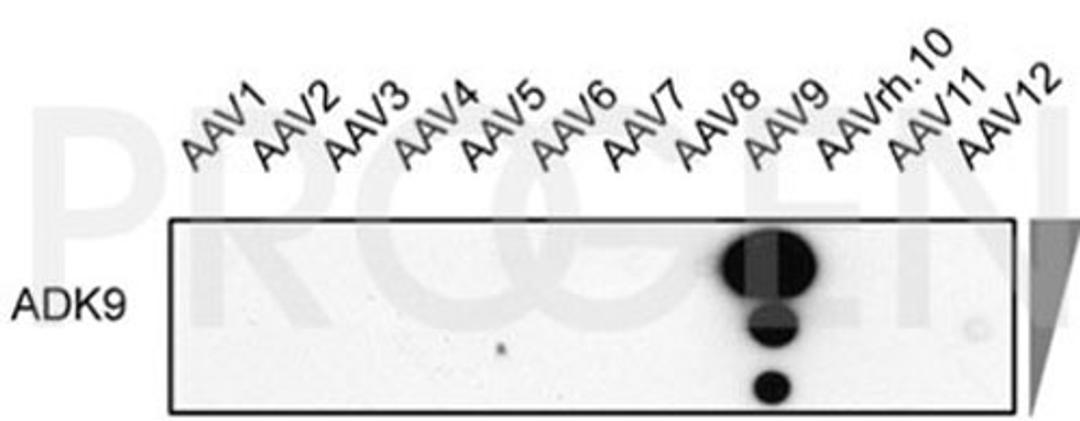
Dot blot with different AAV serotypes and mouse monoclonal anti-AAV9 antibody, clone ADK9 (Courtesy of Regina Heilbronn, Charité Universitätsmedizin Berlin, Mietzsch et al. Hum Gene Ther. 2014 Mar 1; 25(3):212-222)

The supplier does not provide quotations for this antibody through SelectScience. You can search for similar antibodies in our Antibody Directory.
Reviews
Reproducible positive control
Neutralizing Antibody Assay
The AAV9 antibody turned out to be very sensitive in the application. After performing multiple experiments it has shown good reproducibility and has proven to be an excellent control in the assay
Review Date: 4 Jan 2019 | PROGEN
Applications
Antibody Overview
About the company

PROGEN
Since 1983, PROGEN has been an established manufacturer and supplier of premium antibodies, in vitro diagnostics, and reagents for the global life science research community. The company’s portfolio attracts and serves a well-diversified clientele in research institutes and universities, pharmaceutical and biotech companies as well as private and clinical laboratories. While PROGEN ’s antibodies are among the most published antibodies in biomedical and cell biology literature, its ELISA kits aim at niche markets in microbiology, infectious diseases, and immunology. Building on its extensive core-competency and experience in immunochemistry, the company has expanded its product and service portfolio in recent years to include recombinant antibody engineering, antibody phage display technology, density gradient media, and AAV (adeno-associated virus) test kits for gene therapy research.