The Cellular Itinerary of Renal Aquaporin-2 Shuttling with 4.5x Expansion Microscopy
Aquaporin (AQP) water channels facilitate water diffusion across lipid bilayers following an osmotic gradient. AQPs are especially important in renal water reabsorption. AQP2 in the renal collecting duct mediates fine-tuning of urine volume in response to the antidiuretic hormone arginine vasopressin (AVP).
AVP mediates plasma membrane insertion of AQP2 from an intracellular reservoir of AQP2 containing vesicles, which instantly increases water reabsorption and urine concentration. The vesicle population cannot be resolved via conventional fluorescent microscopy, therefore detailed information regarding the AQP2 vesicular population is still lacking.
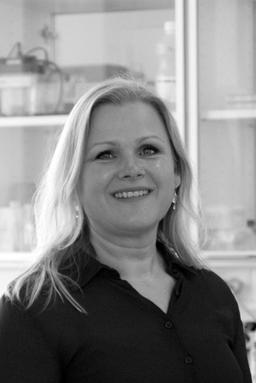
Expansion microscopy (ExM) addresses challenges in resolving vesicle populations. Newly established 4.5x ExM can increase resolution to 60–70 nm. In this webinar, Dr. Lene Niemann Nejsum, Professor of Epithelial Physiology and Pathophysiology at Aarhus University, will present results showing that 4.5 ExM is an ideal approach to obtain detailed information regarding the AQP2 vesicle population. Using 4.5x ExM, spinning disk microscopy and image processing, Dr. Nejsum and her team detected AQP2 vesicles/endosomes. Using different markers of the endosomal system, they obtained detailed information of the cellular AQP2 shuttling itinerary.
Key learning objectives
- Understand how Aquaporin mediated water transport across lipid bilayers
- Gain insight into Studies of intracellular vesicles using Expansion Microscopy
- Learn more about the Use of Andor BC43 with Deconvolution for ExM
Who should attend?
- Both new and experienced Imaris and BC43 users interested in accelerating microscopy projects. The research is relevant across life science projects where visualizsation and analysis is required.
Certificate of attendance
All webinar participants can request a certificate of attendance, including a learning outcomes summary, for continuing education purposes.
Speakers