

Advancing AI-driven antibody discovery through experimental validation
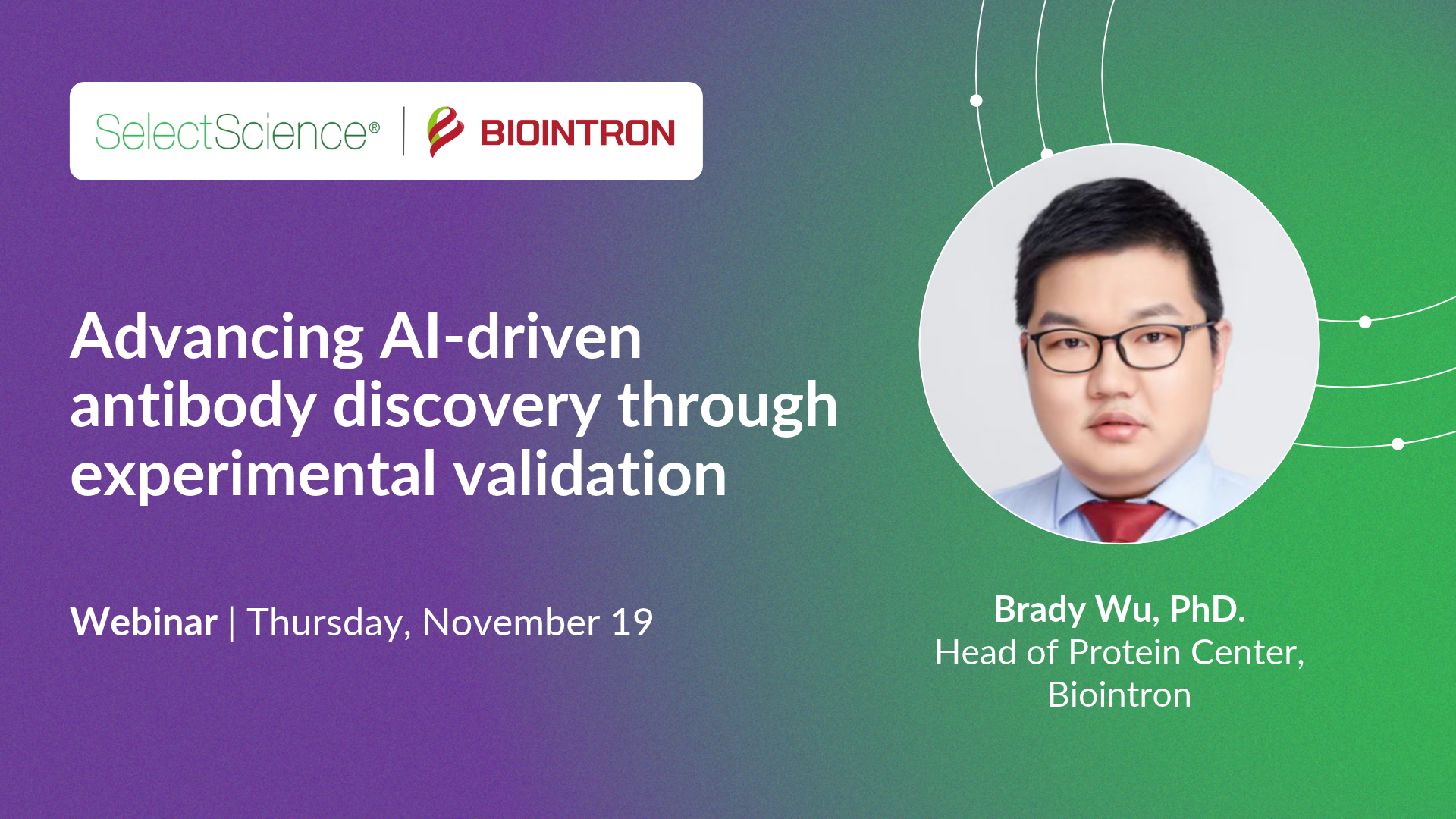
Thursday, November 19 at 16:00 GMT | 17:00 CET | 11:00 EST | 08:00 PST
AI is accelerating antibody design, allowing teams to generate and optimize candidates at unprecedented speed and scale. But every computationally designed sequence still requires reliable experimental evidence to determine whether it expresses efficiently, binds as intended, and has the properties needed for further development.
In this webinar, Brady Wu, PhD, Head of Protein Center at Biointron, will explore how antibody discovery is evolving from traditional hybridoma approaches toward single B-cell technologies and AI-driven de novo design. He will examine why rapid, standardized wet-lab data is essential to candidate validation, model refinement, and a faster Design-Build-Test-Learn cycle.
Dr. Wu will also introduce RushData and discuss how rapid CHO expression, high-throughput characterization, and structured data can help teams evaluate antibody candidates more efficiently. The session will consider how these workflows can support increasingly complex modalities, including multispecific antibodies and antibody-drug conjugates.
Certificate of attendance
If you attend the live webinar, you will automatically receive a certificate of attendance, including a learning outcomes summary, for continuing education purposes.
If you view the on-demand webinar, you can request a certificate of attendance by emailing editor@selectscience.net.
Webinar details
Cost: Free to attend
Location: Online
Duration: 60 minutes
Registration is required to secure your place. If you register but can’t attend live, you will receive a link to the on‑demand recording once it becomes available.
Speakers


Who should attend?
Scientists working in antibody discovery, biologics development, AI-driven drug discovery, and experimental validation.
Featured products
Request Quote for All Products
What will this webinar cover?
- Why high-quality, experimentally validated data is critical for improving AI-driven biologics discovery and model development.
- How rapid expression and characterization workflows, such as Biointron’s RushData platform, can shorten the Design-Build-Test-Learn (DBTL) cycle.
- How faster experimental data generation can support iterative optimization of antibody candidates, including complex modalities such as multispecific antibodies and ADCs.