

How many cycles? Replacing fixed-cycle PCR with real-time amplification control in a genomics core
Tuesday, October 27 at 15:00 GMT | 16:00 CET | 11:00 EDT | 08:00 PDT
Every library prep protocol asks the same question: how many PCR cycles? Standard workflows answer it with a lookup table – a fixed cycle number chosen from expected input. This works well when input amount is known but in single cell workflows where cell counts can be variable, or where input material is limiting, the number of PCR cycles to use is often a best guess. At the Dartmouth Genomics & Molecular Biology Shared Resource (GMBSR), a main question was what changes when that number is determined empirically, in real time, well by well?
Using the icon96™ thermocycler with AutoNorm™, a controlled comparison on 10x Genomics GEM-X 3′ v4 PBMC libraries spanning a 20-fold range of cell loads (500 / 1,000 / 5,000 / 10,000) was conducted, plus a low-viability sample, with every condition prepared in parallel by AutoNorm and by the fixed-cycle standard. All eight libraries were sequenced and compared at matched sequencing depth across sequencing saturation, per-cell sensitivity, clustering, and cell-type composition.
At matched depth the two arms produced equivalent data: cell-type proportions correlated at r > 0.996 in every high-viability pair, recovering the same populations. In this webinar, we will walk through the full depth-matched comparison and what it tells us about where in a library preparation workflow real-time cycle control has the most impact.
Participants will then discover beyond single-cell RNA-seq to other places the GMBSR has deployed iconPCR: amplification of CRISPR lineage-tracing barcodes from 10x samples, and custom amplicon sequencing projects where input quantity and quality vary widely from sample to sample.
Certificate of attendance
If you attend the live webinar, you will automatically receive a certificate of attendance, including a learning outcomes summary, for continuing education purposes.
If you view the on-demand webinar, you can request a certificate of attendance by emailing editor@selectscience.net.
Webinar details
Cost: Free to attend
Location: Online
Duration: 60 minutes
Registration is required to secure your place. If you register but can’t attend live, you will receive a link to the on‑demand recording once it becomes available.
Speakers



Who should attend?
- Genomics core directors and managers
- Single-cell and spatial genomics scientists
- NGS laboratory managers
- Sequencing workflow developers
- Researchers running 10x Genomics, custom amplicon, targeted sequencing, or other library-preparation workflows with variable sample quantity or quality
Featured products
Request Quote for All Products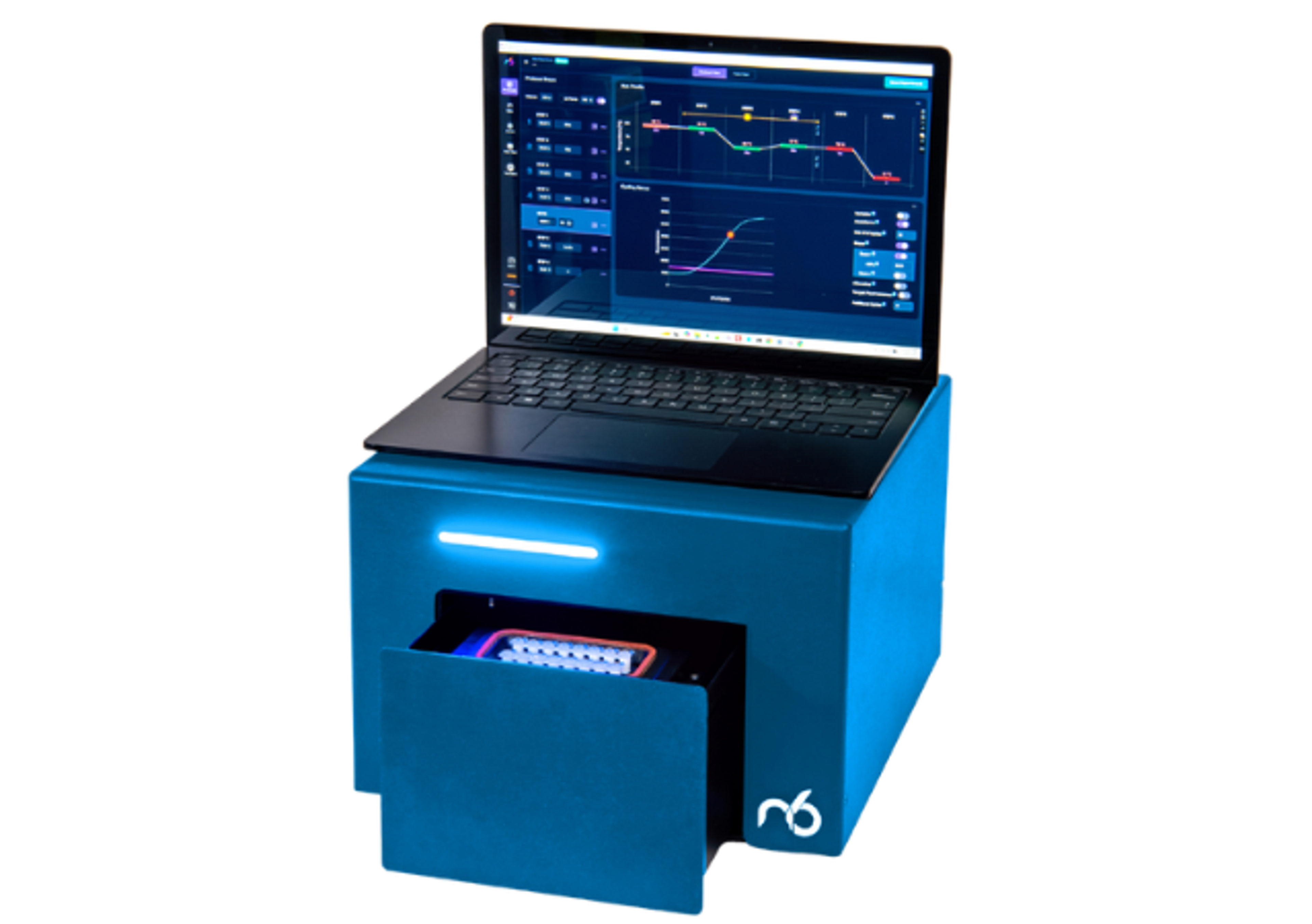
icon16™
n6 Tec., IncThe icon16™ brings AutoNorm™ adaptive amplification to lower-throughput NGS workflows, with up to 16 samples at a time. Designed for labs that refuse to compromise on data quality, it delivers per-well real-time fluorescence monitoring and automatic library normalization in a compact, benchtop footprint.
What will this webinar cover?
- The limitations of selecting a fixed PCR cycle number when library input, cell load, or sample quality varies.
- A depth-matched comparison of fixed-cycle and real-time amplification-controlled 10x Genomics single-cell RNA-seq libraries.
- How well-by-well, real-time cycle control can help manage variable-input and low-viability samples without relying on a one-size-fits-all PCR cycle number.
- Applications of iconPCR™ and AutoNorm™ beyond single-cell RNA-seq, including CRISPR lineage-tracing barcode amplification and custom amplicon sequencing.