

Evaluating fecal specimen transport and automation to preserve enteric pathogens
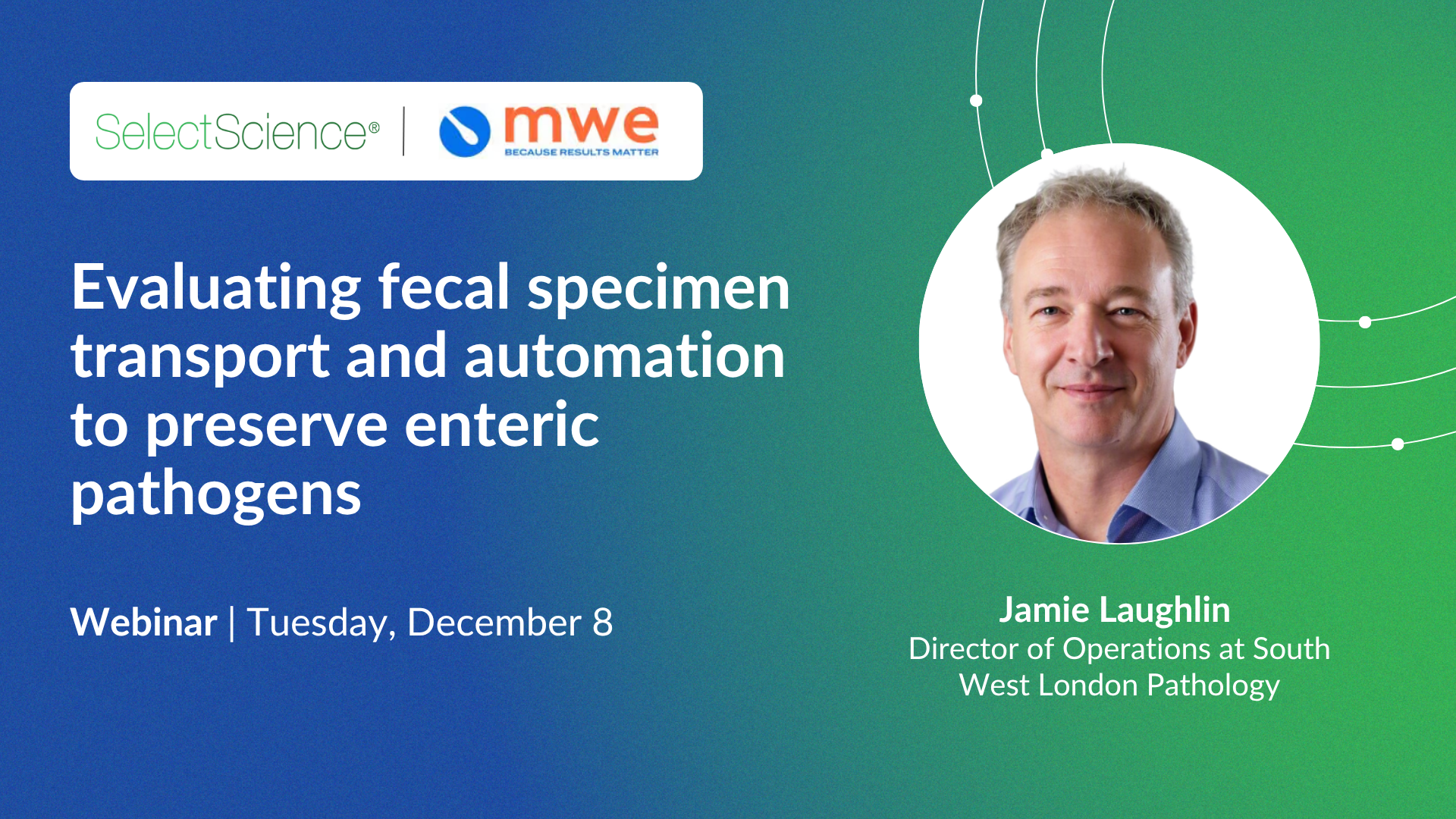
Tuesday, December 8 at 16:00 GMT | 17:00 CET | 11:00 EST | 08:00 PST
Accurate gastrointestinal infection diagnosis begins long before a specimen reaches the analyzer. The way samples are collected, transported, stored, and processed can all have a significant impact on organism recovery, particularly as microbiology laboratories move towards increasingly automated workflows.
In this accredited webinar, Mr. Jamie Laughlin, Director of Operations at South West London Pathology, will explore evidence-based approaches to preserving the viability of enteric organisms throughout specimen collection, transport, and pre-analytical processing.
Drawing on CLSI M40-A2 principles, Mr. Laughlin will examine how clinically representative fecal matrices, storage temperature, holding time, and laboratory automation can affect organism recovery and, ultimately, diagnostic reliability.
Attendees will also see findings from a comparative evaluation used as a practical case study, highlighting key considerations when assessing specimen collection and transport systems for gastrointestinal microbiology.
The case study includes the following organisms:
- Vibrio parahaemolyticus
- Enterococcus faecalis
- Escherichia coli
- Escherichia coli O157:H7
- Yersinia enterocolitica
- Salmonella Typhimurium
- Shigella flexneri
- Plesiomonas shigelloides
- Clostridium difficile
- Campylobacter jejuni
Join this SelectScience webinar to discover how robust pre-analytical preservation can help support reliable organism recovery, confident gastrointestinal diagnostics, and more streamlined microbiology workflows.
Webinar details
- Cost: Free to attend
- Location: Online
- Duration: 60 minutes
- Accreditation: P.A.C.E.®
Can't attend live?
Register to receive access to the recording after the event, allowing you to catch up on the discussion and revisit key insights at your convenience.
Accreditation statement
SelectScience® is approved as a provider of continuing education programs in the clinical laboratory sciences by the ASCLS P.A.C.E.® Program.
Certificate of attendance
All attendees who join the live forum will automatically receive a certificate of attendance, including a summary of key learning outcomes, to support their continuing professional development.
If you watch the on-demand recording, a certificate of attendance can be requested by emailing editor@selectscience.net.
Speakers


Who should attend?
- Microbiology laboratory managers and supervisors
- Medical laboratory scientists and microbiologists
- Clinical laboratory scientists
- Laboratory quality and validation personnel
- Professionals involved in gastrointestinal microbiology and enteric pathogen testing
- Laboratory professionals responsible for automation and pre-analytical workflow development
What will this webinar cover?
By the end of the webinar, participants will be able to:
- Explain how CLSI M40-A2 principles are applied when evaluating microbiology specimen transport systems.
- Assess how specimen matrix, time and temperature can influence the recovery of enteric pathogens.
- Identify practical considerations for integrating fecal specimen collection and transport systems into automated microbiology workflows.
Join the webinar to get answers to these questions:
- How are CLSI M40-A2 principles applied to specimen transport systems?
- How does fecal matrix affect enteric pathogen recovery?
- What impact do storage temperature and holding time have on organism viability?
- How can collection and transport systems be evaluated comparatively?
- What should laboratories consider when integrating these systems into automated workflows?