Versatile Luciferases: New Tools for Reporter Assays

6 May 2013

Discover how Thermo Scientific™ microplate luminometers, in conjunction with Thermo Scientific Pierce Luciferase Reporter Gene Assays™, form a powerful tool for high-throughput gene regulation studies. Different luciferase reporter assay types and the requirements they place on the luminometer are also discussed.

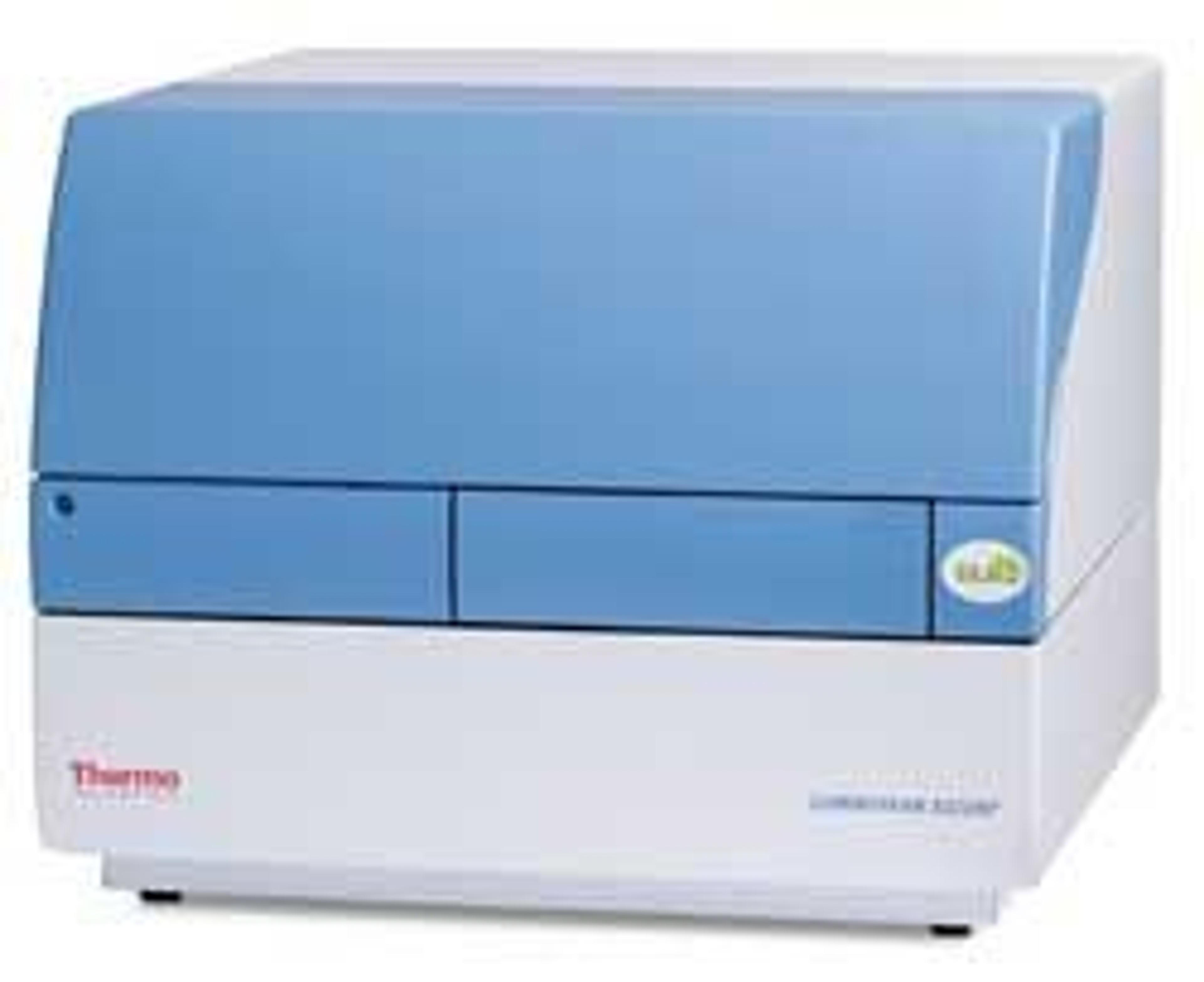
Thermo Scientific Luminoskan Ascent

Thermo Fisher Scientific

Luminoskan Ascent Microplate Luminometer - Ideal for luminometric research applications The Luminoskan Ascent is a dedicated microplate luminometer, ideal for glow and flash luminometric assays. Application areas of the Luminoskan Ascent Reporter gene assays ATP assays Cytotoxicity Immunoassays DNA quantitation Cell proliferation Phagocytosis Intracellular Ca2+ Enzyme assays Microbiological assays Reactive oxygen assays Advantages of the Luminoskan Ascent High-performance optics with the Luminoskan Ascent Luminoskan incorporates the latest optical design. Luminoskan Ascent can also be equipped with filters. The luminometer reads microplate formats from 1-96 and 384-well plates. Versatility through dispenser system, incubator and shaker For an easy and accurate addition of reagents, up to three dispensers can be fitted on-board the Luminoskan Ascent. The dispensers allow a precise delivery of reagents in 1 µl increments over an adjustable volume range of 1-1000µl. For assays requiring precise temperature control, Luminoskan Ascent features an on-board incubator. Built-in orbital shaking, another advanced feature, ensures effective mixing and speeds up reactions. Complete robot compatibility with the Luminoskan Ascent Robotic integration is simple, effective and easy to automate with the Luminoskan Ascent. The plate carrier allows convenient access for different kinds of robotic arms. In addition, wall edges of the carrier have been beveled to aid the plate to slide down to the carrier. Ascent Software is easy to integrate with robotic and LIMS systems. The execution of predefined assays can be controlled remotely and the software can be set up to export and import data automatically.

(2)

Tags

Genome AnalysisGenomics, the study of genomes, includes functional genomics, evolutionary genomics and comparative genomics. There are many genomic technologies such as DNA sequencing of whole genomes, computational biology and bioinformatics. DNA and nucleic acids must be isolated and concentrated from cells for analysis with kits, automated analyzers and software. Other useful technologies for studying genomics include PCR, microarrays and electrophoresis.Microplate Readers / DetectorsMicroplate readers are used to automate the detection and analysis of labeled or label-free components in microplates during assays or live-cell monitoring. Microplate readers are generally distinguished by their mode of detection. Types include absorbance, luminescence, fluorescence intensity, fluorescence polarization, TRF / FRET and multimode microplate readers. Microplate readers deliver a high throughput of samples by reading multiple wells simultaneously, with the 96-well format the most commonly used. As a result, microplate readers are often used in the drug discovery, bioassays, research and pharmaceutical industries for screening applications. Microplate loading can also be automated, with robotic microplate stackers to increase throughput. Find the best microplate readers in our peer-reviewed product directory: compare products, check customer reviews and receive pricing direct from manufacturers.Cell-Based AssaysCell-based assays are used to monitor the presence, quantity and activities of a desired cellular analyte including drug molecules or biomarkers. This can reveal information on cell health (apoptosis, cytotoxicity, viability and proliferation assays), cell metabolism, cell migration and cell signaling mechanisms. Find the best cell-based assay products, kits and equipment with our peer reviewed product directory: compare products, check customer reviews and receiving pricing direct from manufacturers.Gene Expression and Molecular CloningMolecular cloning is a set of techniques that utilizes vectors to transfer recombinant DNA into host cells and is an essential tool for investigating the expression of genes and proteins in bacterial or mammalian cells. A variety of vectors optimized for gene cloning and expression in a range of host organisms are available, alongside competent cells for genetic replication. Here, you can explore a range of molecular tools, high-quality genomic and cDNA libraries, premade clones, transformation and transfection reagents and mutagenesis or gene expression detection assays and expression arrays. Find the best gene expression and molecular cloning products in our peer-reviewed product directory: compare products, check customer reviews and receive pricing direct from manufacturers.LuciferaseLuminescenceLuminescence techniques detect and measure light emitted by substances during chemical reactions or biological processes. Widely used in assays for diagnostics, environmental monitoring, and drug screening, luminescence-based methods offer high sensitivity. Explore leading systems and products in our directory.MultiplexingMultiplexing refers to the ability to measure multiple targets or analytes simultaneously in a single experiment. This technique is valuable for high-throughput screening, diagnostics, and complex assays, as it increases efficiency and data quality. Browse our peer-reviewed product directory to find the best multiplexing products, compare tools, check reviews, and get pricing directly from manufacturers.
Versatile Luciferases: New Tools for Reporter Assays