
Using Orthogonal Techniques for Protein-Peptide Separation to Generate Comprehensive HDMSe Mass Spectral Libraries from an <i>E. coli</i> Model System
4 Sept 2014This poster reports a library generation strategy that builds upon the benefits of existing empirical strategies by implementing orthogonal, multidimensional protein and peptide separation techniques to acquire a comprehensive HDMSe spectral library data set for E. coli.
Related products
Request Quote for All Products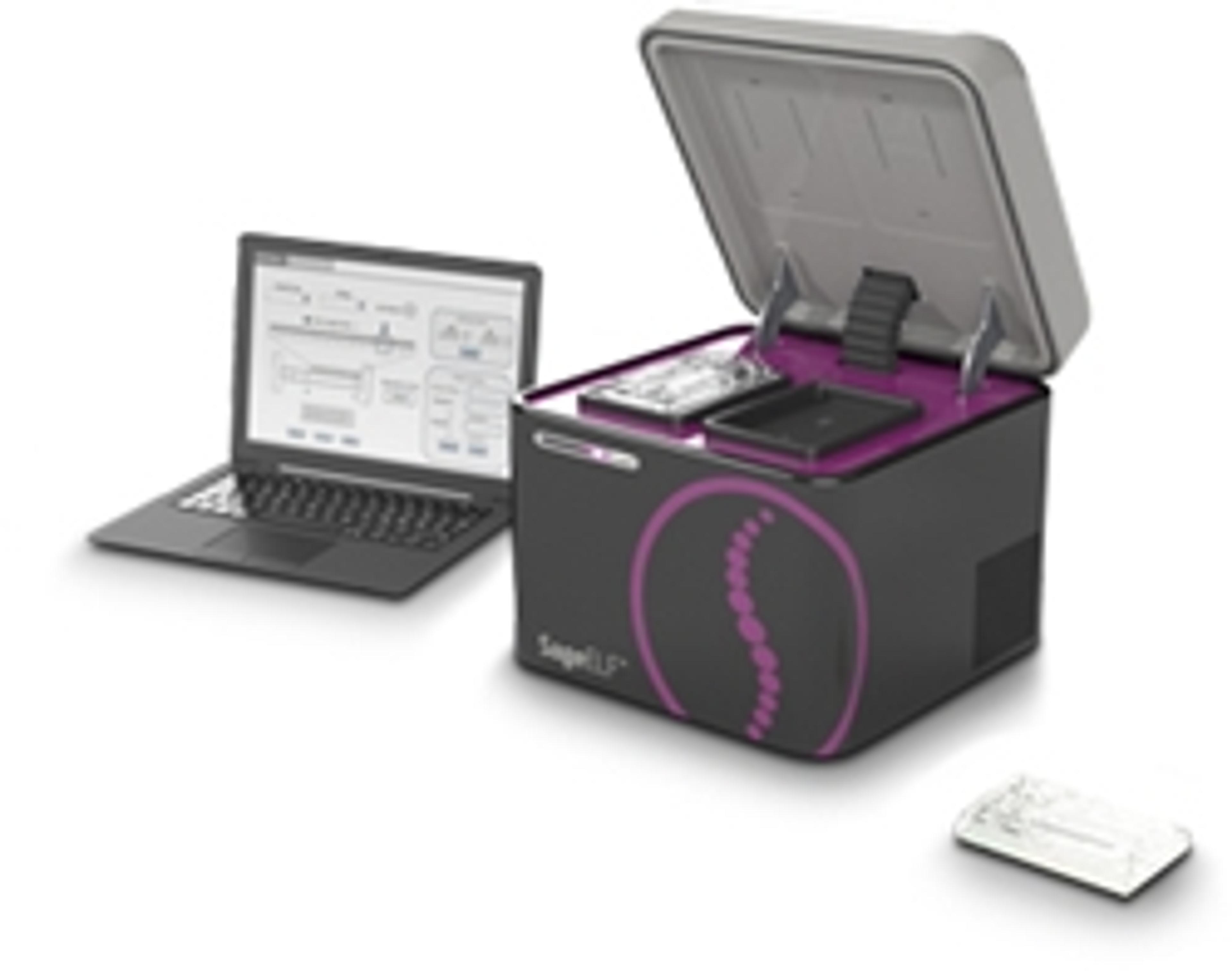
SageELF Sample Fractionator for DNA and Protein
Sage ScienceThe SageELF is an automated, whole-sample fractionation system for NGS sample prep. SageELF, a whole-sample fractionation tool, is now shipping from Sage Science, developer of the Pippin automated DNA size selection system. The SageELF (short for Electrophoretic Lateral Fractionator) generates 12 contiguous fractions from a whole DNA sample, allowing scientists to generate libraries with multiple insert sizes from the same sample, which has applications in genome sequencing, structural variant detection, and identification of rare splice variants. This sample prep instrument will also be especially useful for preserving precious samples. Users simply load their sample, start the run, and pipette out the fractions later. Unlike in-gel digestion, in which some DNA fragments never leave the gel, the whole DNA sample is electrophoresed into the elution modules.Sage Science targets labor-intensive steps in the sample prep process where automation can offer improved precision and reproducibility. Precise size selection is critical for optimizing sequencing efficiency, improving genome assemblies, and reducing NGS project costs.Features: Make libraries with multiple insert sizes from the same sample Ideal for rare or precious samples Automated for precise, reproducible results Applications: Genome sequencing Structural variant detection Rare splice variant detection