
Quantitation of Sirtuin Activity with a One-Step Luminescent Assay
Quantitation of Sirtuin Activity with a One-Step Luminescent Assay
14 Jul 2015This poster describes a one-step, homogeneous luminescent assay for the detection of activity for multiple sirtuin isotypes. The Sirtuin family of histone/protein deacetylating enzymes has gained considerable interest both for their recognized importance in processes such as gene silencing and expression and in cellular metabolism. This assay is a convenient and sensitive screening methodology to detect and measure both inhibitors and activators of sirtuin activity.
Related products
Request Quote for All Products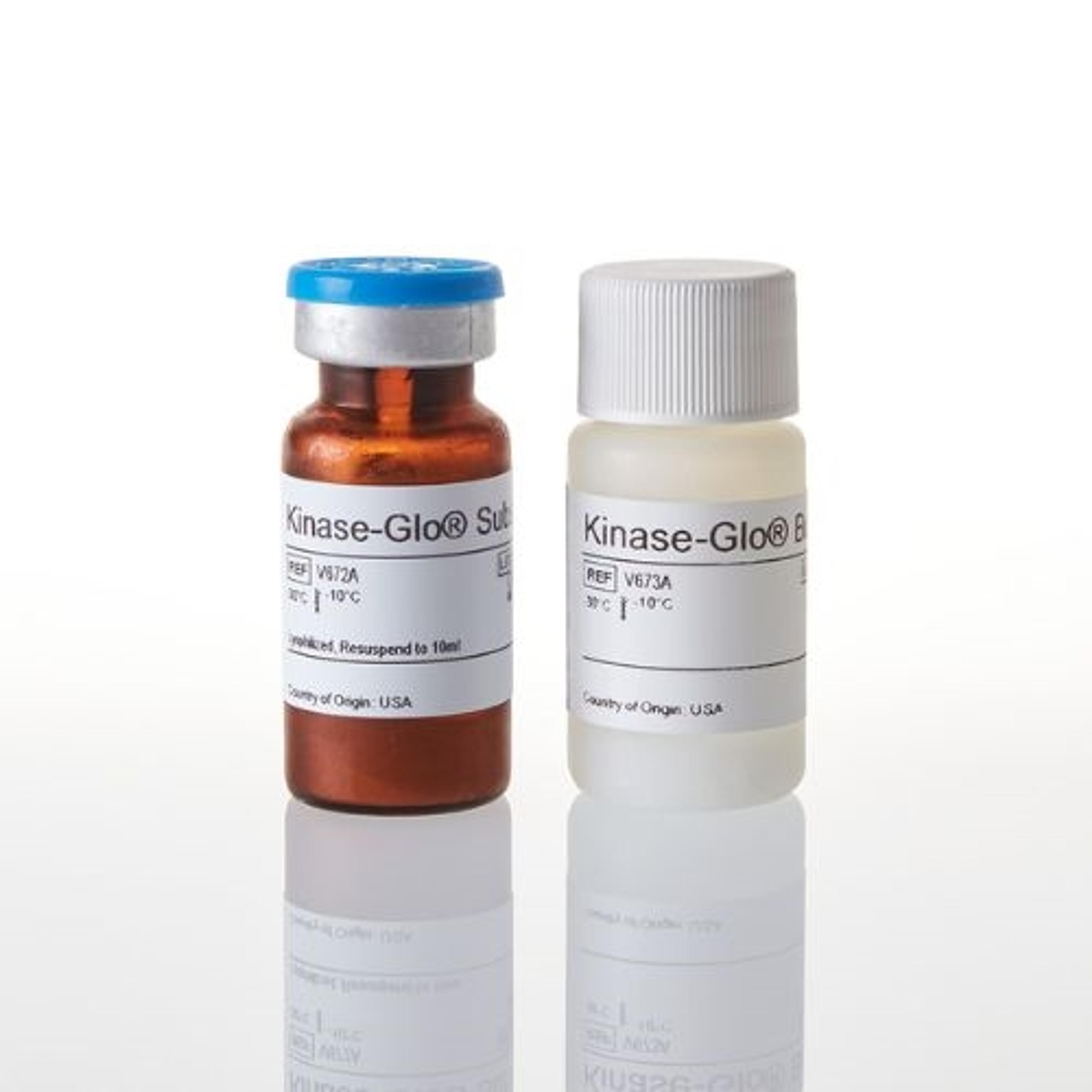
Kinase Glo® Assay
Promega Corp.Universal, HTS Kinase Screening Assays Use higher ATP concentrations: Linear response up to 500μM ATP. Use any kinase and kinase-substrate combination, including peptide, protein, lipid, and sugar substrates. Perform the assay without substrate modifications. Obtain reliable results: Z´-factor values routinely >0.7. Reduce false hits: Luminescence is much less susceptible to interference from library compounds than fluorescence-based assays. How It Works The kinase reaction is conducted under the appropriate conditions. ATP remaining at the time that the Kinase-Glo® Reagent is added is used as a substrate by the Ultra-Glo™ Luciferase to catalyze the mono-oxygenation of luciferin and the generation of light. Luminescence is inversely related to kinase activity. Linear out to 500μM ATP The Kinase-Glo® Platform consists of three assay formats: the Kinase-Glo® Assay, which is used to monitor kinase activity using up to 10μM ATP; the Kinase-Glo® Plus Assay, which is used for assays requiring higher ATP concentrations (up to 100μM); and the Kinase-Glo® Max Assay, which is used for assays requiring up to 500μM ATP. Perfect for HTS applications Z´-factor is a statistical value that compares the assay dynamic range to data variation in order to assess assay quality. Z´-factors greater than 0.5 indicate excellent assay quality. Uncover non-ATP binding site inhibitors Use the Kinase-Glo Assays to distinguish ATP competitive inhibitors from noncompetitive inhibitors. Use PKA inhibitor (noncompetitive, PKI, and competitive, H89) titrations were performed using the Kinase-Glo Plus Assay. IC50 results determined using Kinase-Glo Plus varied just 2-fold for the noncompetitive inhibitor PKI (3.5nM vs. 7.9nM) at 10 and 100μM ATP, respectively. The IC50 results varied 7-fold for the competitive inhibitor H89 (0.06μM vs. 0.4μM) at 10 and 100μM ATP, respectively.
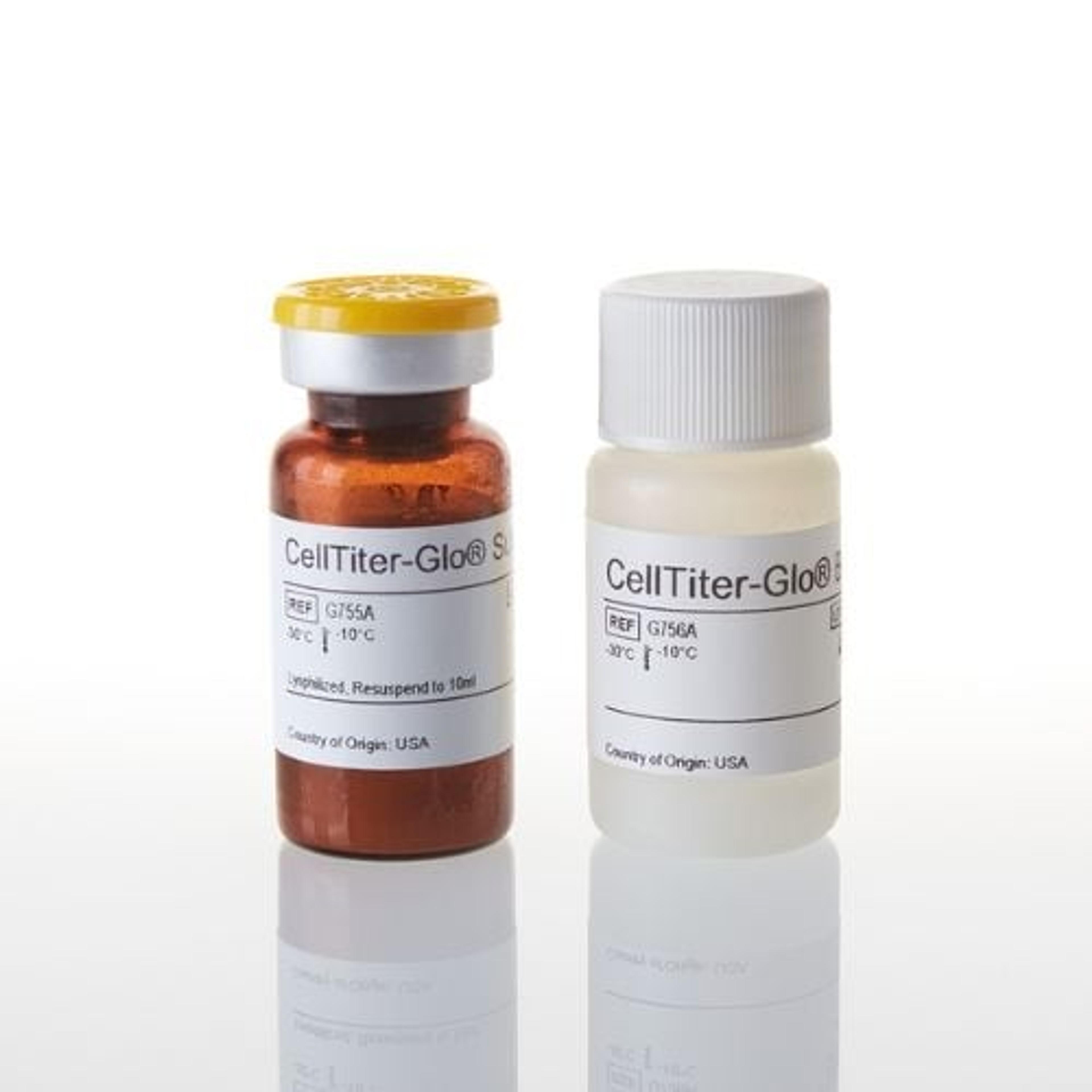
CellTiter-Glo® Luminescent Cell Viability Assay
Promega Corp.The CellTiter-Glo® Luminescent Cell Viability Assay(a,b) is a homogeneous method of determining the number of viable cells in culture based on quantitation of the ATP present, an indicator of metabolically active cells. The CellTiter-Glo® Assay is designed for use with multiwell formats, making it ideal for automated high-throughput screening (HTS), cell proliferation and cytotoxicity assays. The homogeneous assay procedure involves adding the single reagent (CellTiter-Glo® Reagent) directly to cells cultured in serum-supplemented medium. Cell washing, removal of medium and multiple pipetting steps are not required. The system detects as few as 15 cells/well in a 384-well format in 10 minutes after adding reagent and mixing. The homogeneous "add-mix-measure" format results in cell lysis and generation of a luminescent signal proportional to the amount of ATP present. The amount of ATP is directly proportional to the number of cells present in culture. The CellTiter-Glo® Assay generates a "glow-type" luminescent signal, which has a half-life generally greater than five hours, depending on cell type and medium used. The extended half-life eliminates the need to use reagent injectors and provides flexibility for continuous or batch mode processing of multiple plates. The unique homogeneous format avoids errors that may be introduced by other ATP measurement methods that require multiple steps.