ResourceMaterials

Pt, Pd, Rh in Recycled Automotive Catalysts

25 Aug 2014

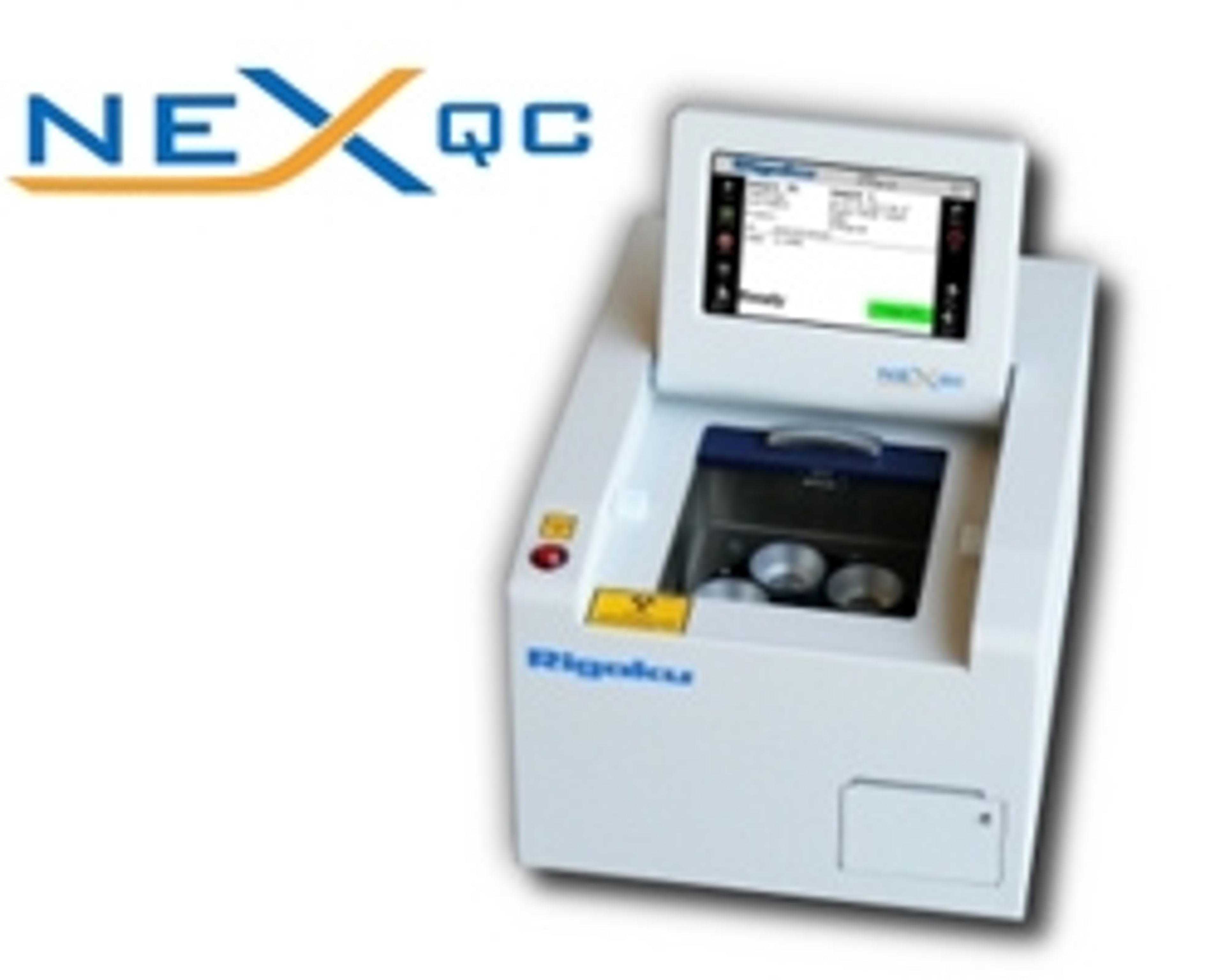
In this application note the Rigaku NEX QC and simple yet versatile software provides an easy-to-use and valuable tool for the catalytic converter recycling industry.

Rigaku NEX QC: Low Cost Elemental Analyzer

Rigaku Corporation

As a premium low cost benchtop Energy Dispersive X-ray Fluorescence (EDXRF) elemental analyzer, the Rigaku NEX QC delivers wide elemental coverage with an easy-to-learn software interface in a robust package designed for industrial at-line quality control applications. Specifically designed for routine quality control elemental analysis applications, the new Rigaku NEX QC features an intuitive "icon-driven" touch screen interface for easy operation and a built-in printer for convenience.The shuttered 50kV X-ray tube and Peltier cooled semiconductor detector deliver exceptional short-term repeatability and long-term reproducibility with excellent element peak resolution. This high voltage capability (50 kV), along with multiple automated X-ray tube filters, provides a wide range of XRF applications versatility and low limits-of-detection (LOD).NEX QC Features: Analyze 11Na to 92U non-destructively Solids, liquids, alloys, powders and thin films 50kV X-ray tube for wide elemental coverage Semiconductor detector for superior data quality Modern smartphone style "icon driven" user interface Multiple automated tube filters for enhanced sensitivity Convenient built in thermal printer Low cost with unmatched performance-to-price ratio Optional fundamental parameters

(0)

Links

Tags

X-Ray Diffraction and SpectroscopyX-Ray diffraction & spectroscopy are used in material characterization to discern the structure and elemental composition of a sample. X-Ray diffractometers (XRD) are superior instruments in elucidating the dimensional atomic structure of crystalline materials, including powders, thin films and single crystals. For large unit cells or ordered macromolecules, consider small-angle X-ray scattering (SAXS). X-ray spectroscopic techniques include X-ray fluorescence (XRF) and X-ray photoelectron spectroscopy (XPS), both providing simple and accurate methods for determining the elemental composition of a material. Energy dispersive (EDXRF) and wavelength dispersive (WDXRF) XRF spectrometers are available, as well as handheld/portable devices. High-resolution, 3D microstructure characterization of materials can be achieved with X-ray microscopes combining sub-micron resolution imaging with 3D computed tomography. Find the best XRD and XRF spectrometers in our peer-reviewed product directory: compare products, check customer reviews and receive pricing direct from manufacturers.Software PlatformsSoftware platforms are useful for various stages of laboratory experiments from data collection to data storage and processing. For instance lab software is available for system control, data management, data analysis and qualification / validation.CatalystMetalsMetal analysis is critical in various industries, including environmental monitoring, food safety, and pharmaceuticals. Techniques such as ICP-MS and atomic absorption spectrometry are commonly used to detect trace metals. Explore metal analysis tools in our peer-reviewed product directory; compare products, check reviews, and get pricing directly from manufacturers.
Pt, Pd, Rh in Recycled Automotive Catalysts