On-Bead Antibody-Small Molecule Conjugation and pH Sensor Fluorescent Dye for Screening of Internalizing Antibodies for ADC Applications

On-Bead Antibody-Small Molecule Conjugation and pH Sensor Fluorescent Dye for Screening of Internalizing Antibodies for ADC Applications

30 Jun 2015

This poster demonstrates a method that allows rapid screening of large number of antibodies for internalization in the cell. The method is a combination of two novel approaches: first, ‘on-bead’ antibody-small molecule conjugation that uses high capacity magnetic Protein A and Protein G beads to capture the antibody directly from the cell media and conjugate with a reactive small molecule, and second, conjugation of the antibody with a pH sensor dye that becomes fluorescent only when the antibody is internalized and trafficked to the endosomes and lysosomes.

Magne™ Protein A and Magne™ Protein G Beads

Promega Corp.

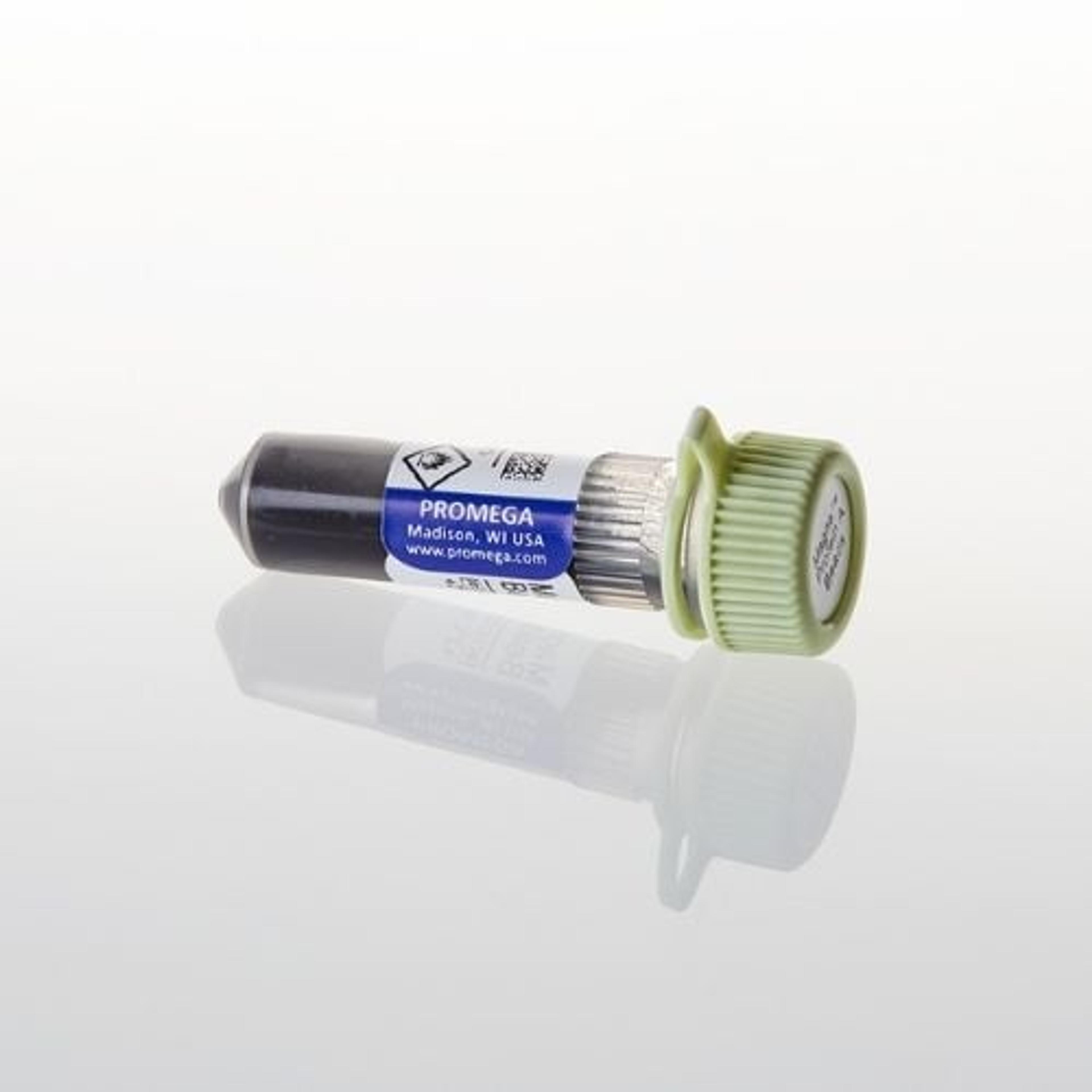
Magne™ Protein G and Magne™ Protein A Beads are magnetic affinity beads with high specificity and high capacity for purification of immunoglobulins from cell culture media, ascites and serum samples.   These paramagnetic beads are composed of iron encapsulated in macroporous cellulose with low nonspecific binding. The magnetic beads use a novel attachment chemistry to immobilize recombinant Protein G or Protein A protein molecules in the same orientation on the surface of the bead. The oriented attachment is known to improve the functionality of immobilized proteins. These beads offer a convenient method for achieving high purity and high recovery of monoclonal and polyclonal antibodies from a variety of biological samples. The superb magnetic properties of Magne™ Protein G and Magne™ Protein A Beads allow rapid and efficient capture of antibodies either with manually processed samples or in a high-throughput manner using the Promega ReliaPrep™ LV 32 HSM Instrument or a robotic platform such as the Beckman Coulter Biomek® FX. Magne™ Protein A and Magne™ Protein G Beads:   High purity and rapid, efficient antibody recovery Low nonspecific binding Ease of handling and cost effectiveness High binding capacity1 (≥25mg) of the beads for Protein A and Protein G Optimized performance

(0)

Links

Tags

AntibodiesAntibodies are used in techniques such as confocal and fluorescence microscopy, flow cytometry, ELISA, ELISPOT, immunohistochemistry, western blotting and immunopreciptation. Select specific antigen reactivity, high specific affinity, low non-specific binding, monoclonal or polyclonal, primary or secondary antibodies and associated conjugates such as an enzyme or dye for visualization.ELISAEnzyme-linked immunosorbent assays (ELISA), also known as enzyme immunoassays (EIA), are used for the detection and quantification of proteins, peptides and antibodies in a sample. ELISA often comes in kit format, with pre-selected antibody pairs to detect specific proteins or biomarkers of diseases such as diabetes and obesity, or cardiovascular and neurological disorders. Detection is made possible with chemiluminescent, fluorescent or colorimetric substrates and detection instruments such as microplate / ELISA readers. Other kits available include: Enzyme-linked immunospot (ELISPOT) assays for the quantification of protein-producing cells and chemiluminescent immunoassays (CLIA) kits. Find the best ELISA kits and products in our peer-reviewed product directory: compare products, check customer reviews and receive pricing direct from manufacturers.High-Throughput ScreeningHigh-throughput screening (HTS) is an automated drug discovery technique for identification of active compounds against a compound library. Use HTS readers and integrated assay preparation / analysis workstations to screen your compounds. Identify active compounds against various HTS libraries, including membranes, proteins and peptides and HTS cell lines. Find the best high-throughput screening products in our peer-reviewed product directory: compare products, check customer reviews and receive pricing direct from manufacturers.Drug DeliveryDrug Delivery refers to dosage form, route of administration, formulations, technologies, and systems for transporting a pharmaceutical compound in the body as needed to safely achieve its desired therapeutic effect. Drug delivery is often approached via the biopharmaceutical or small molecule drug's formulation, but it may also involve medical devices or drug-device combination products. Considerations include instrumentation, software and services. FluorescenceThe emission of fluorescence occurs when a photon of energy is supplied to a fluorescent chemical compound by an external source, causing it to become excited. Fluorescence can be detected and measured for different purposes using microplate readers, fluorescence microscopes, fluorescence scanners, and flow cytometers.High ThroughputHigh throughput experiments allow the simultaneous processing of several samples. This parallelization reduces the cost per experiment and increases reproducibility and output volume of data.Antibody Drug ConjugatesScreeningUsing robotics, data processing and control software, liquid handling devices and sensitive detectors, screening allows a researcher to quickly conduct millions of chemical, genetic or pharmacological tests.
On-Bead Antibody-Small Molecule Conjugation and pH Sensor Fluorescent Dye for Screening of Internalizing Antibodies for ADC Applications