
Imaging hippocampal microcircuitry using glass microperiscopes
17 Jul 2023Multiphoton microscopy (2P) overcomes many of the limitations that conventional microscopy faces by being able to image deeply, quickly, and in 3D — providing compelling and useful data in a variety of disciplines. A combination of ultra-fast pulsed lasers, lenses with high numerical apertures, and highly sensitive detectors provide fast Z imaging and makes Bruker’s 2P technology a go-to technique for revealing dynamic biological processes deep within living tissues. Here, Bruker summarizes the webinar content it presented with Michael Goard, PhD., an Associate Professor for the Department of Molecular, Cellular & Developmental Biology at UC Santa Barbara. His lab investigates the neural circuitry underlying perceptual, spatial, and cognitive abilities in the mouse cortex and hippocampus by using two-photon microscopy, microprisms, and microperiscopes.
Related products
Request Quote for All Products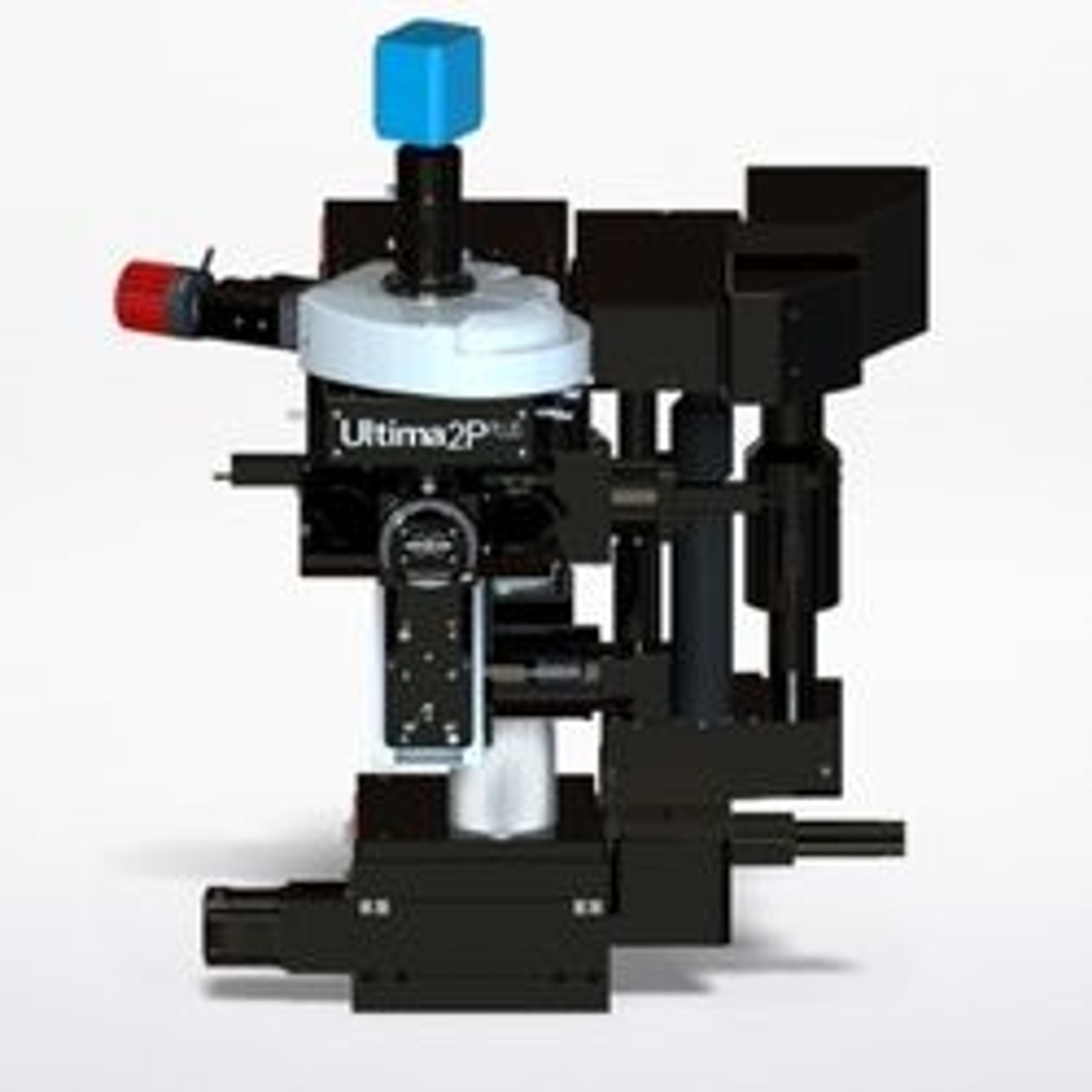
Ultima 2Pplus
Bruker Fluorescence MicroscopyWith new advances in field of view, sensitivity, wavelength, and sample accommodation, the Ultima 2Pplus delivers an ideal combination of flexibility, resolution, imaging depth and speed, allowing simultaneous imaging, stimulation and electrophysiology protocols with greater efficiency and effectivity. The system is designed specifically for intravital imaging, with fully motorized control of the objective X-Y-Z position, as well as two axes of rotation for precise imaging orientation.