ResourceSpectroscopy

Food Fraud: Pomegranate Juice Adulteration

31 Mar 2013

This case study shows that monitoring of fruit juices does not need to be difficult, time consuming or expensive with testing technologies such as DSA/TOF MS and screening technologies such UV/Vis spectroscopy. Detection technologies such as these will be essential in ensuring that the food and beverage products that are being imported are both safe and authentic.

LAMBDA 25, 35, & 45 UV/Vis Spectrophotometers

PerkinElmer

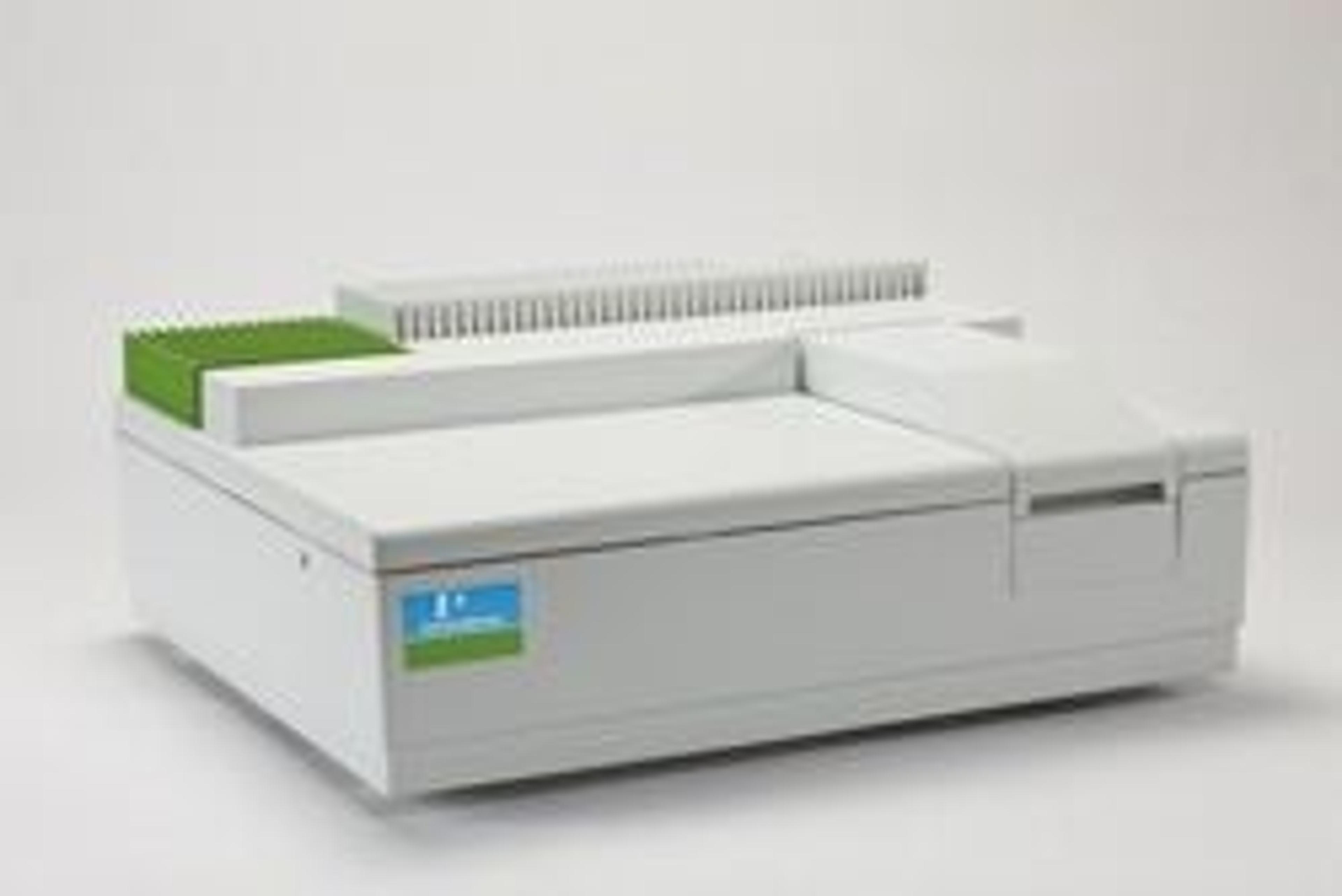
PerkinElmer's LAMBDA 25/35/45 UV/Vis systems are easy to operate and deliver trustworthy results with the minimum of operator training. With over 12,000 units installed worldwide, our superior technology and proven build quality has proven itself under the toughest conditions. Our extensive suite of Instrument Performance Verification (IPV) tests confirms high quality performance over the lifetime of the system, and for regulated industries the Enhanced Security (ES) version of UV WinLab integrates seamless 21CFR part 11 technical compliance.LAMBDA 25Choose the LAMBDA 25 for routine UV/Vis applications including liquids analysis, pharmacopeia and regulatory tests. Range: 190 nm - 1100 nm Bandwidth: 1 nm (fixed) LAMBDA 35Choose the LAMBDA 35 for measurements on liquids, solids, pastes and powder samples and regulatory tests requiring variable bandwidths. Range: 190 nm - 1100 nm Bandwidth: 0.5 nm - 4 nm (variable) Integrating sphere option LAMBDA 45Choose the LAMBDA 45 for measurements on turbid and light-scattering liquid samples such as biological solutions and suspensions. Range: 190 nm - 1100 nm Bandwidth: 0.5 nm - 4 nm (variable) Pre-monochromator for reduced stray light

(38)

Links

Tags

Mass SpectrometryMass spectrometry (MS) is a powerful analytical technique used to identify and quantify molecules based on the mass-to-charge ratio of gas-phase ions. It provides detailed information about the structure, composition, and properties of compounds and is widely used across fields such as environmental monitoring, materials science, drug discovery and development, food and beverage testing, and wider chemical research. Key MS techniques include tandem mass spectrometry (MS/MS), liquid chromatography–mass spectrometry (LS-MS) and inductively coupled plasma (ICP-MS). Choosing from these wide range of techniques and technologies can be a daunting task, so keep up to date with scientific applications, performance expectations, and customer reviews here all in one place. Visit our product directory to receive quotes direct from the manufacturer. UV-Visible SpectroscopyUltraviolet-visible (UV-Vis) spectrophotometers are used to measure the interaction of UV and visible light with a sample, including transmission, reflectance & absorbance. The two major instrument classes are single-beam or double-beam spectrophotometers. More specialized equipment includes colorimeters, spectroradiometers and refractometers. Portable and microvolume spectrophotometers are also available. For the modular spectroscopy lab, explore a range of light sources for combination with a spectrograph/spectrometer and optics. Find the best UV-Vis spectroscopy products in our peer-reviewed product directory: compare products, check customer reviews and receive pricing direct from manufacturers.Food AuthenticationFood authentication ensures that food products are accurately labeled and free from adulteration or misrepresentation. This is important for consumer safety, quality control, and regulatory compliance. Explore food authentication tools in our peer-reviewed product directory; compare products, check reviews, and get pricing directly from manufacturers.Food TestingFood testing refers to a variety experiments including PCR, mass spectrometry, processing, QuEChERS, analyzing and Kjeldahl.
Food Fraud: Pomegranate Juice Adulteration