
Five Tips to Optimize Biological Safety Cabinet Operation
19 Aug 2014Optimize the operation of your biological safety cabinets and reduce the risk of contamination with these five essential tips.
Related products
Request Quote for All Products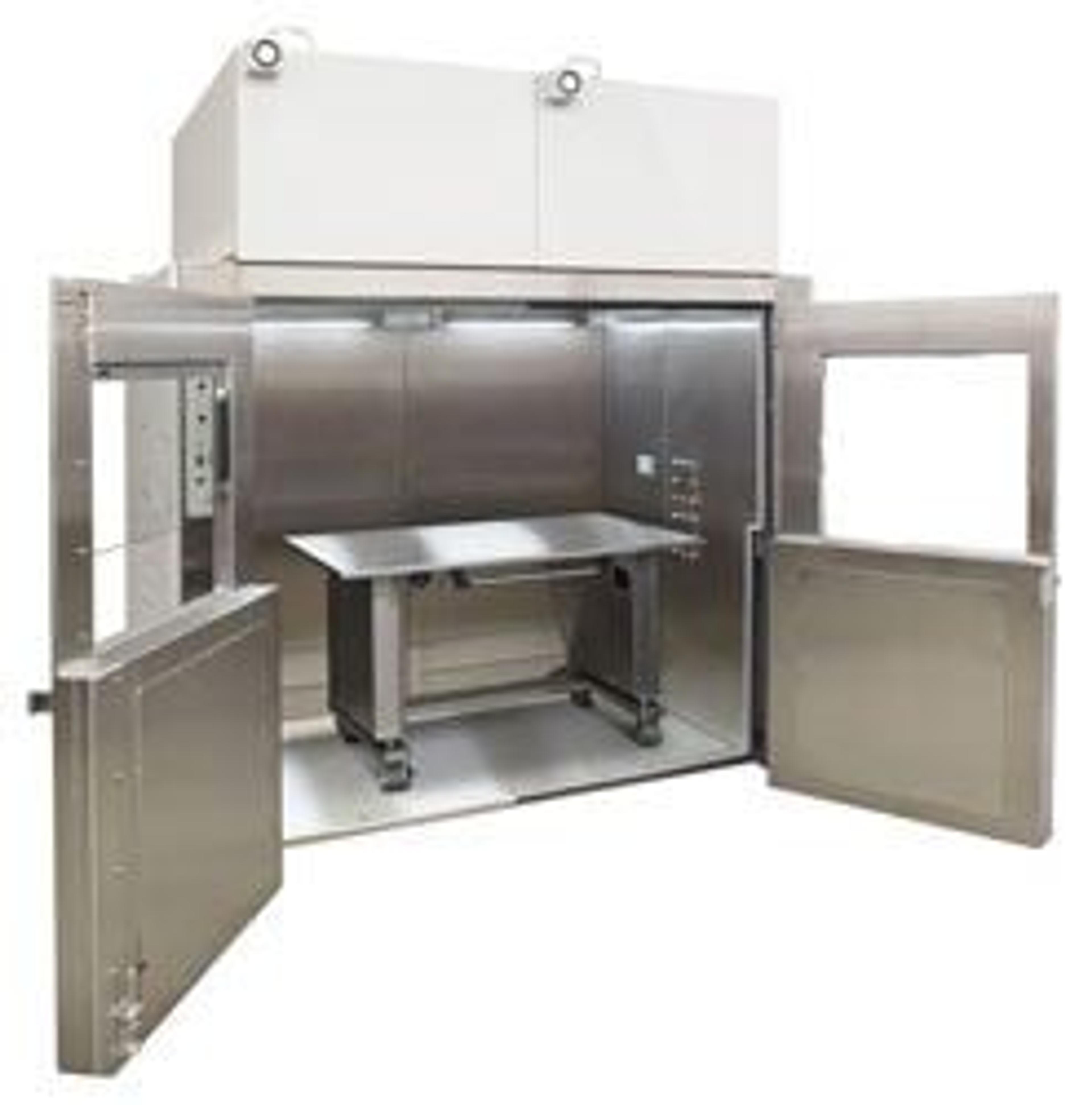
AutoLabGard ES NU-125 Mini-Room Class II, Type A2 Biosafety Cabinet
NuAire, Inc.The AutoLabGard ES (Energy Saver) NU-125 Mini-Room is designed after a Class II, Type A2 Biological Safety Cabinet on a larger scale to provide Class II protection for personnel, product, and the environment. The mini-room can be used for applications involving high-throughput robotic systems, large high-speed cell sorters, ultra-centrifuges, and laboratory equipment requiring Class II protection from potentially harmful aerosols and airborne particles. The NU-125 AutoLabGard ES is constructed with an interior stainless steel floor and wall panels that are gasketed and bolted together. Painted exterior Cold Rolled Steel (CRS) cover panels are gasketed and bolted to the stainless wall panels that make up the negative pressure plenum. Painted CRS blower modules are mounted on top of the wall panels and contain both the supply and exhaust HEPA filters along with the ultra-high efficiency DC ECM motors. Stainless steel doors complete the cabinet enclosure with a hinged window assembly mounted on each door providing an 8 inch (203mm) access opening. If additional access is needed to the interior for user or system interfaces (i.e. power/computer cables, process tubing, etc.), negative pressure pass through ports may be added to the sides or rear of the enclosure that maintain enclosure containment. The airflow pattern of the NU-125 AutoLabGard ES is identical to any class II, type A2 biosafety cabinet. Room air is pulled into the cabinet through the work access opening at an average velocity of 105 fpm (.53 m/s) to provide an air barrier. Engineered with an ultra-high efficiency motor the AutoLabGard lowers operating costs by using less electricity and increasing filter life with less heat output. Each NU-125 is tested and comes with a certified copy to tests consistent with standard NSF/ANSI 49. Contact NuAire today to start your high-throughput robotic system enclosure consultation. Example Application: A perfect match for the BD FACS Airflow Cytometer Laboratory equipment or processes requiring sterility Class II Biological Safety Cabinet protection for robotics