ResourceSpectroscopy

Features and operation of hollow cathode lamps and deuterium lamps

24 Jan 2022

This application note discusses the parameters which influence the operation of hollow cathode and deuterium lamps. Examples are given of how parameters can be selected in order to improve the quality of analytical results. Aspects of deuterium lamp operation for background correction are also covered.

Single Element Hollow Cathode Lamps

Agilent Technologies

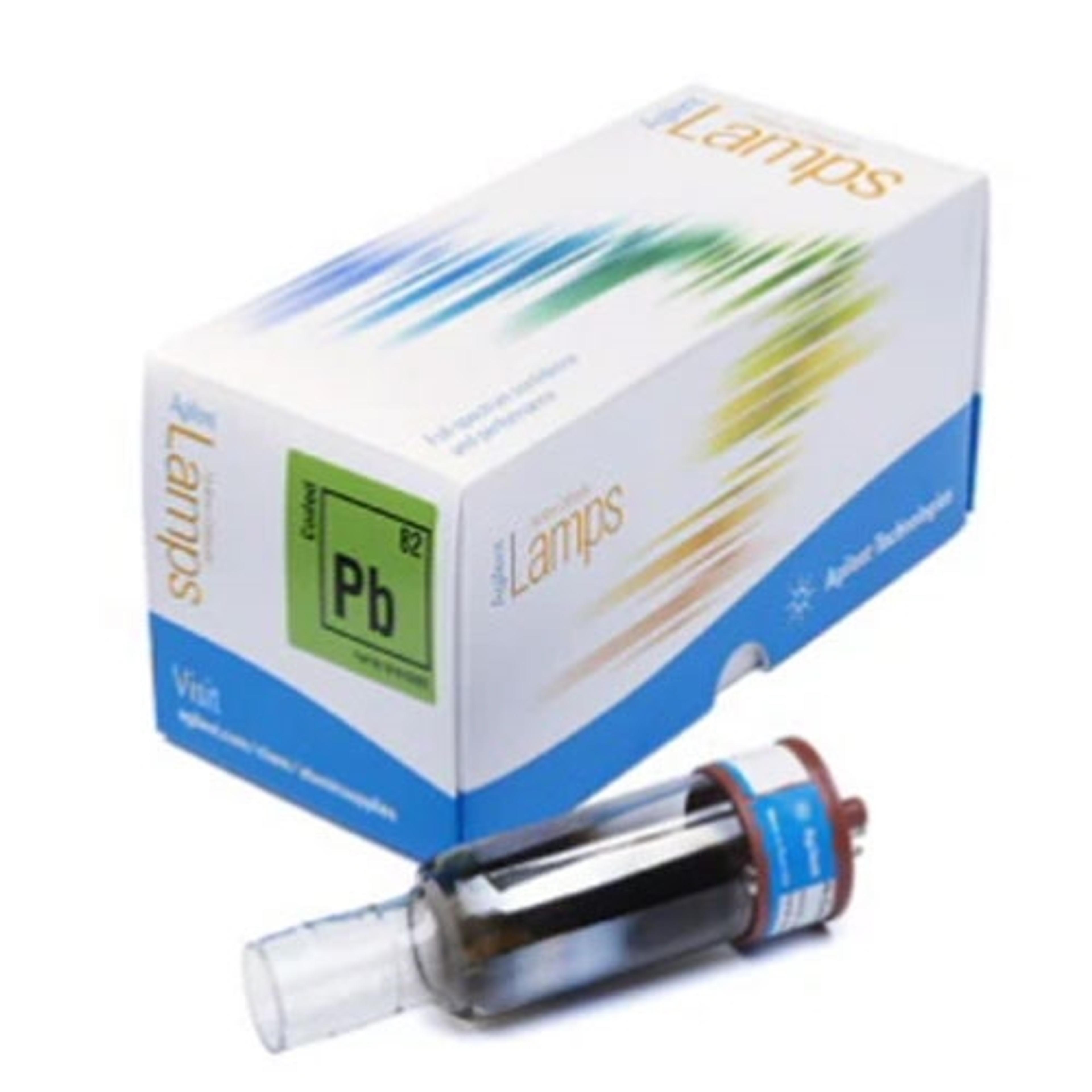
Agilent single-element lamps are available as either coded or economical uncoded lamps. Coded lamps are element coded for automatic recognition by the Agilent AA instrument, simplifying operation and eliminating the risk of time-consuming errors when changing the lamp position. Uncoded lamps provide the same excellent performance as Agilent coded lamps. Agilent lamps are manufactured in an ISO 9001 environment using the purest cathode materials for optimal lifetime, economical operation, and superb performance. They provide high spectral purity and the extended processing cycle, and unique lamp conditioning procedures ensure minimal lamp warm-up and stable operation.

(0)

Links

Tags

Atomic Absorption / Emission SpectroscopyAtomic absorption spectroscopy (AAS) and atomic emission spectroscopy (AES) — also called optical emission spectroscopy (OES) — are used to detect the elemental constituents in samples. Both techniques involve the atomization of a sample. Atomic absorption spectrometers may use a flame or furnace to create an atomic vapor of the sample before irradiation with spectral light. Optical emission spectrometers may use a flame, inductively coupled plasma (ICP), microwave plasma (MP) or spark arcs to atomize and excite the sample. At higher excitation energies, electrons can be emitted instead of photons, which can be useful for samples that can’t be atomized and for surface analysis. Explore electron spectroscopy equipment such as Auger spectrometers and photoelectron spectrometers for surface elemental analysis of samples. Find the best atomic absorption, photoelectron and optical emission spectrometers in our peer-reviewed product directory: compare products, check customer reviews and receive pricing direct from manufacturers.ICP-MSInductively Coupled Plasma Mass Spectrometry (ICP-MS) is a powerful analytical technique used to determine the concentrations of elements and their isotopes in a variety of samples, including water, soil, and biological tissues. It involves ionizing elements in the samples with extremely high-temperature Argon (Ar) plasma and then using a mass spectrometer to measure the number of ions based on their mass-to-charge ratio (m/z). Explore ICP-MS systems in our peer-reviewed product directory; compare products, check reviews, and get pricing directly from manufacturers.Elemental AnalysisElemental analysis involves determining the elemental composition of a sample, often used in environmental, pharmaceutical, and material sciences. Techniques like ICP-MS, X-ray fluorescence, and atomic absorption spectroscopy allow precise quantification of elements such as metals and nonmetals in complex matrices. Browse our peer-reviewed product directory to find the best elemental analysis tools, compare products, check reviews, and get pricing directly from manufacturers.