
Efficient high-throughput scNMT profiling with the VIAFLO 384
16 Jul 2026INTEGRA Biosciences demonstrates how its VIAFLO 384 platform supports high-throughput scNMT-seq workflows for simultaneous analysis of nucleosome occupancy, DNA methylation, and gene expression at the single-cell level. By combining the VIAFLO 384, MAG module, MAGFLO™ beads, and ASSIST PLUS robot, researchers can improve throughput, reproducibility, and reagent efficiency across library preparation and sequencing workflows.
Resource details:
Resource type: Application note
Page count: 9
Read time: 14 mins
Related products
Request Quote for All Products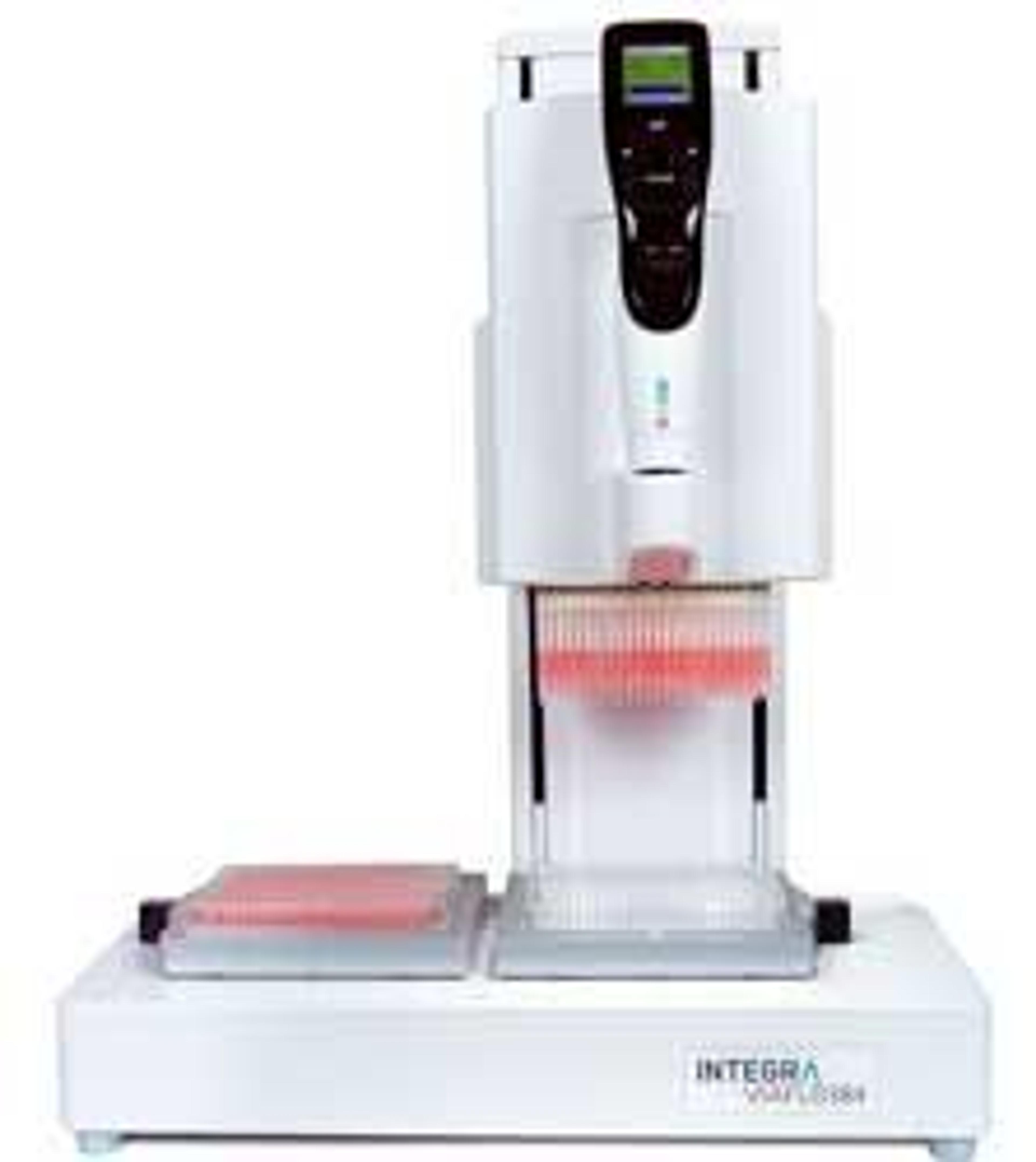
VIAFLO 384 – Electronic 24, 96 and 384 Channel Handheld Pipette
INTEGRA BiosciencesINTEGRA Biosciences’ VIAFLO 384 increases productivity of sample preparation in microplates and supports 24, 96 and 384 channel pipetting heads. VIAFLO 384 is used like a standard handheld pipette. It is hand-controlled but movements are supported by motors for an effortless workflow and precise targeting of the microplate wells. With a choice of ten interchangeable pipetting heads, the unit quickly adapts to any 24, 96, 384, or even 1536 well pipetting application in a volume range of 0.5 μl to 1250 μl. VIAFLO 384 benefits from the innovative GripTip system. The special pipette tips, together with the unique tip fitting, form an integral system. It guarantees tips will not fall off during pipetting and provides a reliable sealing of every tip. VIAFLO 384 can be used for sample transfers from reservoir to plate, plate to plate or within plates. VIAFLO 384 Features and Benefits: VIAFLO 384 is used like a handheld pipette and has an intuitive user interface, freeing staff from training time. Pipetting heads can be changed for an optimal instrument adaption to different volume ranges, increasing accuracy and precision. The innovative GripTip system provides a reliable sealing of every tip and guarantees that tips will never fall off, providing safe and reproducible assay preparation. Various pipetting modes are available for increased productivity and application customization.